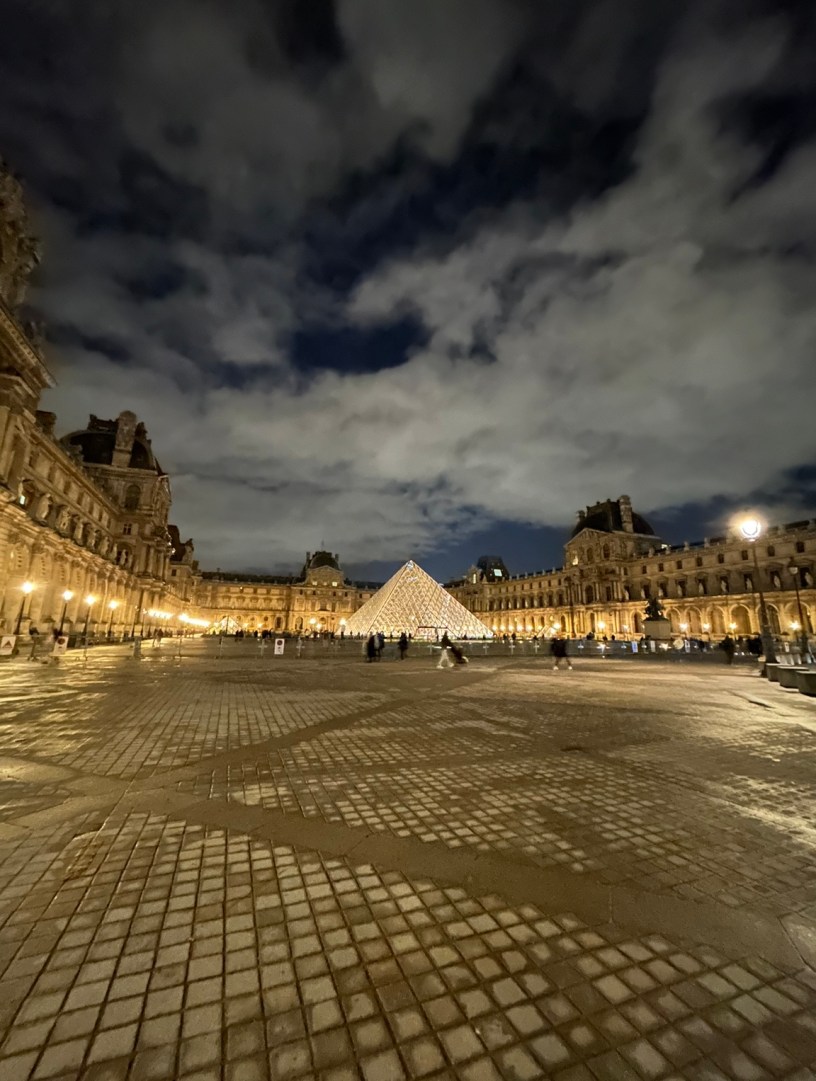
How does one manage their visit in a world-famous museum which contains over 380,000 objects and displays 35,000 works of art in one day?
This is the query of many who visit the Musée du Louvre. Where do we start? What are the “must-see” works of art and how do we find them? On return visits, do we see our favorites or try to discover works we haven’t seen before? Or try to do both…
In our recent visit to the Musée du Louvre, we had a plan: stay with our Traditions and if time allows, make new memories.
Reservations
First, it is strongly recommended to purchase tickets online at www.louvre.fr. You will have to reserve a day and time of admission. If you are using the Paris Museum Pass, you can only visit Museums one time during the duration of your Pass [you can purchase 2, 4, or 6 day passes at http://www.parismuseumpass.fr/t-en%5D. This is a new stipulation and really limits your flexibility, but with the massive crowds, I see the need for this. Be sure to enter through the Carrousel du Louvre to avoid the long lines and inclement weather. Check!
My Visits to the Louvre, Traditions:
- Pyramid Pictures:

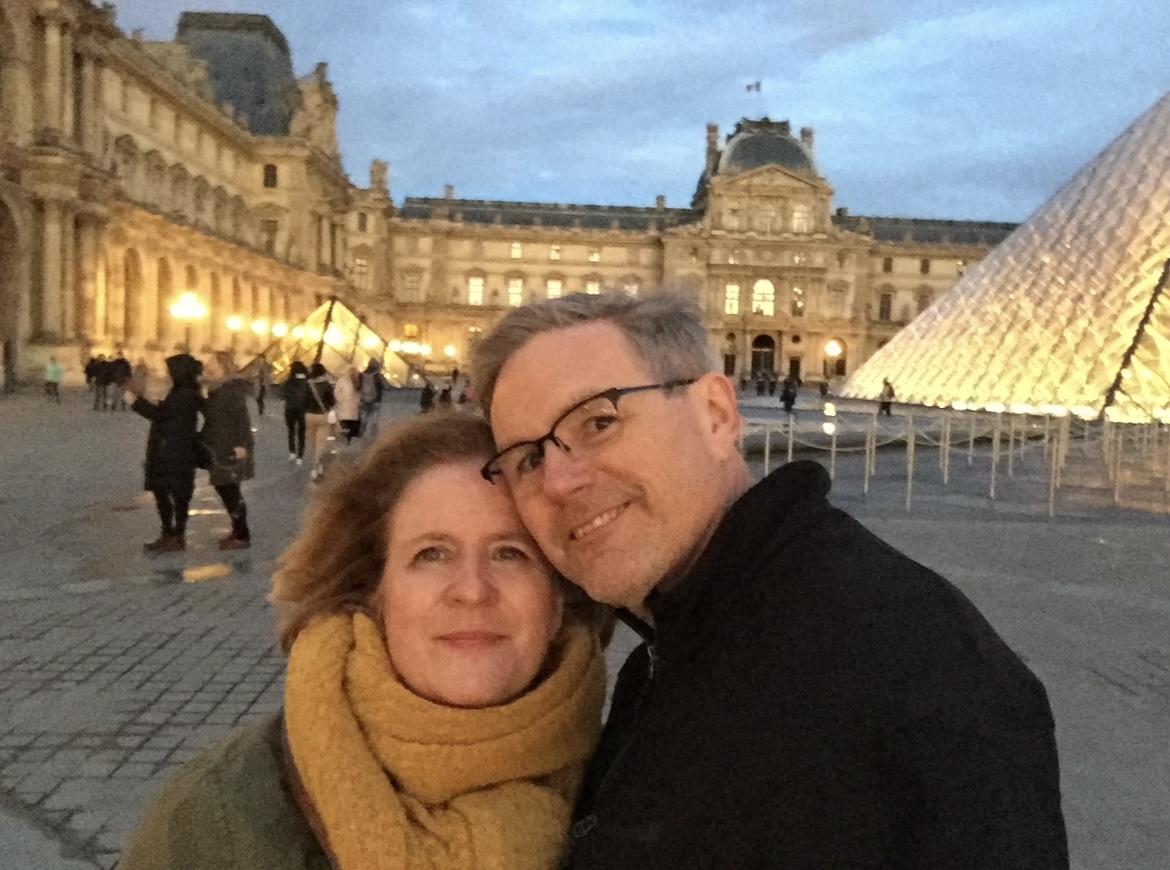
I.M. Pei’s contribution to the Cour du Musée du Louvre is iconic. It is rare to find a picture of the Louvre without these three Pyramids. For my first visit to the Louvre, in 1976, however, there were no Pyramids as they were installed in 1989. I love how each season, each hour of the day, offers a new perspective and reflection of these massive prisms.
- Mona Lisa:
Of course, this was first on our list. Make the pilgrimage through Denon [thank you, Louvre staff for adding signs and arrows]. Wait in line in the Gallery just to enter the room where Mona Lisa resides. Fight your way through the immovable crowd of people to get close enough for a picture/selfie or set your Iphone camera on Zoom (recommended). Exit as quickly as possible and cross this off your list. Sad new reality.

I have seen the masses feast their eyes on a simple, smiling young maiden as she represents the goal of a pilgrimage through marble corridors and staircases;
Surrounded by the masters of the ages, neglected, ignored in the mad rush to Da Vinci’s maiden.
What is it about her smile that draws the young, the old, the educated and the naïve to her side?
[-A vignette I composed after my second view of Mona Lisa in 2005]
- Paintings
There are over 5,000 paintings in the Louvre. Many are from French artists dating back to the 14th century, Portrait of John II the Good. During my Study Abroad in 2012-13, I took a L’histoire de l’art français course at the Sorbonne, taught by Art Historian Richard Pantet. Each weekend, I spent countless hours in the Louvre locating and studying the works that were presented in class of French Artists including: Delacroix, Poussin, Greuze, Chardin, Ingres, Watteau, Robert, Corot, Le Brun, David, Rigaud, and of course, some Impressionists—Monet, Degas, et Seurat [Musée d’Orsay owns most of the French Impressionist paintings]. When my husband came to visit me at Christmas, he accompanied me on this treasure hunt! Thank you, Dave.
We studied over 500 works by French artists that semester and there was only one exam—the Final. We had to identify the Artist and Title of 100 paintings. I only missed one!

Now, my tradition is to locate my favorite French paintings from my course (Greuze, Robert, and Ingres) and then find my other favorites by Albrecht Dürer and Vermeer [this wing was closed due to renovation, unfortunately).
- Sketching the Winged Victory at Samothrace
Each visit includes some time to sketch. This gives me a moment to rest and to study one of my favorite works of Art.


- Soliloquy of “Venus of the Louvre” by Emma Lazarus
When I was in graduate school, I memorized and recited “Venus of the Louvre” by Emma Lazarus, a celebrated American poet who wrote “The New Colossus” to raise funds for the Statue of Liberty.
Emma was a “woman of action; a secular, nationalist Jew” who honored fellow poet and friend, Heinrich Heine, in “Venus”[see post]. This statue changed his life.Heine explained his reaction to seeing Venus in the Louvre:
I took leave of the lovely idols I had worshipped…And when I entered the lofty hall of the Venus, I lay for a long time at her feet and wept so bitterly. Venus looked down upon me compassionately and disconsolately as if to say ‘do you see I have no arms and I cannot help you’. (43 Fried)
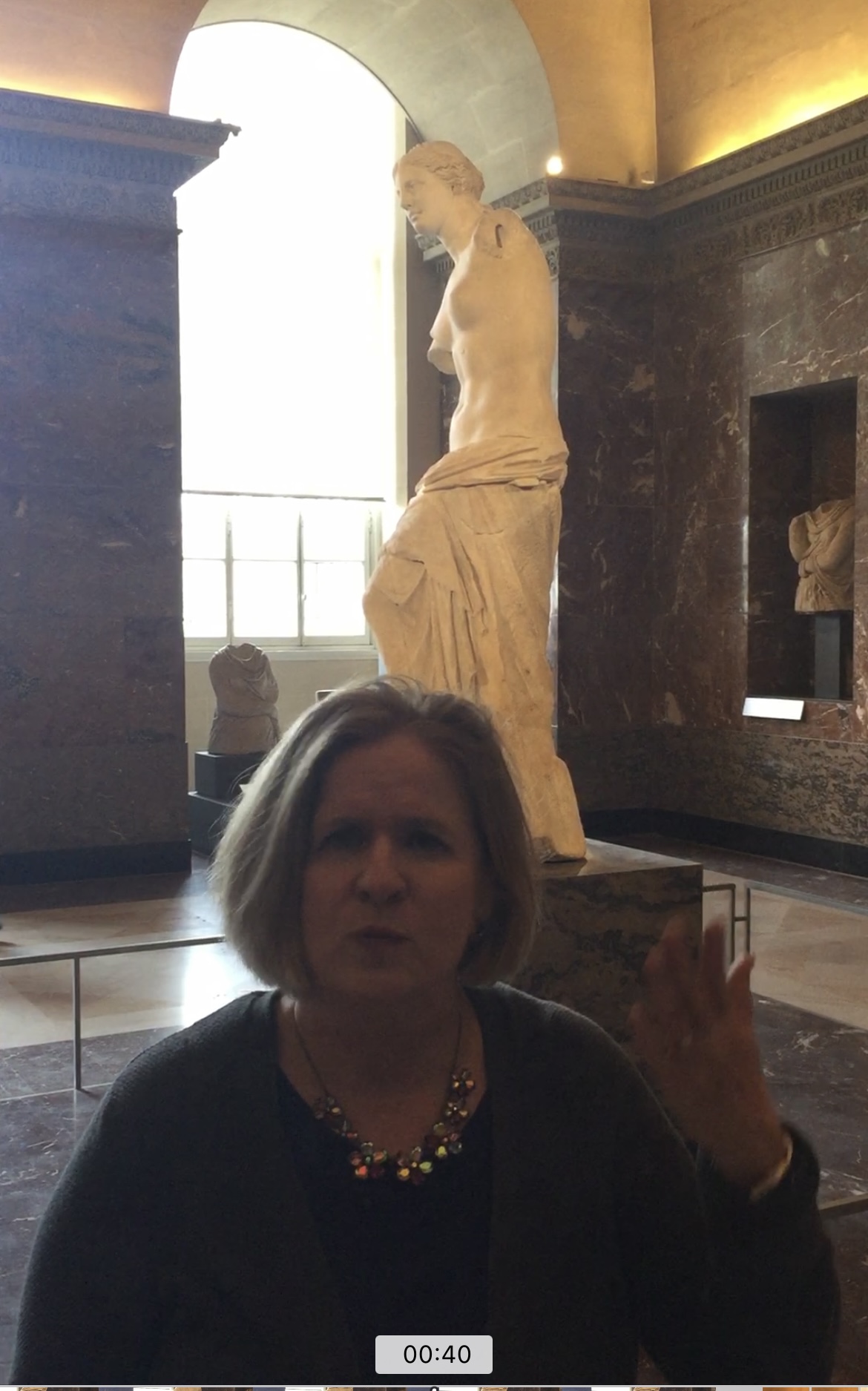
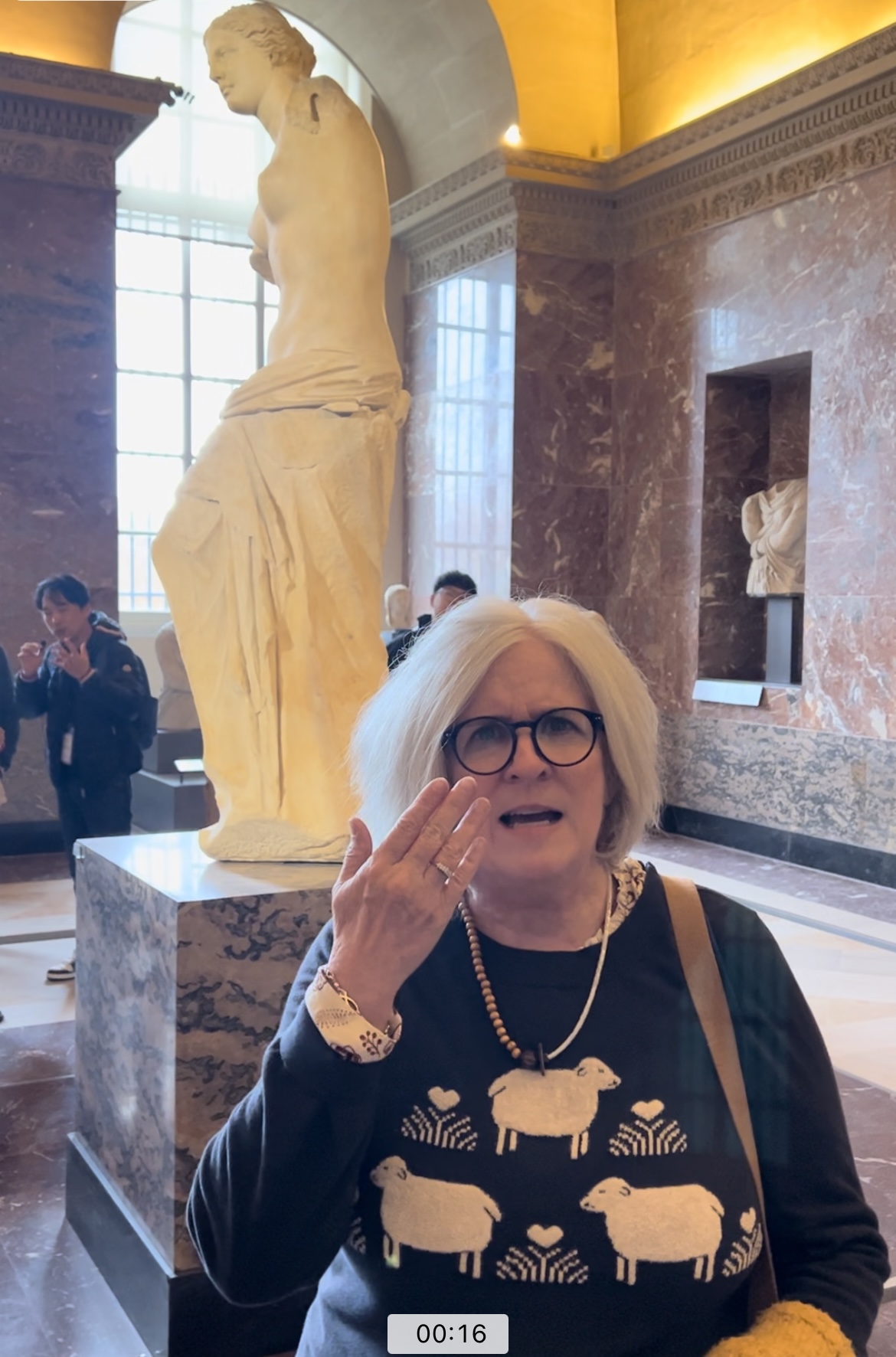
I dreamed of reciting this poem one day in front of the Venus de Milo in the Louvre. I have had three opportunities to do this since that time and, thank you husband, have this “tradition” recorded.
Venus of the Louvre
Down the long hall she glistens like a star,
The foam-born mother of Love, transfixed to stone,
Yet none the less immortal, breathing on.
Time’s brutal hand hath maimed but could not mar.
When first the enthralled enchantress from afar
Dazzled mine eyes, I saw not her alone,
Serenely poised on her world-worshipped throne,
As when she guided once her dove-drawn car,—
But at her feet a pale, death-stricken Jew,
Her life adorer, sobbed farewell to love.
Here Heine wept! Here still he weeps anew,
Nor ever shall his shadow lift or move,
While mourns one ardent heart, one poet-brain,
For vanished Hellas and Hebraic pain.
by Emma Lazarus (1866)
Mesopotamia random pose
This final tradition is very bizarre, however, as with traditions, one must carry them out.
In 2005, while visiting 8th century Mesopotamia, The Palace of Sargon II, The Cour Khorsabad, I made a random pose between two winged bulls. Within minutes, many tourists began to strike this same pose as if this were a “thing”. Now, each time I visit, I strike this same pose to see the reaction of those around me…same!
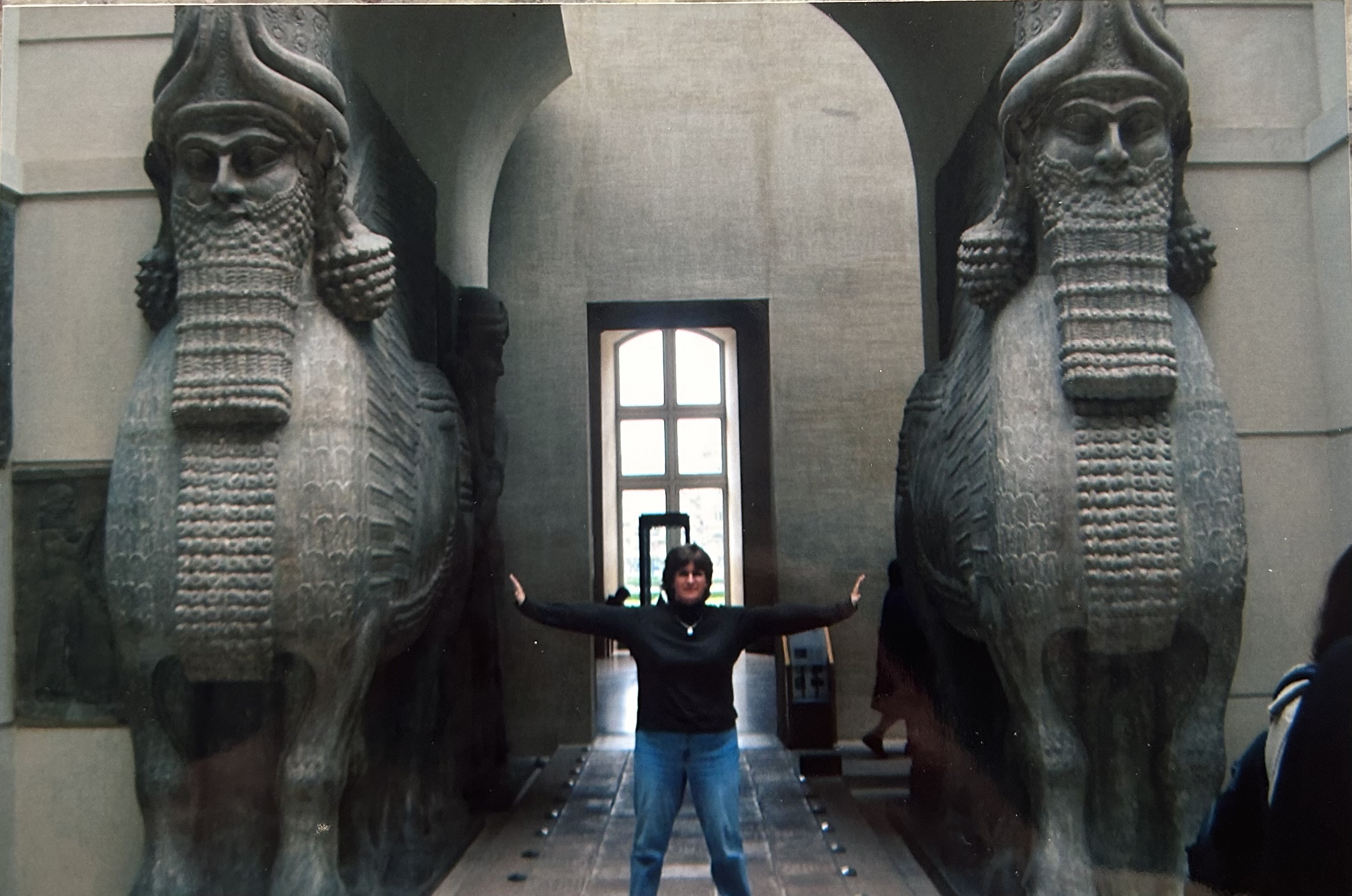

English novelist, Lawrence Durrell said, one must “travel with the eyes of the spirit wide open, sit quietly and observe and smell and listen for the spirit of the place which is the most important determinant in culture…one should tune in, idly, but with real inward attention”.
Thank you for taking this journey of my traditions at the Louvre. Please share some of your traditions in the comments!
 My French Quest
Each time I come across a reference to the Mona Lisa at the Louvre, I am reminded of how lucky I have been. In 2001 on my first trip to Paris, it was right after 9/11 and all the public galleries were closed. We had a great time anyway because there were no crowds and we enjoyed a week of visiting private galleries instead.
It was on our next trip in 2005, that (as you suggest here) we had bought tickets in advance from here in Australia, and bypassed the entire queue. Our strategy was to start on the top floor, and make our way down intending to abandon things once we encountered the crowds.
When we passed the Mona Lisa room, we hesitated, expecting the hordes to be there and almost kept going. But we could see that there was just a small Japanese tour group of about 15, so we went in… and they departed… and we were there with the Mona Lisa all by ourselves.
When I tell this story (which I love to do), younger folk always ask if we took a selfie. I don’t think either of us knew how to do it back then, and I don’t take a phone when I travel anyway. When I say that there was no selfie, they always… always! ask how can I prove it? *chuckle* They are bemused when I tell them that I don’t need to prove it, I will never forget it, and if they don’t believe me, I’m not bothered about that!
Thank you for your reflection, Lisa. This quote by Durrell fits your story perfectly: “to travel with your eyes wide open, sit quietly, observe, smell, and listen for the spirit of the place”. Love it!