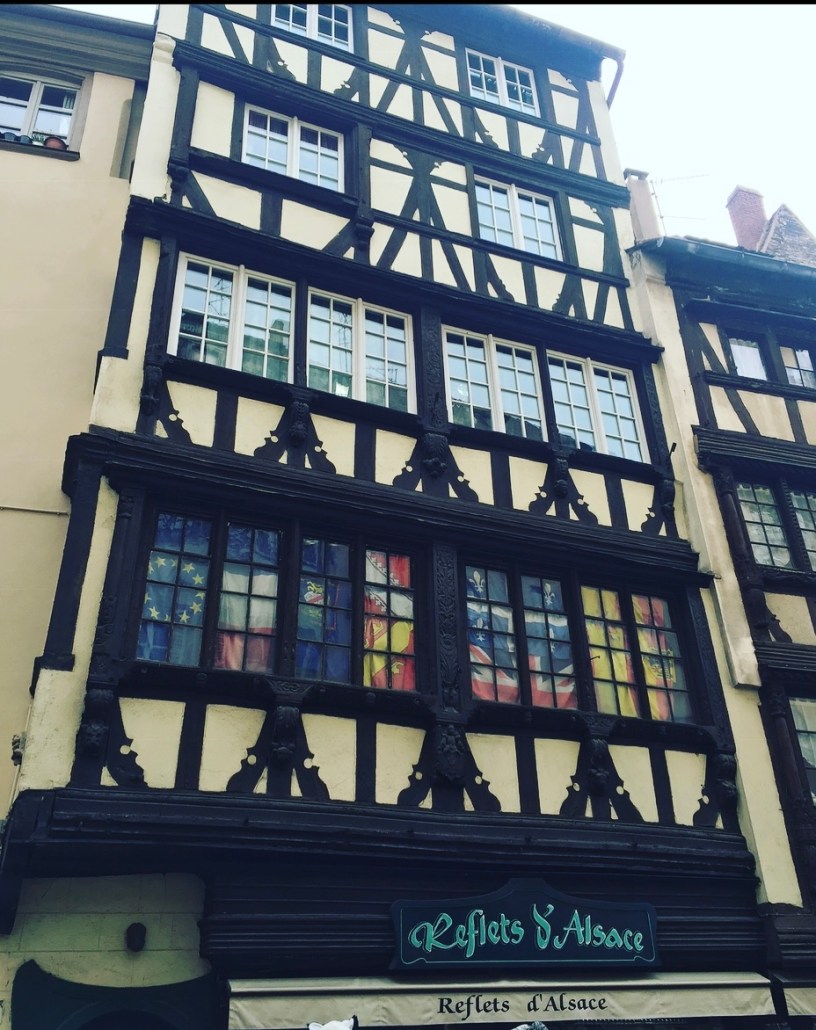
As I translate and study French Literature, I am always looking for connections to my experiences in France, specifically Paris, and the great French writers and philosophers of littérature from the 18th and 19th centuries such as Hugo, Balzac, Valery, Verne, and Voltaire. When I was living in Paris in the fall of 2012, I purchased Voltaire Lettres D’Alsace A Sa Nièce Madame Denis (1938), a compilation of 100 letters written by Voltaire to his niece Madame Denis while he lived in Strasbourg and Colmar around 1753.
The connection? My family history dates to this time in Alsace, France and here was a way for me to see and experience Alsace, France, through Voltaire’s lens. I must admit that I read this French edition on the flight back to the U.S. with anticipation as I turned each page hoping to find an encounter of Voltaire with someone from my family of Chapeau! No luck.
**If you are passionate about the works of Voltaire, this blog is not for you! This is more a “walking tour of Voltaire in Alsace” than the political history of his writings and influence. I am strictly referring to the diary from Lettres for locations of Voltaire’s activities, not any touring sites.

Lettres D’Alsace
“J’ay le malheur d’être un homme de lettres, un ouvrier en paroles, et puis c’est tout. Voylà ma vocation dans ce monde” (translation from Voltaire’s Middle French) “I am a man of letters, a worker of words, and that is all. This is my vocation in this world”…”before my death, I want to leave at least one edition less bad than the others.”
Previously, the only known letters from Voltaire to his niece were from his time in Berlin and Potsdam, the three years he spent at the court of the King of Prussia. The letters from Alsace were written after this time and contain Voltaire’s feelings on the day after the death of Madame du Châtelet. The Lettres D’Alsace were scattered throughout the world and 150 years later, were miraculously discovered, in original form, and combined into this remarkable journal of history.
Through these Lettres D’Alsace, we follow Voltaire, almost daily, for a year of his life: the passage between the stay in Prussia and the quarter of a century in Switzerland. Because these letters are written to a niece who is particularly dear to him and who has common misfortunes, Voltaire opens his heart with complete confidence.
Voltaire takes refuge in Strasbourg as he states “Il vaut mieux s’en arbiter hors de France qu’à la Bastille” (It is better to take shelter outside France than in the Bastille). Alsace was considered a part of the Germanic Empire at this time and has only been entirely a part of France since WWII. This is where my interest lies in Lettres D’Alsace, the walking tours of Voltaire in Strasbourg!
Voltaire in Strasbourg
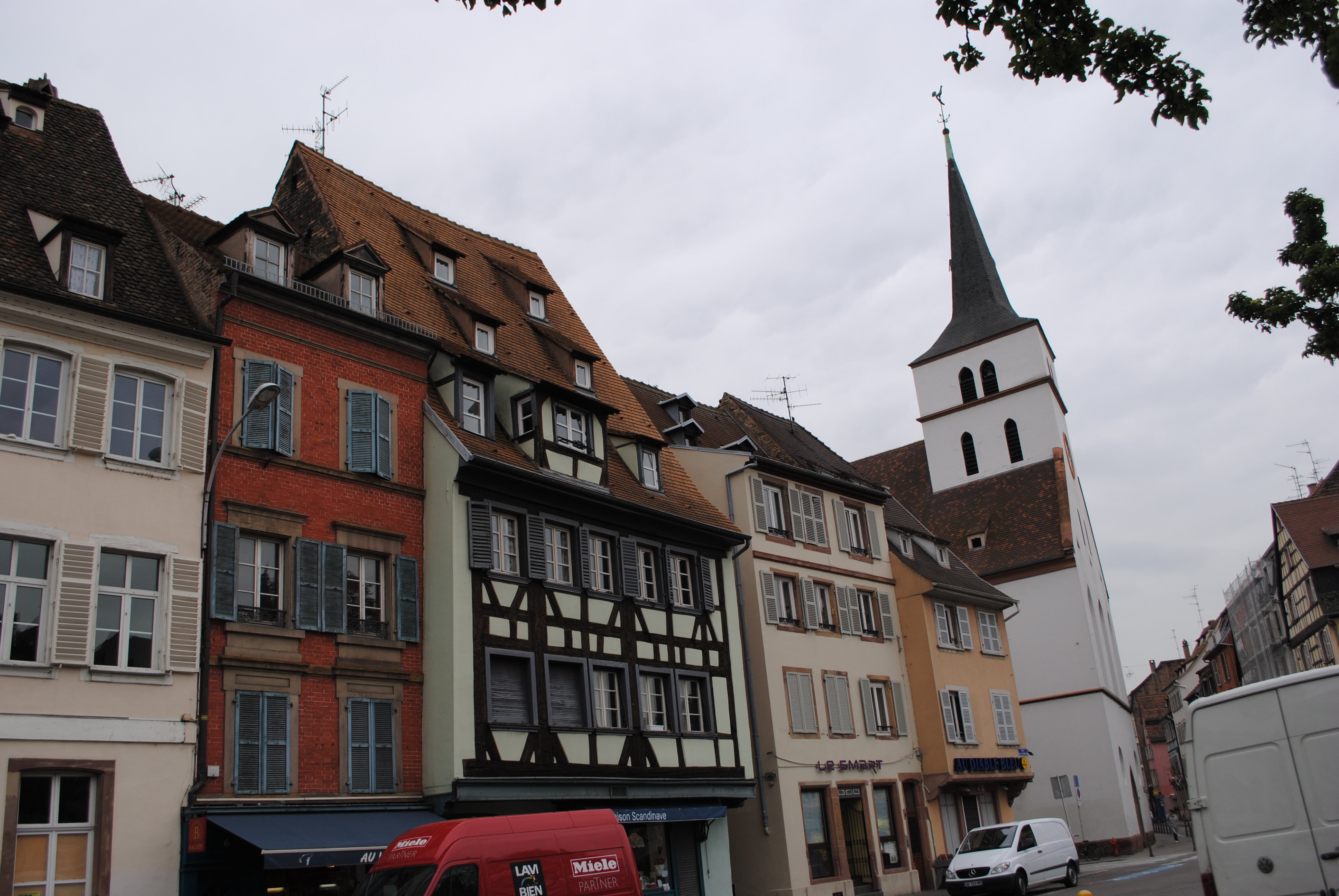
Before arriving in Strasbourg, Voltaire had lived “in palaces, prisons, and cabarets…I quietly worked five hours a day on the same work”(Lettres 14). He stayed at the Brasserie L’ours Blanc (still in existence, The White Bear Inn, 52 rue Jue des Enfants) and also a small cottage on the outskirts of Strasbourg for six weeks. He would then take refuge in the home of Professor Schoepflin and his Doctor, Gervasi. Towards the end of his stay, Voltaire stayed with Madame de Brumath in a castle on the island at the Chateâu of Lutzelbourg (worth the visit!)
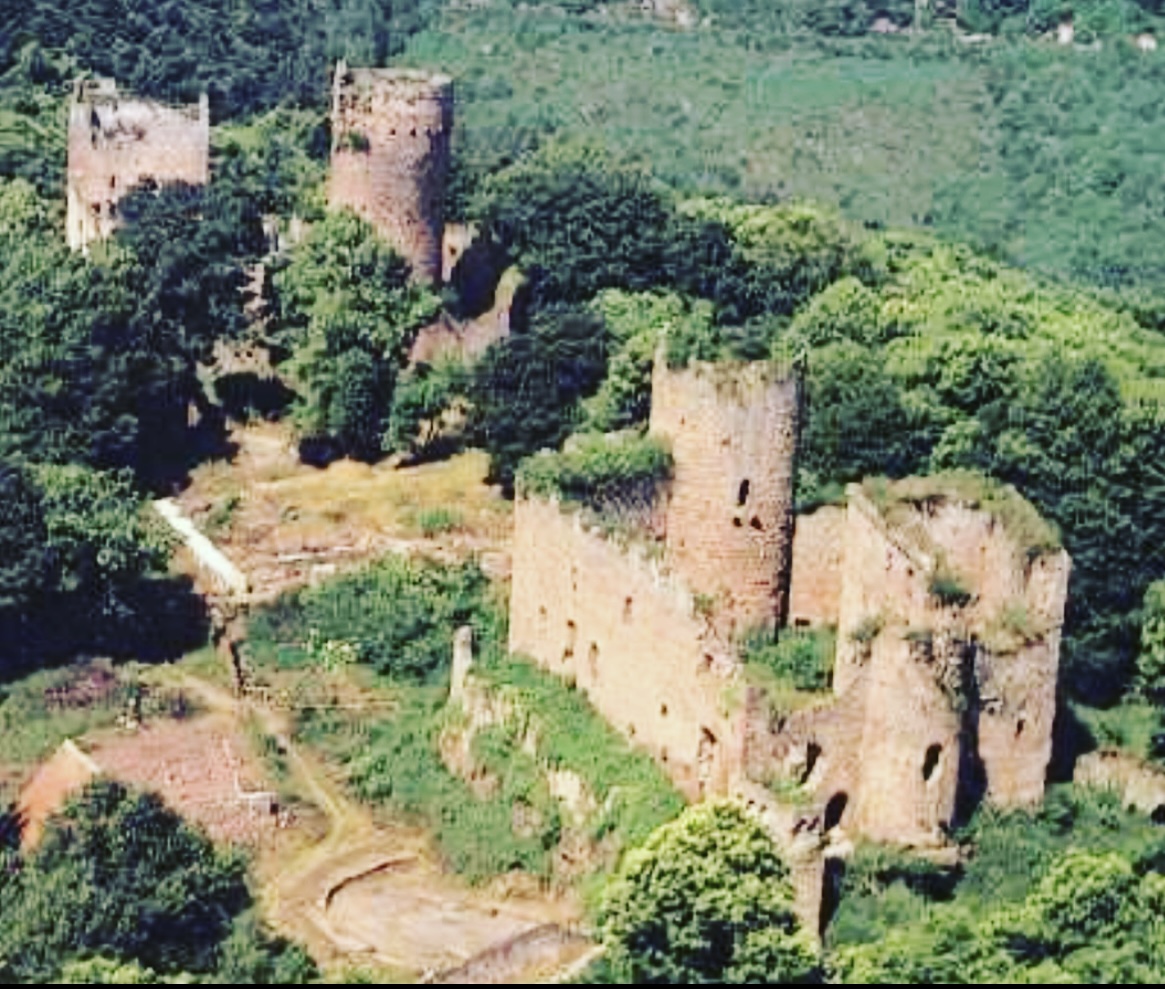
The hope of Voltaire returning to Paris diminished every day. He continued to be refused at the French court, therefore, he stayed in Alsace to write his Annales de l’Empire and publish them in Colmar (15). He stayed over a year in Colmar (next on my list to visit- the village of Colmar was the inspiration for Belle’s “little town, it’s a quiet village” in Disney’s Beauty and the Beast). In Colmar, Voltaire stayed at the Auberge du Sauvage on the rue des Jews. He also stayed at the Château Horbourg and Château d’Oberkergheim the M. de Klinglin, the premier president au Conseil, Sovereign of Alsace. Voltaire states “les fruits sont excellents dans canton de l’Alsace: le vin y est très bon”(16).
Voltaire’s began to decline at this point and his good friend who taught at the university of Strasbourg, Monsieur Sheffling, recommended that Voltaire go to Fontainebleau where he mended his poor health. Voltaire said of Sheffling that he was“le Meilleur professeur d’histoire (best history professor)(110).”
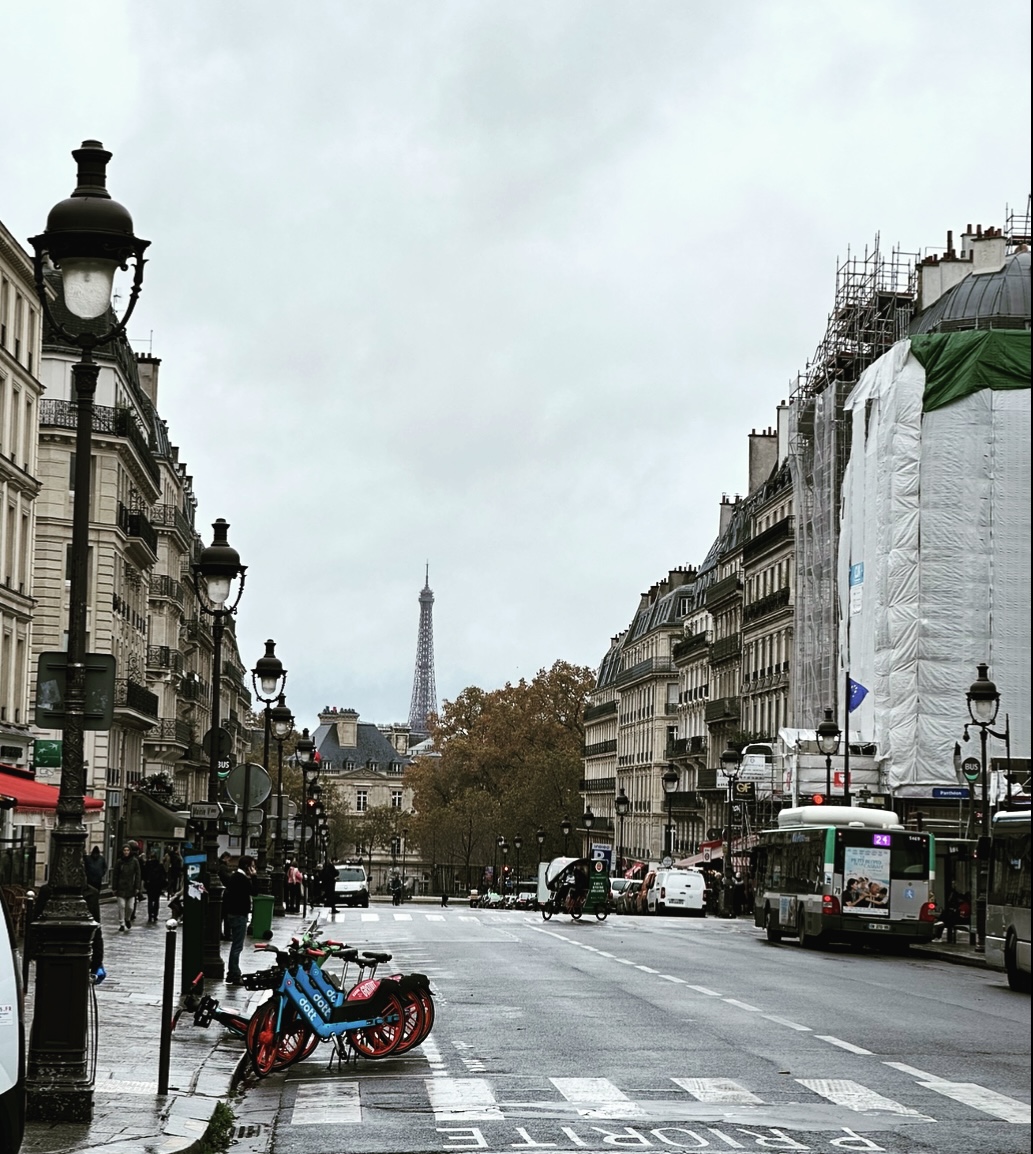
Voltaire would soon recover and sent his Histoire d’Allemagne to Paris, by way of his niece, to be published at chez Hérissant, on the corner of rue Saint-Jacques and rue la Parcheminerie. [This printing shop in Paris is no longer in service-it is now a cute little Papeterie (stationary shop) where I buy graphed sketching notebooks for my son-in-law when I visit Paris-see photo below, on right, below construction.]
Voltaire trusted Hérissant not only to protect and produce his valuable writings but also to have utmost discretion of the incendiary content. What a critical business of this time: to be custodian of important, handwritten documents that, if lost, could not be replaced. Essays this will change the course and purposes of the future. How fun to imagine Voltaire and his contemporaries walking through these same neighborhoods with their important essays ready for publication! Alas, my purposes are not quite as auspicious.
In December of 1753, Voltaire completed and sent his Annales de L’Empire to l’Académie française, des Belles-Lettres. It was edited by Monsieur Vernet, professor d’histoire in Geneva. Unfortunately, Voltaire did not feel that he paid close attention in editing and found false dates and misunderstandings concerning the Benedictines and the Pope. I feel that if Mr Vernet had known his mistakes would be published for posterity, he might have declined to edit Voltaire’s work, oh my!
Voltaire soon began to circulate in Paris copies of the “L’Abrége de l’Histoire Universelle, under his nom de plume, Voltaire. Voltaire’s work was drawn from his Essai sur les Moeurs, (essays on morals) as well as some elements from his Annales de l’Empire.
Work Cited
Voltaire: Lettres D’Alsace A Sa Niece Madame Denis. (1938). Paris: Librarie Gallimard
 My French Quest