I am taking a break from Greek Literature this week and going back to my first passion- My Frenchquest! My love affair with all things French began when I saw my first Renoir at the Art Institute in Chicago in 1997 titled Two Sisters on the Terrace. [Thank you Richard Bretell for obtaining and curating this piece for the AIC].
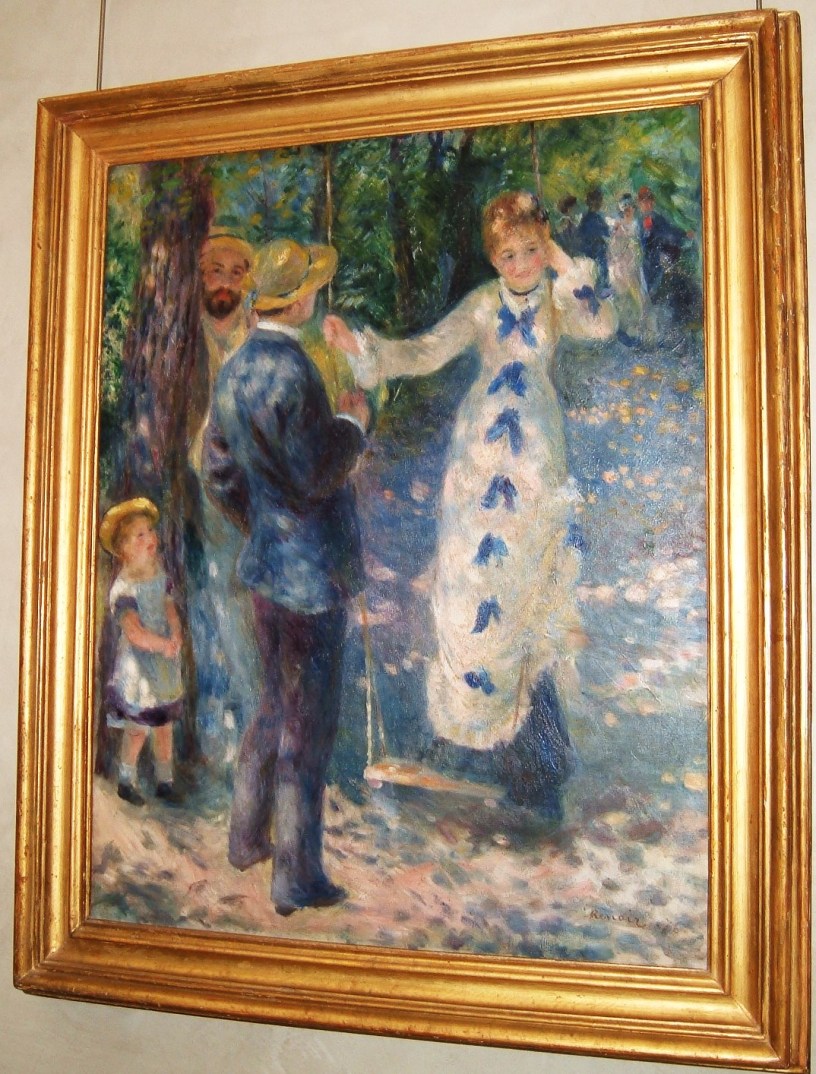
I wanted to focus today on my second favorite painting by Pierre-Auguste Renoir, La Balançoire, (1876) part of the permanent collection of the Musée D’Orsay in Paris. Renoir brought much healing through his art to France after the Franco-Prussian war of 1870, the Commune, and losing so many of its citizens in WWI. A framed print of this painting has also been a part of our living room since 1998.
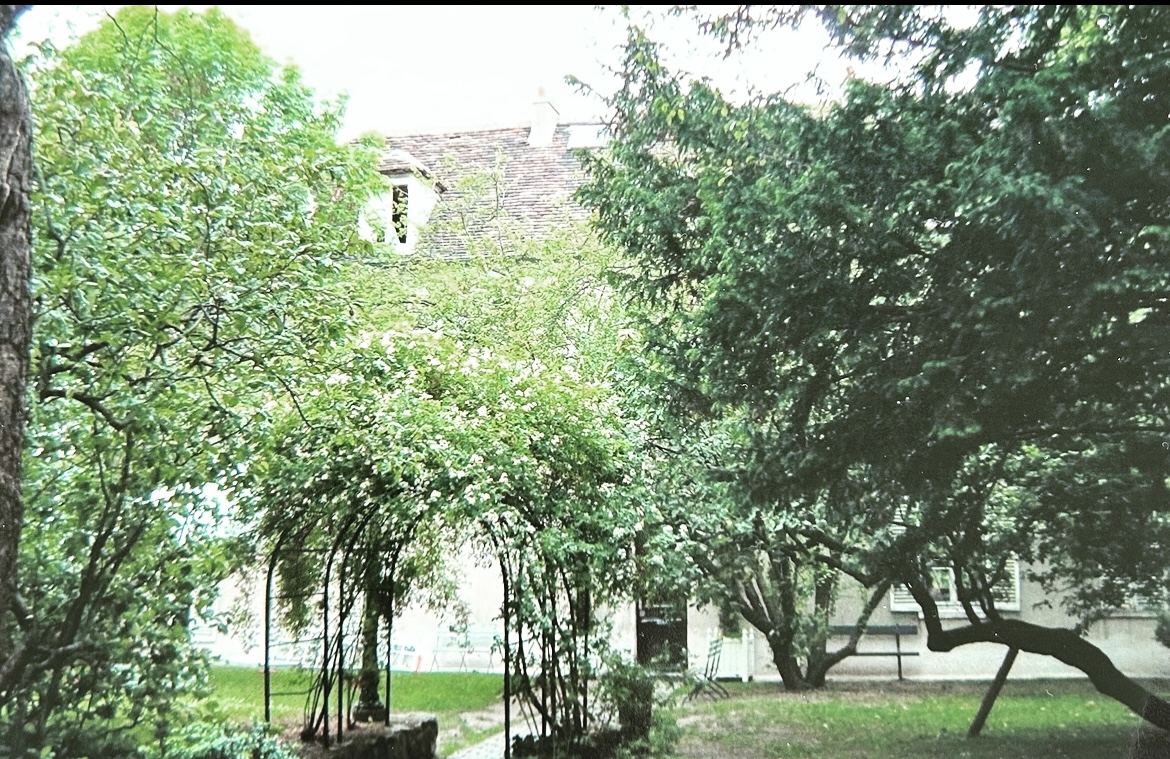
The Impressionist took painting out of dark studios and stark subjects into the beauty of nature. Being a part of nature is very calming and a great respite from the doldrums of everyday life. Many of Renoir’s paintings are en plein air (everyday life) in Paris. He painted La Balançoire or The Swing, from the courtyard in his backyard, which is now The Musée du Montmartre. [On my first trip to Paris after viewing La Balançoire in 2008, I went straight to this courtyard at the Musée du Montmarte where Renoir lived and painted the swing. As you would imagine, there was no swing. At least tree was still standing in this beautiful, serene courtyard. It is worth the trip!]
Renoir’s brother Edmond, Robert Goeneutte, and Jeanne, were the models for this painting as well as in The Ball at the Moulin de la Galette, which Renoir exhibited at the 3rd Impressionist Exhibition in 1877 .
In The Swing, Renoir shows the transience of sensation which led the Impressionists to play with fabrics and patterns and to invent new poses which had been displayed in the new-found art of photography. One critic said that he could even see the “taches de graisse sur les habits des homes” (touches of grease on the men’s clothes) in this painting (Conniasance des Arts, 42). I love how Renoir plays with the sunlight coming through the trees, casting shadows on the characters and the ground underneath. The blue ribbons on the young woman’s dress seems to highlight les papillons (butterflies) flitting about white puffy clouds. The little girl is waiting in anticipation for her turn on the swing. I imagine that she will have to wait for a while!
The Impressionists also wanted to highlight the fashion of the day in everyday life in France through their paintings. Renoir used the magic of shadows and light to display this modernity in his paintings. I had the great fortune to see the dress which Renoir depicted in this painting at the Musée d’Orsay’s exhibition, “L’Impressionnisme et la Mode”, along with many other vetements of modernity that were displayed. From 1860-1870, la mode had become accessible to the public for the first time. Beautiful dresses were not just for the bourgeoisie, the rich and royal, but now were affordable to the working class as well.
As always, viewing this painting brings much light and joy to my soul! Thank you, Renoir!
 My French Quest
I’ll never forget the day we traveled the streets of Paris looking for this swing! We did not find it as it was, but the search was worth it. The whole experience made an “impression on me,” which probably was the point of the painting all along.
What a magical day! Yes, I will never forget standing in the yard where Renoir lived and painted. So thankful you were with me on that quest.