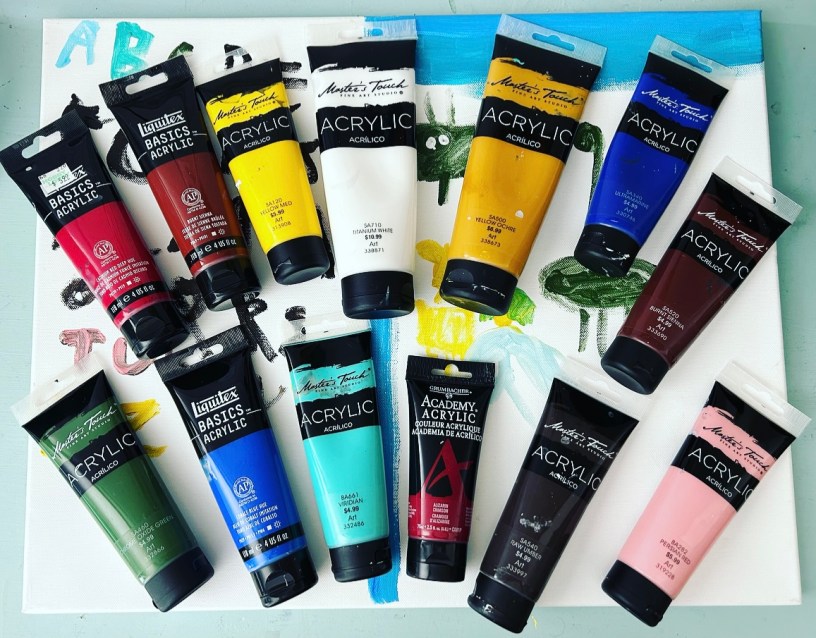
The next Author on my list from Thomas More’s personal library in Utopia is Pliny Natural History Volume IX, Books XXXIII, XXXIV, and XXXV. This is a dual translation of Latin/English. Although I have recently seen Pliny referenced in the historical accounts by Herodotus, this was my first time reading Pliny’s Encyclopedia of knowledge, which contains:
- Astronomy and Meteorology [Vol 2]; Geography and Ethnography [Vols 3-6]; Anthropology and Physiology [Vol 7]; Zoology [Vols 8-11]; Botany [Vols 12-27]; Pharmacology, magic, water, and aquatic life [Vols 28-32]; Mineralogy [Vols 33-37](this is the edition I read).
The Natural History is the most extensive single compilation of work from ancient writers to have survived from the Roman Empire. Pliny published the first ten volumes in AD 77 but was still revising the final version after the eruption of Mt. Vesuvius. Pliny had such a love of nature that he had gone to investigate the strange cloud rising from the mountain, which was “shaped like an umbrella pine”. This, unfortunately led to his death from the volcanic fumes. The final works were published posthumously by Pliny’s nephew, Pliny the Younger.
“My subject is the world of nature … or in other words, life.”
As Art is one of my greatest passions, I enjoyed reading the section in Book XXXV on the origin of Art and colours. I was not expecting this little treasure! According to Pliny, the Egyptians declare that they invented Art six thousand years before the Greeks took claim. The theory began with tracing an outline round a man’s shadow and painting it in a single colour and called this monochrome, a method still used today (271).
Line drawing was invented by the Egyptian Philocles and the Corinthians were the first to use pigments from powdered earthenware to fill in the interior of the drawings. Foreign paintings became fashionable in Rome after King Attalus bought a painting of Dionysus and placed it in the Forum. Caesar also gave importance to paintings by dedicating the works of Ajax and Medea in front of Venus Genetrix.
A nice anecdote can be found in XXXII. Emperor Nero had ordered his portrait to be painted in the Gardens of Maius, on a colossal scale, on linen 120 ft high, a thing “unknown hitherto”. When the portrait was finished, it was struck by lightning and destroyed by fire. Soon after, portraitures of gladiators became the highest interest among artists.
The section on the origin of colours fascinated me as I use some of these acrylic colors today in my painting. Art differentiated itself by adding light and shade, the contrast of colours; some are sombre, some are brilliant such as cinnabar, Armenium, gold-solder, indigo, and bright purple. Many natural colours from this time are sinopis, ruddle, Paraetonium, Melinum, Eretrian earth and orpiment. The artificial colours are: yellow ochre, burnt lead acetate, realgar, sandyx, Syrian colour, and black (283).
More details on the natural colours which were also used for medicinal purposes:
- Sinopis: a brown-red ochre from Sinope, was produced in Egypt and Africa and was also used as a liniment around the eyes and for kidney troubles, and as a remedy for poisons and snake bites.
- Burnt ceruse: a yellow-ochre used to paint ships and for representing shadows in painting
- Melinum: a white colour from the island of Melos, which is used as a depilatory effect by drying the tongue on contact. Good for plasters. Another white, which comes from cretaceous earth is used for polishing silver.
- Eretrian: used as a desiccative for headaches and internal “suppurations”
- Vermillion: a mixture of red ochre and ceruse; Virgil held that this came from sandyx, which is a plant which “shall clothe the pasturing lambs”(291).
- Black pigment comes from two sources in the Earth—from the brine in salt pits and the charred remains from graves. It can be produced by burning resin or pitch. Athenian painters derived it from the skin of grapes and burning ivory.
- Purple: Royalty! The most highly praised purple comes from Tyre or Gaetulia in which hysginum is mixed with pigeon droppings or the scum of reeds (295).
- Armenia: a dark blue which gives nourishment to the hair, named after Armenian.
- Appian: a green that counterfeits malachite. Made from a green earth and gives brilliance to the complexions of women in paintings.
Following the deep-dive into colours used by artists of that time, Pliny gives a comprehensive list of those who contributed much to painting. I have highlighted a few here:
- Parrhasius of Ephesus was the first to give proportions to painting and vivacity to the expressions (he references the Art of Painting by Antigonus and Xenocrates)
- Timanthes whose works are “more implied than depicted, whose execution is always surpassed by genius”(317). A very high compliment indeed!
- Apelles of Cos who surpassed all the painters that preceded and all who were to come after him. He published volumes on the principles of painting and could not find a painting that compared to the “glamour that his work possessed”. This is a quality noted by the Greeks as charis.
- Apelles, who was commissioned by Alexander the Great by edict to paint his portrait—no other artist had this privilege.
- Women artists: I like that Pliny included these in his list—Timarete who painted Artemis at Ephesus; Irene, and Aristaret.
As I finished reading Pliny’s Natural History Book XIV, I was saddened to think that he would perish soon after this from the eruption of Mt. Vesuvius at age 56. Even though this was considered “old” in the First Century, he still had much more to contribute to the world. Thank you Thomas More for introducing me to Pliny!
Work Cited
H. Rackham. Pliny Natural History. Harvard University Press: London William Heinemann Ltd, 1952.
 My French Quest