Personal Recollections of Joan of Arc, by the Sieur Louis de Conte
“I like Joan of Arc best of all my books; and it is the best; I know it perfectly well. And besides, it furnished me seven times the pleasure afforded me by any of the others; twelve years of preparation, and two years of writing. The others needed no preparation and got none.” –Mark Twain
One of my favorite books from my Summer Reading 2024 is Mark Twain’s Joan of Arc. Twain writes this version of Joan from the point of view of her page, Sieur Louis de Contes (Twain uses his initials here SLC, Samuel Langhorne Clemens). Many events in the novel are fictionalized; however, the main events in the life of Joan are rendered faithfully. Many actual details about the life of Joan of Arc are uniquely established and known, having been recorded under oath in court documents that are preserved in the National Archives of France
The first draw to this story is my love of Mark Twain’s The Innocents Abroad, his 1869 travelogue of the five-month “Great Pleasure Excursion” on board Quaker City through Europe and the Holy Land.
Joan of Arc
Secondly, the story of Jehanne Darc (1412-1431), a patron saint of France, defender of the French nation, and was instrumental in aiding the coronation of Charles VII during the Hundred Years War. She is recognized as the “savior of France”. At thirteen years old, Joan was visited by the archangel Michael, Saint Margaret, and Saint Catherine who gave her charge to help Charles VII save France from English domination.
At seventeen, Joan was sent by Charles to bring hope and lead the charge to the demoralized French army in Orléans, Loire, and Reims. The French were victorious, and Charles was crowned as the King of France with Joan at his side.
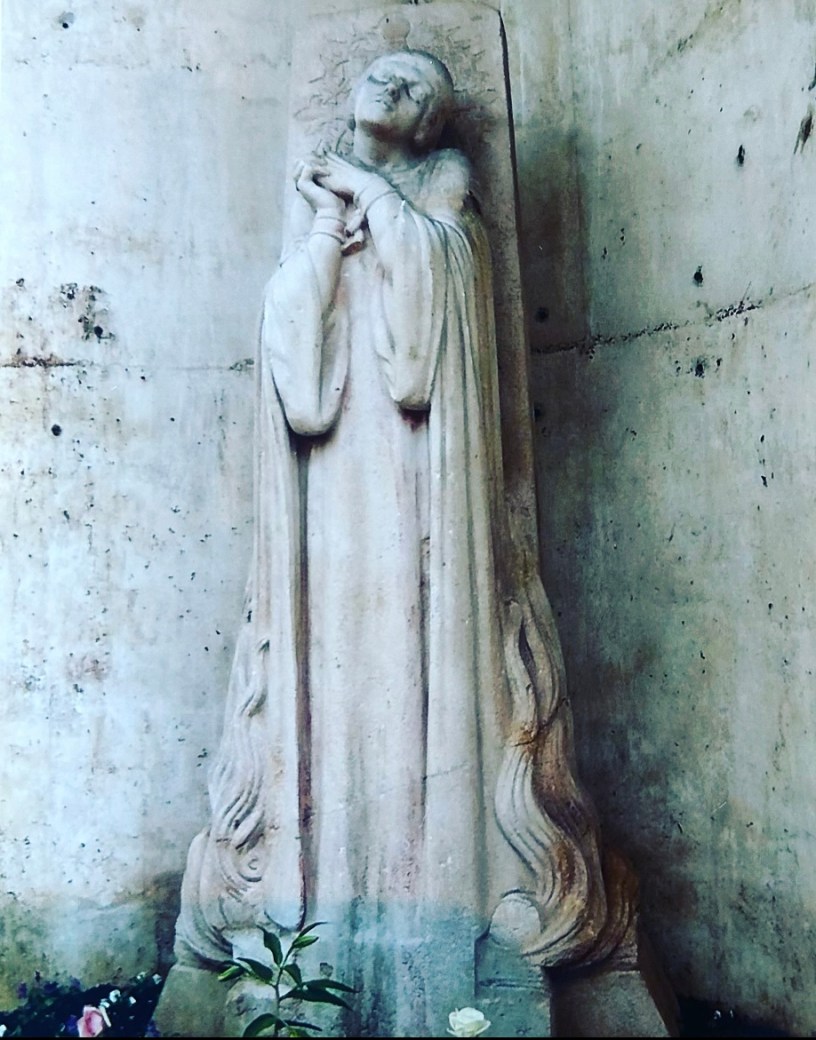
Unfortunately, the French were unsuccessful in the following battles and Joan was put on trial on accusations of heresy, blasphemy, and demon possession. The French had no trouble believing that God was inspiring and leading Joan when they were winning but when they began to fail in battle, they needed someone to blame. Jean was found guilty and burned at the stake on May 30, 1431 in Rouen, France. I have been to Rouen several times and have stood in the square where she was burned. It is chilling. There are several memorials to Joan including the dungeon where she was in prison, Donjon de Rouen, and St. Joan of Arc’s Church.
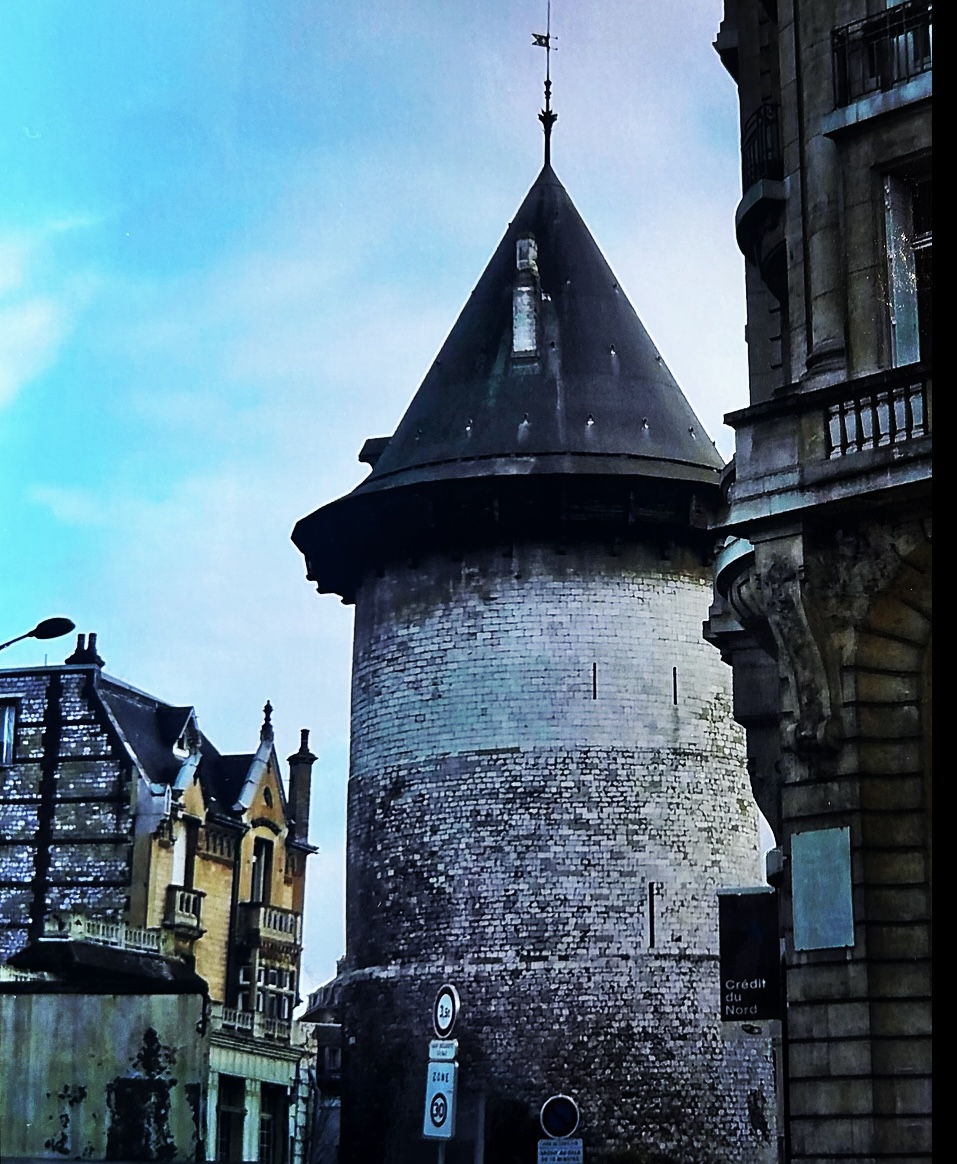

Her courage and her strong faith in God have been an inspiration to me for many years.
Twain’s Tribute
For the purposes of this blog, I will focus on Twain’s tribute to her life in Joan of Arc. Twain spent twelve years of preparation and many months in France doing archival work where he studied both sides of history, the French and the English, to provide an accurate biography of Joan’s life and mission.
Twain divides his historical novel into three sections:
- In Domrémy: Joan’s family and youth
- “In Court and Camp”: Joan as commander of the army of Charles VII
- “Trial and Martyrdom”: Joan’s defense at the trial in Rouen
One reason this book is so compelling is that Twain masterfully gives account of Joan’s childhood through the eyes of her siblings and friends. Twain assigns the first-person narrator of Joan’s story to Sieur de Conte, an actual person who knew Joan but in Twain’s narrative is her childhood friend.
“In Domrémy”
Joan’s childhood was realized in Domrémy, a small village in the Vosges, the Grand Est (east) of France between Paris and Strasbourg. [It was renamed Domrémy-la-Pucelle after Joan’s nickname “ la Pucelle d’Orléans”]. Think of Belle’s “little town, it’s a quiet village, everyday like the one before… a provincial town” in Beauty and the Beast. I think of Joan’s experiences as a fun-loving, adventurous, jeune fille, when I walk the streets of Strasbourg, with the half-timbered houses and canals!

It is easy to love Joan from the first description “”the character of Joan of Arc … occupies the loftiest possible to human attainment”. We first see Joan with her friends and “fairies”, gathering around their favorite L’arbre Fée de Fourlemeont singing:
“Now what has kept your leaves so green,
Arbre Fée de Bourlement?
The children’s tears! They brought each grief,
And you did comfort them and cheer
Their bruised hearts, and steal a tear That healed rose a leaf”.
Even with a child’s innocence, Sieur de Conte recounts seeing Joan converse often with a divine entity. He soon learns that she “has been chosen by God to win back France and set the crown upon the head of His servant that is Dauphin and shall be King” (81). Joan declares that she has been sent by “My Lord, the King of Heaven”.
De Counte recounts Joan’s vision:
The day was overcast, and all that grassy space wherein the Tree stood lay in a soft rich shadow. Joan sat on the roots of the Tree, her hands folded loosely, bent head as one who “is lost in thought, steeped in dreams, and not conscious of herself or the world“(73).
“And now I saw a most strange thing, for I saw a white shadow come slowly gliding toward the tree”, recalls de Counte. This shadow was a robed form with wings and the whiteness of lightning. “My breath grew faint and difficult, because of the terror and awe that possessed me”(73). Joan did not have this reaction. She rose and stood with her head bowed a little and was “drenched in this wonderful light”.
Joan implored of the angel “But I am so young! Oh, so young to leave my mother and my home and go out into the strange world to undertake a thing so great!”(74). She soon was overcome with sobs.
“In Court and Camp”
In the second section, “In Court and Camp” Twain recounts the battles in detail and continues to show Joan’s bravery, strength (physical and mental), and compassion. She is fearless. She is on a mission, literally, and has given her life for this mission. Others doubt, most of France doubts, but much of her army remains faithful, even to their death. It is so hard to read these battles and think of young Joan being injured, threatened, imprisoned, judged, accused of blasphemy, and put on trial. In reading fiction, even historical fiction, I can take comfort that “this didn’t really happen; this is an inspiring story from the imagination of an author”. When I read Twain’s story of Joan’s life, however, I am aware that this really happened. It is heart breaking.
“Trial and Martyrdom”
The final section, “ Trial and Martyrdom” is almost too much to bear. “Joan, the Church can no longer protect you. Go in peace. Joan, weeping, knelt and began to pray. For whom? Herself? Oh no-for the King of France”(432).
With a cross to her lips, Joan climbed up the cruel steps to the face of the stake and leapt up to the pile of wood. An executioner wound chains around her slender body. We see her execution through the eyes of De Counte , blurred with tears. “Tragic sounds there were that pierced my ears and wounded my heart…but it as I tell you: the latest image recorded by my eyes in that desolating hour was Joan of Arc with the grace of her comely youth still unmarred; and that image, untouched by time or decay, has remained with me all my days”(433). Twain is de Counte, three centuries removed, but somehow able to be present at this execution.
Fiction or Real Life?
How could this be? How could an angel appear to a young girl from a small town in France to lead an army and defend France? As incredulous as this sounds, I believe it happened. I believe that God sent his messengers to Joan in the early years of fifteenth century France just as He sent his messengers to Gideon to sanction him to be a warrior and lead the Israelites. (Judges 6-8).
According to Twain’s account, he believed as well. He spent twelve years in research and writing to make her story known to the world!
Work Cited
Mark Twain. Joan of Arc. 1896. Harper and Brothers
 My French Quest
I’m happy to hear that you enjoyed this book. A friend gave me a copy a few years ago and I’ve not yet found time to crack it. Part of my hesitation being my uncertainty about whether I’d like it.
I think you would really enjoy the French history, Carol, through Twain’s narrative style. The best part for me was the tender, compassionate side of Twain as he painted a beautiful expression of Joan’s soul. I fumbled in trying to explain this. It is hard to put into words. I was deeply moved by this book. Robyn
Interesting that you think Twain believed in Joan’s vision, Robyn, since he had such a jaded view of religion. Apparently Joan cut a swath through that skepticism.
Yes, Mitch, I can’t imagine Twain devoting 12 years to research and writing, including living in France (such a sacrifice!!!), if he didn’t believe in her vision. I did not detect cynicism, tongue-in-cheek approach, even in his recounting of her visions-based upon historical documents. I would love to know your thoughts if you have a chance, or have had a chance, to read “Joan of Arc”.