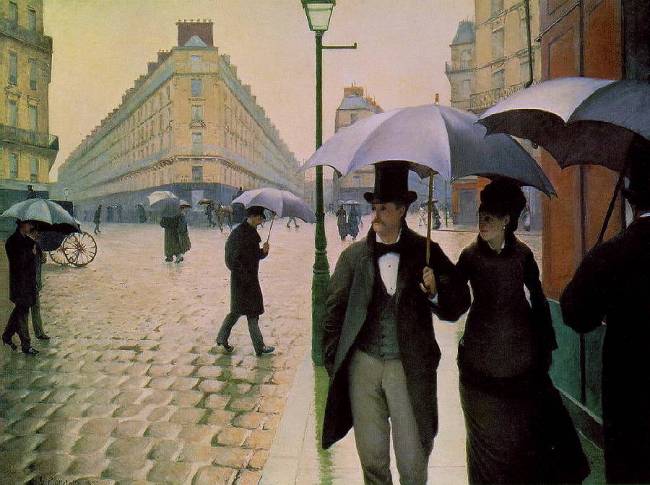
In 1884, when the Realist movement was prevalent in Paris, Guy de Maupassant wrote “The Necklace” “La Parure”. Like the Impressionists of Paris who were reacting against the depiction of Romanticism in painting, Maupassant wanted to describe everyday life in Paris through literature.
The Romantics valued imagination and human passions, innocence and simplicity. The Realists, on the other hand, valued knowledge and experience. What was it like to live in 19th century France while the city was being transformed through Baron Georges-Eugène Haussmann’s architecture –large, elegant buildings with stone facades and wrought iron details, majestic parks and boulevards, corner cafés, cobbled stone streets?
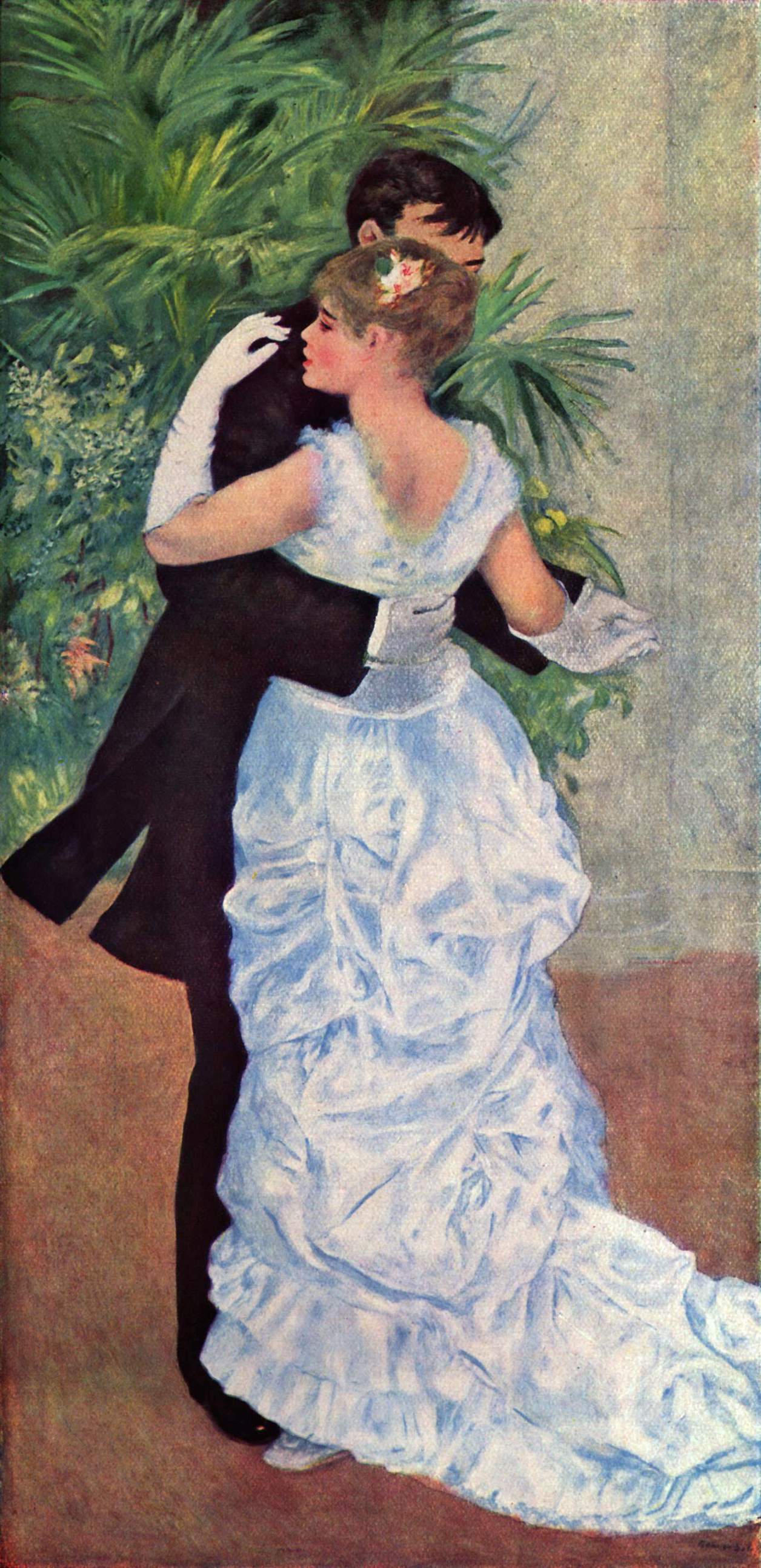
This quickly became the Paris that was the setting for the novels of Balzac, Hugo, Baudelaire, Maupassant and documented by many of the Impressionists such as Monet, Manet, Renoir, and Caillebotte (my favorites!).
Under the leadership and vision of Napoleon III, Haussmann modeled the rebuilding of Paris on his previous visits to progressive cities such as London and New York and on his predecessors Louis XIV (Versailles and great boulevards of the Right Bank), Henry IV (Place des Voges) and Louis XV (Place de la Concorde). Napoleon III was possibly influenced by Voltaire’s essay Des Embellishments de Paris where he describes Paris as “the center of the city dark, confined, frightful…the public markets established in narrow streets, parading squalor, spreading infection, and causing continual disorder” (Pinkney,32).
Pinkney states that perhaps Napoleon III was also influenced by his uncle Napoleon I who in 1798 said, “If I were master of France, I would want to make Paris not only the most beautiful city that had ever existed, but also the most beautiful city that could exist (33).”
[ Napoleon I followed this dream by building the Rue de Rivoli which spans across the entire city east to west, the Quais along the Seine, four bridges, and public works. See post]
One can still stroll as a flaneur, down these Haussmann boulevards of Paris today—they are certainly more pristine than they have ever been following the Summer 24 Olympics! However, not all Parisians enjoyed this bourgeois life. The middle and lower classes were still poor, working class just trying to survive. The Realists stepped behind the facade of the boulevards and gave us a peek into the lives of the commoner.
Guy de Maupassant was a master in recounting a single day, the “impression of truth”(114). We see this in “The Necklace”, published in 1884 . It is the story of Mathilde, a young woman who pines for a life she cannot have – and the evening that marks a turning point in her life.
Mathilde, while being a member of the lower commercial class, has attitudes that are more appropriate to the upper or leisure class. Because of her daily frustration of not being part of the bourgeoise life, she constantly nags her husband to give her money to live out her dream, if only for a moment. The husband finally gives in to her wants (he gives her the money he had been saving to buy a hunting rifle!) and for one enchanted evening, she is the belle of the ball. In her newly purchased gown, an exquisite “Necklace” which she borrowed from a friend, all her fantasies come true. For one night. Only one night.
Works Cited
Guy de Maupassant. “La Parure”. Le Livre de Poche, Paris. 1935
David Pinkney. Napoleon III and the Rebuilding of Paris. Princeton University Press. 1958
 My French Quest