
“I crave thy forbearance for having thought that even the busiest mind might not be a stranger to those moments of repose, when the clock of time clicks drowsily behind the door, and trifles become the amusement of the wise and great“–Longfellow of his travels in France
In the “leafy month of June” [unlike the “lusty month of May”, Camelot-I couldn’t resist] , Longfellow travelled through the beautiful province of Normandy. France was the first foreign soil that Longfellow had ever set foot on:
“Everything wore an air of freshness and novelty, which pleased my eye, and kept my fancy constantly busy. Life was like a dream. It was a luxury to breathe again free air and like a long-imprisoned bird let loose from its cage, my imagination reveled in the freshness and sunshine of the morning landscape.” (Outre-Mer, 10).
Longfellow’s first stop in France was in the Norman city of Rouen. Having visited Rouen myself on several occasions, I was transported back to one of my favorite cities through his eyes.
“In Rouen, there was an air of antiquity about the whole city that breathed of the Middle Ages; and so strong and delightful was the impression that it made upon my youthful imagination, that nothing which I afterward saw could either equal or efface it” (9).

Longfellow’s visit to Rouen in the early nineteenth century was very similar to my first experience in 2012. He describes this once rural hamlet:
“ On every side, valley and hill were covered with a carpet of soft velvet green, the birds were singing merrily in the trees, and the landscape wore that look of gayety so well described in the quaint language of an old romance”(10).
Today, Rouen still “has an air of antiquity that breathes of Middle Ages” in the old city center, however, as most suburbs of Paris, is surrounded by the sounds and smells of industry.
Rouen Cathedral
One of the best reasons to visit Rouen is to see the Cathedral that inspired Monet to paint a series of impressions in 1892. Perhaps Claude Monet read this Longfellow’s lovely description of the Rouen Cathedral:
“With these delightful feelings, I rambled on from street to street, till I unexpectedly came out in front of the magnificent cathedral. If it had suddenly risen from the earth, the effect could not have been more powerful and instantaneous. It completely overwhelmed my imagination…When I gazed on the stupendous architecture of the church, the huge columns that the eye followed up till they were lost in the gathering dusk of the arches above, the long and shadowy aisles, the statues of saints and martyrs that stood in every recess, the figures of armed knights upon the tombs, the uncertain light that stole through the painted windows of each little chapel—all I had read of, but had not seen, — I was transported back to the Dark Ages, and felt as I can never feel again”(22).
Monet and the Rouen Cathedral
Monet was always mindful of documenting French culture and architecture in his paintings. During this time in France, following the destruction and defeat of the Franco-Prussian war, there was a renewed interest in Catholicism and Gothic style architecture which was first adopted during the Middle Ages. Therefore, Monet possibly wanted to document this renewal of culture and architecture of the Rouen Cathedral in his tableaux.


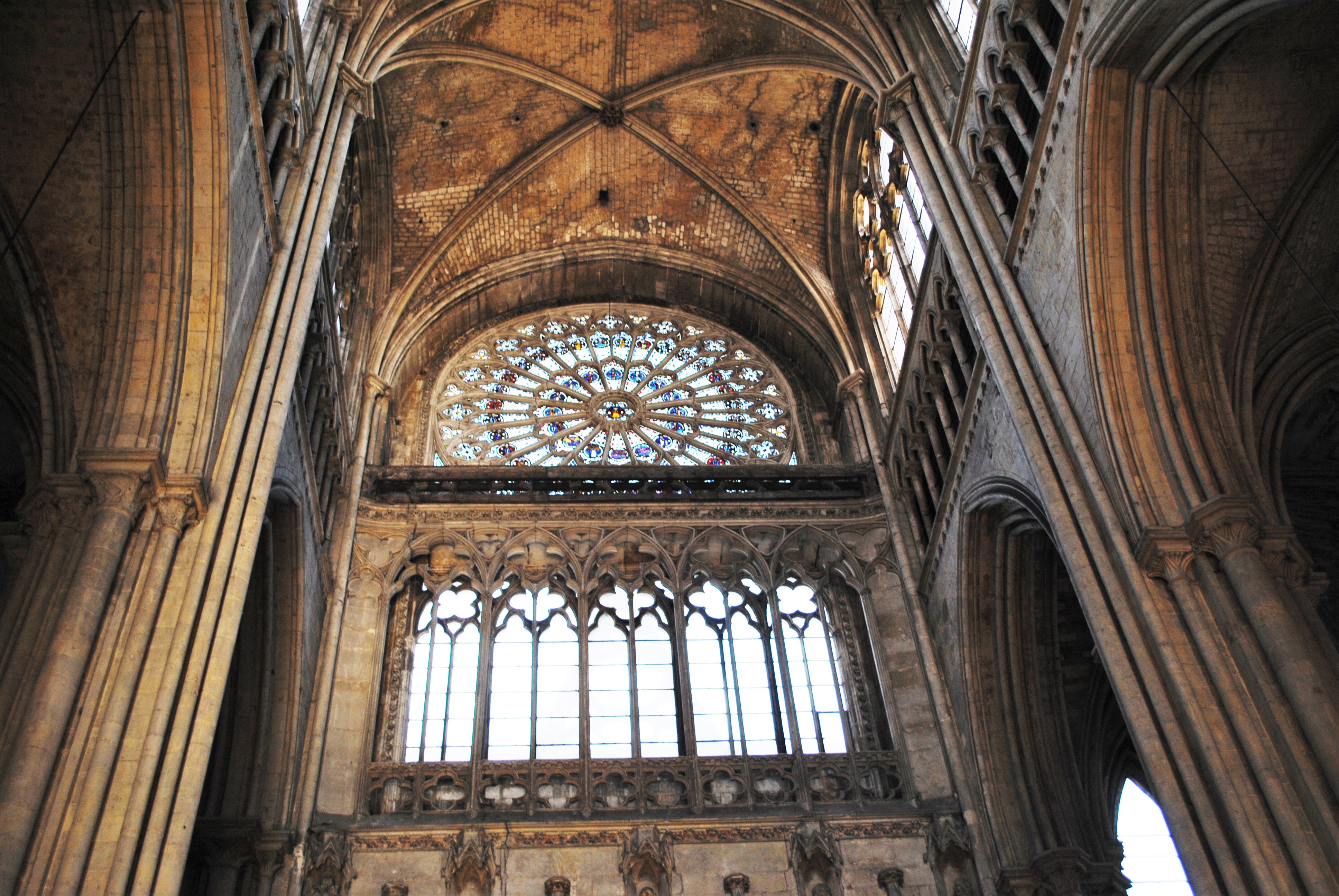
Unfortunately, the Rouen Cathedral that Monet and Longfellow experienced was almost destroyed in April, 1944, during an bombing of World War II. The Cathedral has since been restored to its original grandeur!
I have seen ten of Monet’s Rouen Cathedral paintings over the years in exhibitions as well as the following from permanent collections in:
1) Le portail et la tour Saint-Romain, plein soleil and 2)Soleil Matinal (d’Orsay); 3) Facade (sunset), harmonie in gold and blue,1892-1894 (Musée Marmottan, Paris); 4) Façade Sunlight and 5) Façade West, 1892 (National Gallery in D.C.); 6) The Portal in Morning Light, 1894, (Paul Getty Museum); 7) The Façade in Sunlight, 1894, (Clark Art Institute, Williamstown, MA); 8) Facade and the Tour d’Albane. Grey Weather, 1894, (Musée des Beaux Arts, Rouen) (thank you K !); and 9) Sunlight and Morning Effect, (MFA, Boston).

(The other Rouen Cathedral paintings by Monet are currently in Japan, Germany, Serbia, Switzerland so will have to see them in a future Monet exhibit!)
Saint Joan of Arc
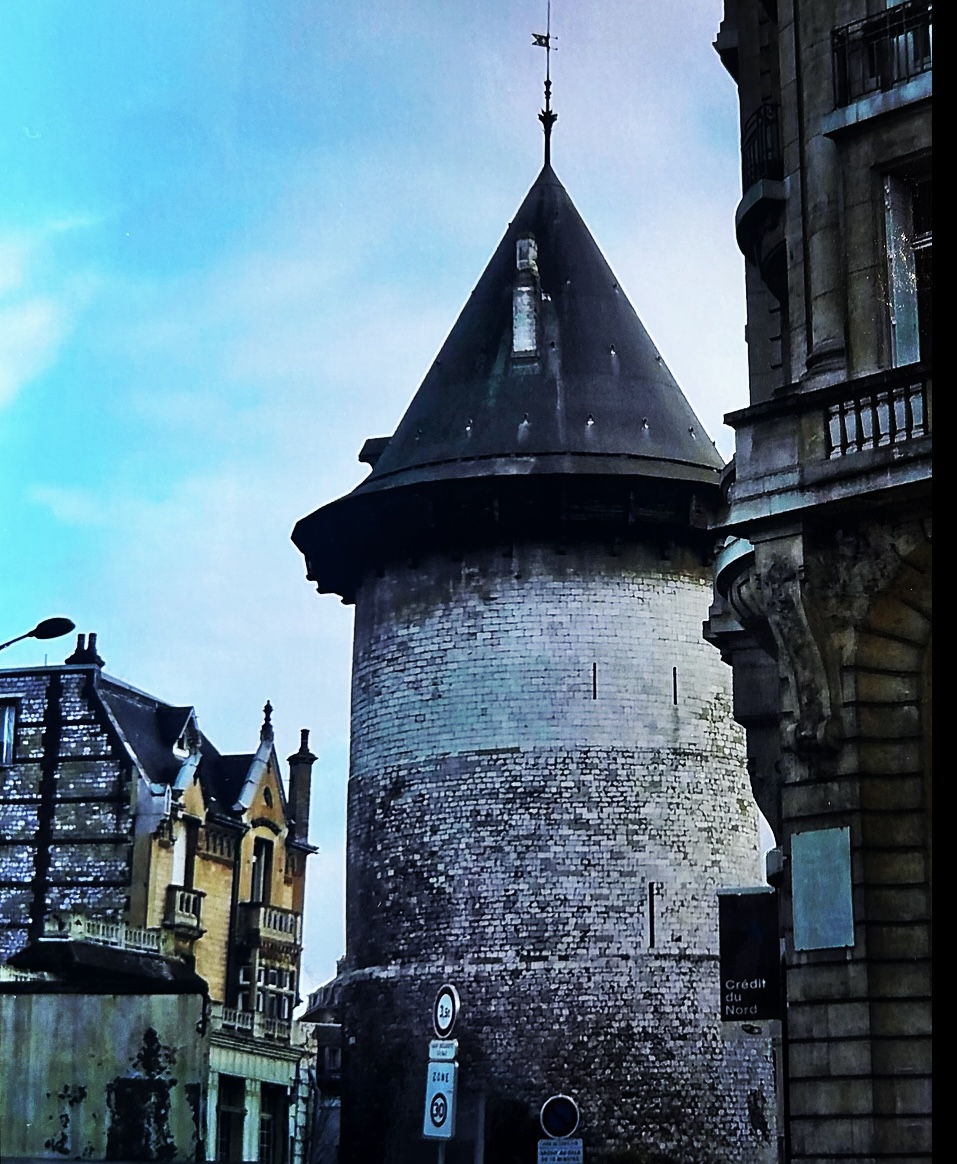
Longfellow does not mention the homage to Saint Joan of Arc (Jean d’arc) in his travelogue of Rouen, but it is one of the main attractions. Jean d’Arc was the young heroine who, after receiving a vision from the Archangel Michael, led an army to support Charles VII and recover France from English domination during the 100 Years war. Unfortunately, even after many victories, Joan was accused and put on trial for heresy. She was imprisoned in Rouen in the Donjon and burned at the stake (Place du Vieux Marché). There are several monuments to her life in the Joan of Arc Tower (the Donjon built by Philippe Auguste in 1204) and the Joan of Arc Church.

French Literature in Rouen
In addition, there are many reasons to visit Rouen. For the French Lit and Art community, Rouen was home to many: Gustave Flaubert (his birthplace is now a medical and dental museum so no Flaubert mementos), Guy du Maupassant, Roy Lichtenstein, Duchamp, and Victor Hugo, to name a few.
Field of Cloth and of God
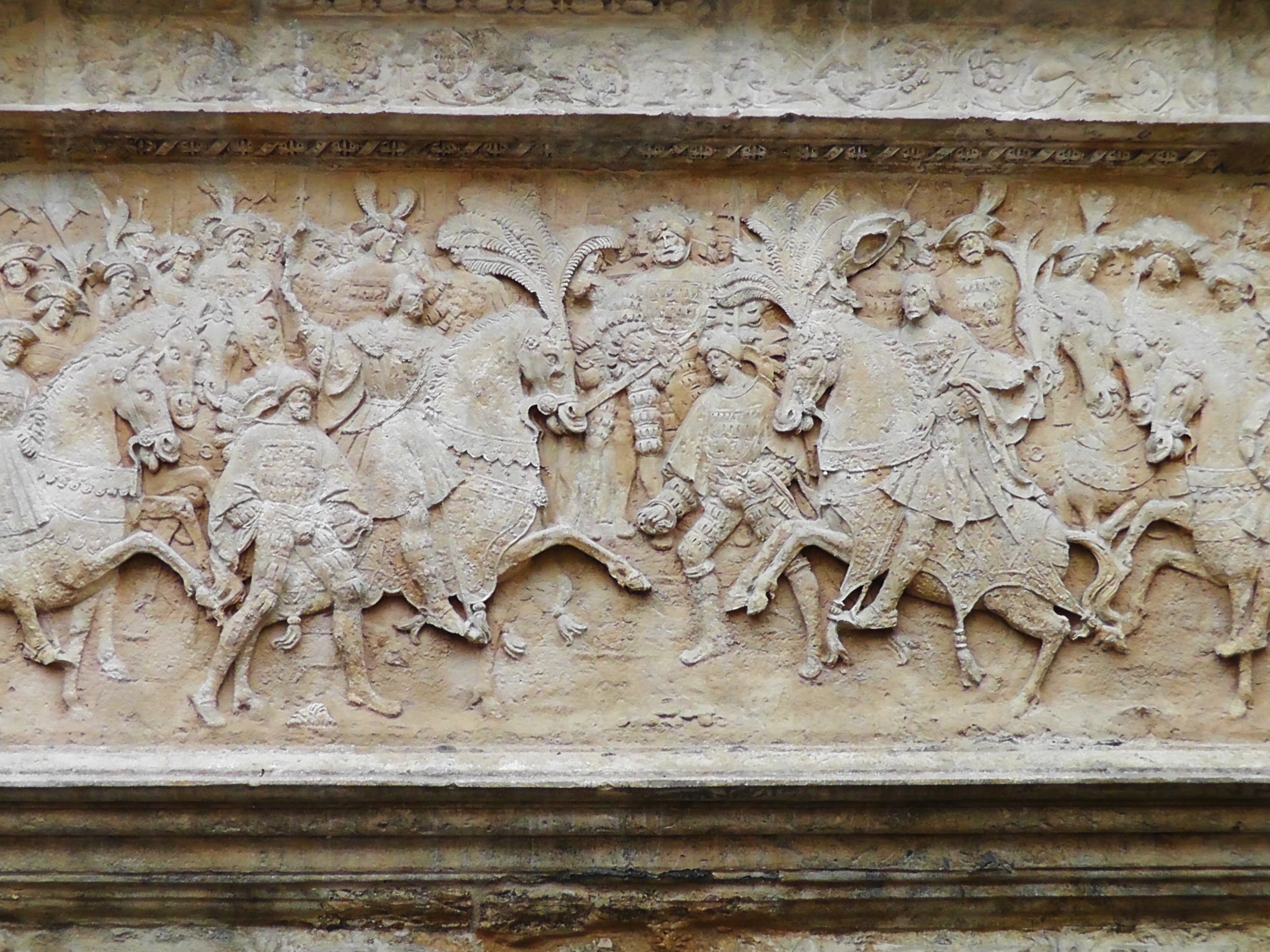
For the Western Civ community, the courtyard of the Hotel de Bourgtheroulde houses two sculptures: The Triumphs of Petrarch and the Field of Cloth of God, the diplomatic meeting of Kings Francois I of France and Henry VIII of England in 1515. This was a great serendipity for my daughter Lorin, who is a British History Professor (Mary Tudor scholar) and myself, a French professor and pedant of Francois I and the Renaissance.
The Great Clock
Near the old Marketplace is Renaissance archway and an old belfry which houses the Great Clock, which was in continuous operation from the 14th century until 1928; more than 5 million hours without stopping once. After the clock was fully restored in 2006, visitors now can go inside the clock tower and see the first bells of the city.

I love this quaint little French city. The fresh butter coloured, milky stones of the cathedrals, the Parliament building and cross-timbered town houses, and the Gothic and Renaissance architecture are all within walking distance from the train station (Gare de Rouen-Rive-Droite). Lovely little patisseries and boulangeries line these original, cobble-stoned streets. Rouen is the capital of Normandy and has a modern part of the city, as well, but I enjoy the historic part of town.
So much, so much! If you are vacationing in Paris, I highly recommend a visit to Rouen, a 2 ½ hour train ride and the old town centre is within walking distance. It gives one a sense of the old French culture and architecture of a Normandy countryside (think Belle in Beauty and the Beast) as well as history and cuisine. I have since returned several times to introduce my friends and family to this haven.
Works Cited
Eric S. Robertson. Life of Longfellow. London; Walter Scott 1887
Henry W. Longfellow. Outre-Mer: A Pilgrimage Beyond the Sea. Philadelphia: McKay Publisher. 1892.
 My French Quest