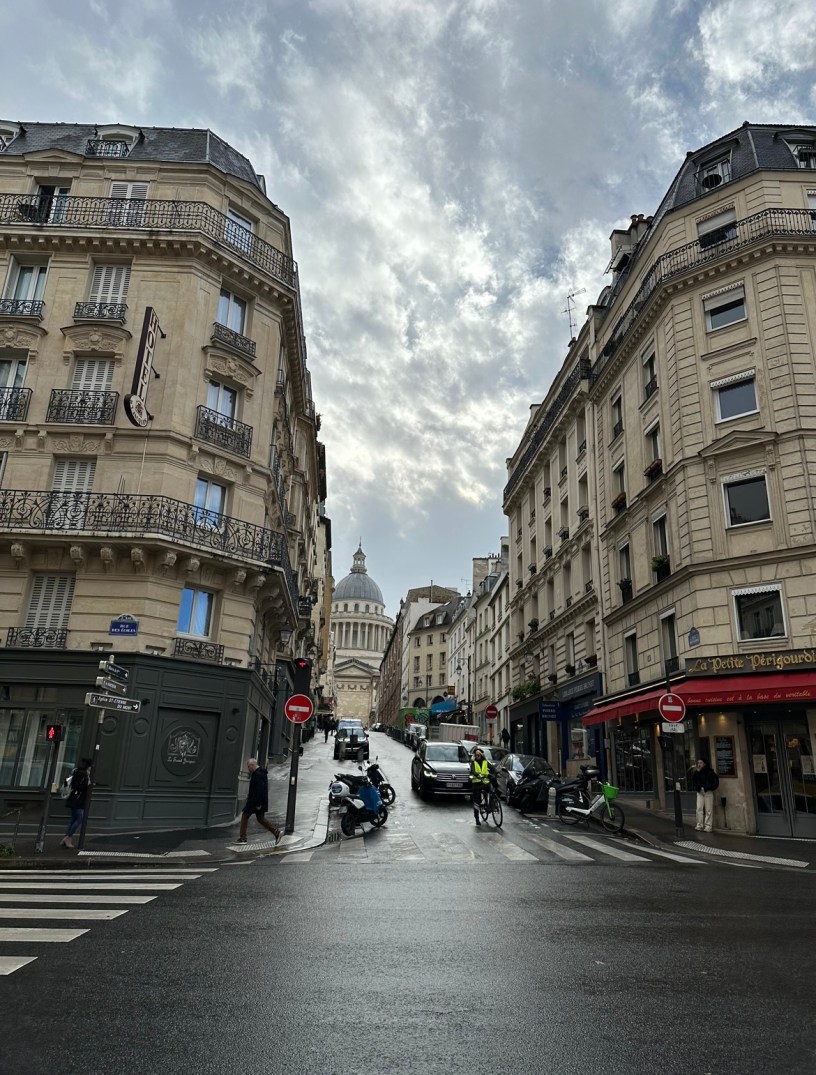
Is it fair to say that American Literature became popular and finally respected in Europe because of Ernest Hemingway? According to literary critic Roger Asselineau, this is the case, especially in France: “Nowadays ( in 1965), no history of contemporary French literature fails to mention Hemingway. His works have been discussed by Gide, Camus, and his influence can be felt in most novels written since World War II.”(“French Reactions”,39).
Hemingway, along with other expatriate writers of the “Lost Generation” such as F. Scott Fitzgerald and Gertrude Stein, helped solidify American literature’s reputation, especially in Paris, where many of them lived. There is almost no timelag between the appearance of Hemingway’s works first published in America and soon after in France. In “French Reactions to Hemingway’s Works between the Two World Wars”, Asselineau studies the overall impact of Hemingway during this inter-war period (39).
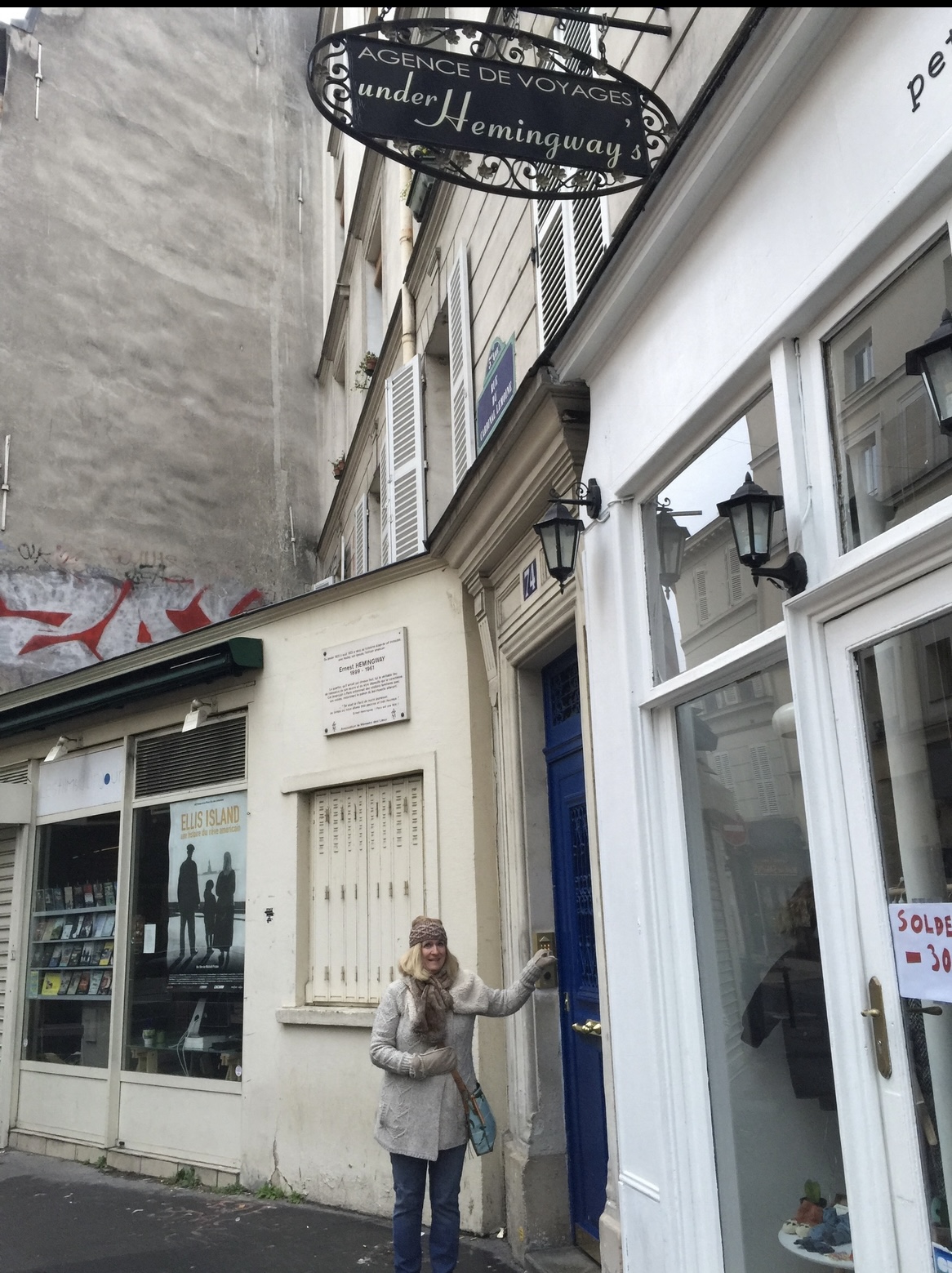
Hemingway in Paris
One of the best resources I’ve read which highlight this magical, important time (1921-1926) for Hemingway in Paris is in his biography A Moveable Feast [see my post]. In Feast, one can gain a deeper understanding of Hemingway’s life, both the pinnacle of his literary success and the profound despair following the dissolution of his marriage to Hadley. Some biographers suggest that this personal loss contributed to his later struggles with depression, ultimately culminating in his suicide.[ I am bringing my copy of A Moveable Feast on my trip to Paris next week as I revisit his influence and life in the Latin Quarter].

Asselineau examines the chronology of the French translations of Hemingway’s works during the inter-war period along with the reviews. Here are a few of these works with a little backstory:
- “L’Invincible”: published in Le Navire d’Argent in March 1926, it followed Walt Whitman’s Eighteenth Presidency (translated by Sylvia Beach of Shakespeare & Co!!). Beach and her co-editor Jean Catel had first discovered this story on a trip to Boston. Hemingway’s name was hardly known at this time, so this was a lucky break for him to appear in this edition.
- “The Sun Also Rises”(1927): this novel launched Hemingway on both sides of the Atlantic. He received a great review in Nouvelle Revue Française by critic Louis-Jean Finot, “Few novelists are successful short-story writers. And yet what pleasure a well-constructed and well-written tale gives to the reader…in short, it is an excellent book”(Sept. 15, 1928).
- “Men Without Women”(1928): published in English without a French translation, reviewer Bernard Fay claimed that this story gave Hemingway “first place among writers of his generation”(42). This story also received a strong review from Régis Michaud in Roman américain d’aujourdhui.
- “Les collines sont comme des éléphants blancs”(1929) (“Hills like white elephants”).
- A Farewell to Arms (1929): At this point, Hemingway had three books in print in France and they were reviewed by Philippe Soupault, the novelist and surrealist. Once he published A Farewell to Arms, it was immediately translated and published in the French magazine, Les Cahiers du Sud to great reviews. Asselineau reminds us that “After World War I, the people of France wanted to read, to be diverted, to forget the horrors through which they had been, to recollect in tranquility the emotions they had experienced” (51). There was both an infinite craving for diversion and escape, and a passionate desire to understand what had happened and why it had happened. All of this encouraged fiction-writing, more particularly in the direction of the novel of action, or of adventure.
An interesting claim by Asselineau is that Hemingway’s “so-called new techniques in fiction were merely the systematization of method’s which had already been used in the past by French writers” (61). This is quite a bold claim. French readers thought they “discovered America” by reading Hemingway’s novels. Philip Rahv asserts that Hemingway was a “European masquerading in American dress”(61). Rahv relates this to Kipling’s resemblance to that of Mérimée—of Prévost’s to Stendhal. This could account for Hemingway’s success in France.
Hemingway had evolved a new technique which exerted a strong influence on Sartre himself and on Camus. He was responsible for the new “Byronism” made up of disenchantment and tough guy nihilism. Hemingway’s distinctive writing style, emphasis on realism, and exploration of universal themes resonated with European audiences. His works, especially The Sun Also Rises and A Farewell to Arms, captured the disillusionment of the post-World War I generation, making him a key figure in transatlantic literary culture. Additionally, his association with prominent European writers and intellectuals helped bridge the gap between American and European literature.
Hemingway in America
Ernest Hemingway became popular as a writer in the United States in the mid-to-late 1920s. His 1926 novel The Sun Also Rises gained widespread attention and established him as a major literary figure. This was followed by A Farewell to Arms (1929), which solidified his reputation. By the 1930s, he was one of the most well-known American writers, and his works continued to gain critical and commercial success throughout his career.
For Whom the Bell Tolls
At the time of Asselineau’s writing, there had only been two decades to briefly sketch the growth of Hemingway’s reputation in France after World War II. There were two distinct “periods” in his production: a dark, nihilistic period which extends from his first works (see above) to For Whom the Bell Tolls, which was published in France only after the interruption of World War II and the German Occupation. By 1948, over 100,000 copies had been sold. In 1950, it sold out in three days. Hemingway became the idol of the general public. Everyone loved this romantic story which recounted thrilling adventures with relatively little bloodshed. The hero was attractive and so was his partner. Even though the end is very sad, spoiler alert!, it was so noble and moving that the readers forgave the author. Hemingway became known as “The Happy Warrior” who had taken an active part in the Liberation of France. “The pen is mightier than the sword”, peut-être.
The second period is a “whitish, or rosy, or idealistic period from For Whom to his death” (63).
Le Vieil homme et la mer (The Old Man and the Sea)
In 1952, the translation of The Old Man and the Sea was published in French to a chorus of praise. This is my favorite work of Hemingway. This story “extolled to the skies the beauty both of the matter and the manner…it was sort of pre-apotheosis before the official apotheosis of the Nobel Prize in 1954” (64).
François Mauriac, a French critic of literature, concluded:
Hemingway is synonymous with triumphant physical strength, war when you are twenty, big game hunting, love, liquor galore…But this boxer, this trapper, this big game hunter has written great works and done more than merely write them; he lived them side by side with that Spanish people up in arms which he loved so much.
As a Christian, Mauriac made one reservation, however:
“…I think that Hemingway was wrong: truth cannot correspond to only one brief period of life; it cannot belong only to young males intoxicated with their strength, for this does not last; it must also suit weak and mild natures…”(Mauriac, Figaro, 1953, 65).
Work Cited
Roger Asselineau. The Literary Reputation of Hemingway in Europe. New York: University Press, 1965.
 My French Quest
Interesting take on Hemingway. A few years ago, I read Paris est une fête, while staying in Paris. A French friend had given it to me as a gift— Hemingway’s Moveable Feast. At the time, I thought that he would give an American author’s work in French but as you say, the French view him as one of their own.
That was my first full-length book by H. Excellent French translation. I loved it and think you will also enjoy reading the story while in Paris.
Then I read A Farewell to Arms in English. I suspect much of the novel is based on Hemingway’s experience in WWI. I didn’t appreciate this one nearly as much as the first. I couldn’t relate to the main female character. It seemed to me that Hemingway didn’t understand women very well. Do you have an opinion about this?
Regarding the author’s battle with depression, I thought his condition was largely hereditary. His father also committed suicide.
Nice touch using your own photos!
I view Hemingway’s “A Farewell” in light of his years as a war correspondent in Europe. I am currently reading about the German reactions to Hemingway pre WWI up to post WWII and I’m gaining more insight to his themes of violence and of romance, how they are interwoven (very similar to Hugo’s Les Miserables). To answer your question, based on his unsuccessful relationships in marriage and his main passion to be a renowned author, this could account for his failure to fully represent women in his works other than objects of romance. Robyn
I hadn’t given it much thought but I now have to agree.
I love your first picture, gorgeous!
A Moveable Feast is really the only book by him that I love.
In grade school in France (in the early 70s), we all had to read The Old Man and the Sea. Not sure now