
In 423 BC, Aristophanes wrote the play Clouds and it was produced at the City Dionysia. It amazes me that this play has survived for nearly 1500 years and I am writing a blog about it today. The main subject of Clouds is the growth of Athens in the late fifth century, of new and untraditional forms of education, specifically Rhetoric, which Aristophanes regards as the art of winning arguments. In Clouds, he shows the merits of “making the worse argument into the better”.
As I was scanning Ancient Literature for my Summer reads at the SMU Fondren Library, Clouds piqued my interest for two reasons.
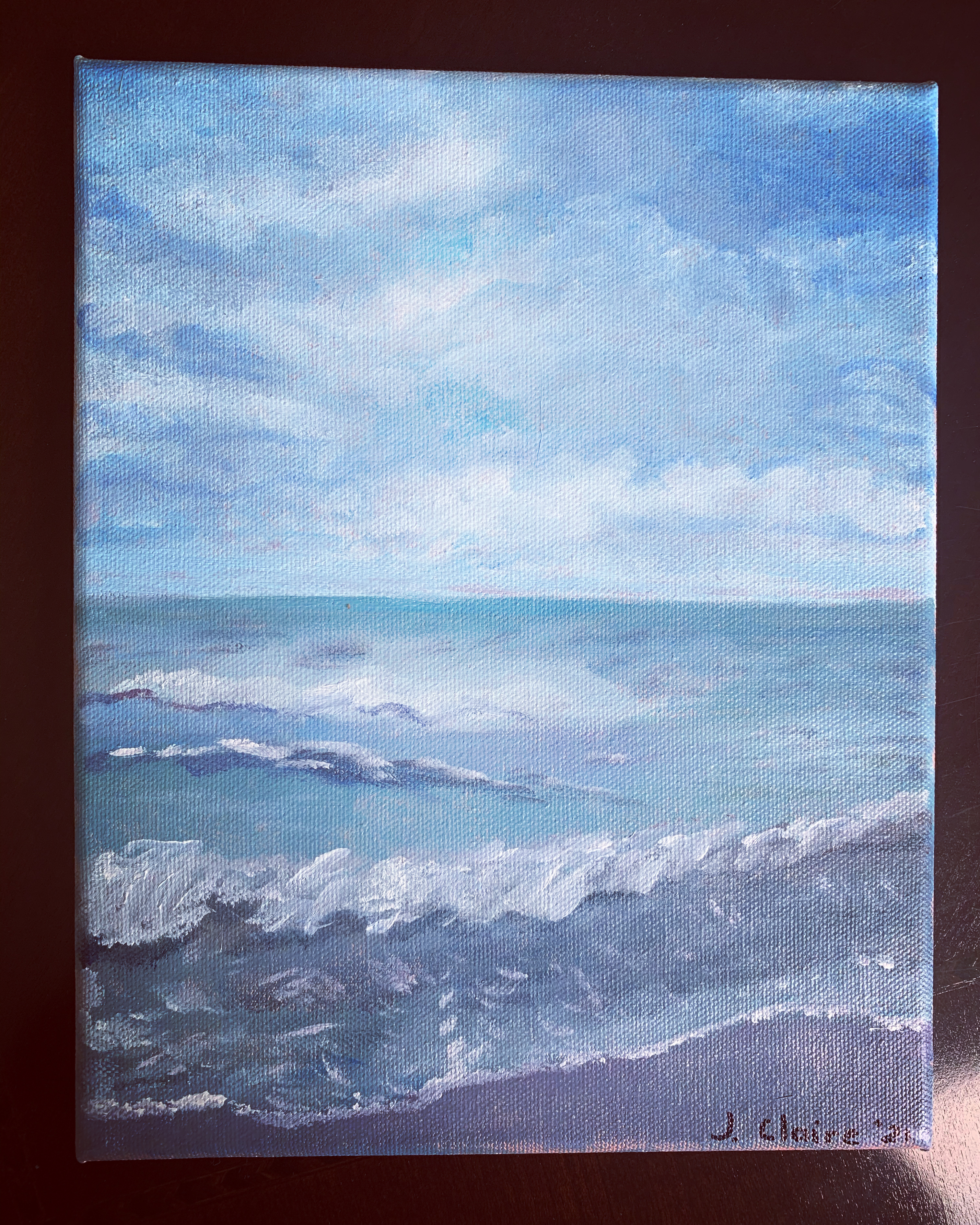
The first being that I have always been a Cloud-gazer, spending many hours trying to recreate, through the art of painting, their magnanimous forms, shadows, light, blue and gray hues against the endless sky. In fact, I am looking at an extraordinary sunset with crimson red clouds in Cimarron, Colorado, as I write this! I was so curious to see how Aristophanes, a brilliant 5th century poet, would describe Clouds or why they were important to him.


Secondly, as a Professor of Rhetoric and Composition, I was intrigued to learn from the Introductory Note by Translator Alan H. Sommerstein of Nottingham, that this play is about the different philosophies of an Argument by the thinkers and educators of that time whom, following Plato, were often labeled “the sophists”. These men pursued cosmology, meteorology (hence Clouds), biology, and grammar.
In Clouds, Aristophanes singles out one sophist in particular, Socrates; partly because, according to Aristophanes, he was a relentless questioner and arguer in the Agora and hardly ever left the city of Athens. Because of this, Socrates was more familiar to a great number of people than his contemporaries Prodicus and Hippias. Sommerstein believes that the accusations made by Aristophanes against Socrates were sincerely justified. Unfortunately, the unfair image portrayed of Socrates in Clouds, that he was teaching science and dishonest rhetoric, would possibly lead to his condemnation, charges made by his accusers, and eventually his death. Plato also appears to have considered The Clouds a contributing factor in Socrates’ trial and execution in 399 BC.
Aristophanes presents the fictitious Socrates as a fraud with introverted thinking and conversational dialectic, but this is also found later in Plato’s dialogues Phaedo and Timaeus, as the practice of asceticism, a behavior given to Socrates.
In the play, Socrates is administrator of “The Thinkery”, a school for bums and lazy young men who have chosen not to indulge in the higher pursuits of education and athletics. Students at The Thinkery learn how to turn inferior arguments into winning arguments—this is the only way to get ahead in life as well as pay off debts in court.
Aristophanes continues to portray the buffoonery of Socrates as he is “walking the air and descrying the sun”—
“I could never have made correct discoveries about celestial phenomenona, except by hanging up my mind and mixing the minute particles of my thought into the aire which it resembles. If I had been on the ground and investigated the upper regions from below, I would never have made my discoveries (line 225).”
In Clouds, Socrates’ main objective in life is “to commune and converse with the Clouds who are our deities”. Women, who are heavenly Clouds, are “great goddesses for men of idleness who bestow on them intelligence and discourse and understanding, fantasy and circumlocution and incisive and repressive power” (315). Hmmm.
I did enjoy Aristophanes’ “Better and Worse Argument” Debates (lines 890-115). Worse Arguments always defeat Better arguments in public! I like the idea of how using a counterargument, or Worse Argument, can lead to a Better position. Make the “weaker argument stronger” (refutation!) This would be a great case-study to use in my courses on Rhetoric. [prefaced with a strong warning as to the “Attic Old Comedy” of Athenians with a lot of crude humor and sexual innuendos. This caught me of guard!]
I will return to my Cloud-gazing !
Work Cited
ARISTOPHANES: The Comedies of Aristophanes :Clouds, v2. Translation Alan H sommerstein British Library, 1982
 My French Quest