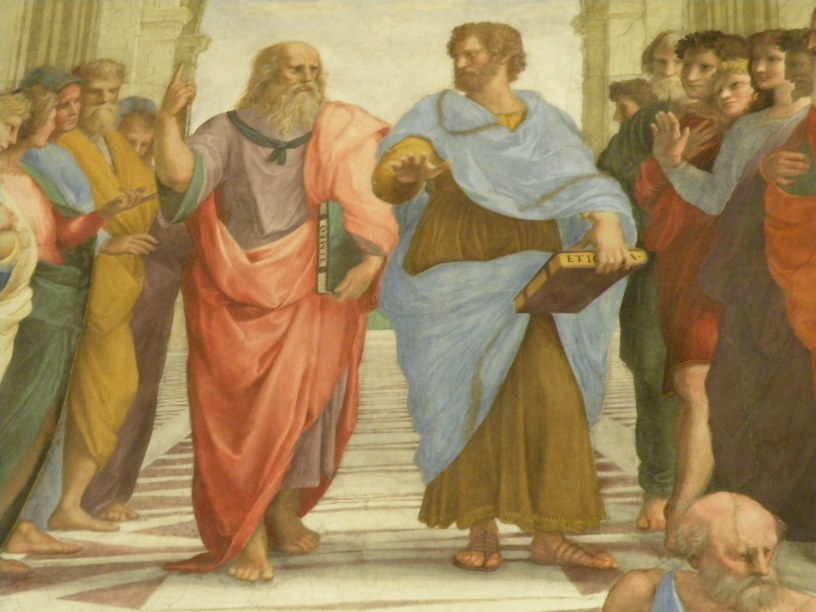
“For we live, each one of us, immersed in languages, and our thoughts, feelings, and behavior, are determined by the words and syntax of our native tongue and even by the signs through which those words and that syntax are made visible in writing (Adonis, 193).”
Should rhetoric, grammar, and composition only be taught in the specialized discipline of English?
This week, my two Academic worlds collided! As a blogger, I am on a quest for knowledge through faith, literature, the arts, language and linguistics, history, and wherever this universe steers me. As a Professor of higher education, I also search for knowledge and pedagogy in my field of English to better lead and equip my students for their academic pursuits and then on to life!
For my blog followers, you have been reading my syntheses on Aldous Huxley’s essays from the 1950’s “The Education of an Amphibian” and “Tomorrow and Tomorrow and Tomorrow”. In his “Adonis and the Alphabet”, Huxley places a high importance on the teaching of language, both spoken and written, in higher education. This is my wheelhouse!
For a book discussion with our Seminary Dean through Faculty Development, we were asked to read Wendell Berry and High Education: Cultivating Virtues of Place by Jack R. Baker and Jeffrey Bilbro (2017). This book is a critique of American universities and who we, as educators, must construct a new narrative of higher education. This includes the focus on the Trivium: grammar, logic/dialect, and rhetoric.
The intersection: I found many similarities between the pedagogical evaluation of language in higher education in the essays of Berry and Huxley. So fun! For this blog, I will focus on Berry’s chapter “Standing by Our Words”, a celebration of language in the Liberal Arts.
Aldous Huxley’s “Adonis and the Alphabet”
In Aldous Huxley’s essay “Adonis and the Alphabet”, he explores the origin of language and its etymological connection with literature. Huxley traveled to ancient Byblis, north of Beirut, in the 1950’s to visit the birthplace of the alphabet. As a Linguist, this chapter brought much joy to my heart!
Byblos was the common name for papyrus as we find in the writings of Herodotus and Homer. When this byblos came in rolls and had writing on it, the thing was a bible, a book!
Why is the alphabet important to language?
Before the invention of the alphabet, the civilized peoples of the Near East employed two ancient systems of writing- the hieroglyphic writing of Egypt and the cuneiform of Sumeria, Babylonia, Assyria, and Persia. These systems were similar to Chinese as they were made of hundreds of signs, some pictographic, some ideographic, and some phonographic.
The inventors of the alphabet reduced these hundreds of signs to less than thirty. Every word in every language could be rendered in a form which indicated how the word was to be pronounced.
Huxley points out that “alphabetic writing creates an illusion of clarity and separateness. The words we read are written in such a way that they seem to be exclusively themselves, and this makes us believe that we know what’s what. But, of course, the what we know is never only what” (93).
In Western civilization, the students of linguistics and metalinguistics have become fully aware of the part played by language as a “virtual philosophy, a source of ontological postulates, a conditioner of thought and even perception, a molder of sentiments, a creator of behavior patterns (194).”
No language is perfect, no vocabulary is adequate to the wealth of the given universe, no pattern of words and sentences, however rich, however subtle, can do justice to the “interconnected Gestalts” with which experience presents us (195).
Consequently, language must be taken seriously. Wisdom comes only to those who have learned how to talk and read and write without taking language more seriously than it deserves, explains Huxley.
How does Huxley’s ideas of language intersect with Wendell Berry’s?
A sentence is both the opportunity and the limit of thought—what we have to think with, and what we have to think in (Wendell Berry 57).”
Wendell Berry is a great supporter of teaching the liberal arts in higher education. However, one of the challenges in teaching a coherent, common language, as we see in Huxley’s essay, is that in today’s universities, language is often conflated with “English Composition” (my courses). Unfortunately, as Berry points out, learning to write becomes a “hurdle” in every student’s early college education. Students and faculty alike (pas moi) speak about “getting writing out of the way” (57).
“The concepts of sentence and sentence structure are not merely grammatical or merely academic—not negligible in any sense.” Liberal arts education must include two broad pathways: the trivium (grammar, logic, and rhetoric) and the quadrivium (arithmetic, geometry, music, and astronomy).
Baker and Bilbro state that the trivium might teach students not only to understand the past but also to recognize how these pathways and questions shape the way we understand ALL Academic Disciplines (59)! Yes, Yes, Yes
The Trivium
Grammar is not simply learning the rules of a language. Instead, grammar is the linguistic study of the inner workings of language, which is only partially achieved in most modern language courses that aim for basic spoken proficiency. When students submit to these strict grammatical rules, they find themselves welcomed into the rich world of a human community, into the life of the people who ordered, spoke, and wrote the language.
As students practice logic, they learn that their arguments have the power to persuade for good or for ill. They must be accountable to their thoughts or words and must stand by them once they are spoken or written.
“Building on the foundation of grammar and logic, rhetoric teaches students to assess the consequences of language in a community, demonstrating the damage wrought by inarticulate, unordered language (have you been on Social Media lately?) as well as the benefits by loving wise language—the art of soul leading” (Berry 61). The practice of rhetoric teaches students to craft arguments that lead their particular audience’s souls toward a more intimate relation with a specific truth.
One strong argument found in both Huxley’s “Adonis and the Alphabet” and Berry’s “Standing by Our Words” is that the subjects of the trivium and the practice of reading literature should not be specialized in one area of study.
Teaching the trivium (grammar, dialect/logic, and rhetoric) in a disciplinary specialization has been my calling in higher education since 2001. I currently teach English Composition and Rhetoric for a university and World Literature and Art for a seminary. These disciplines should be shared by all educated people, in all subjects, Berry argues.
“Language and literature are always about something else…They are about the world. We will understand the world, and preserve ourselves and our values in it, only insofar as we have a language that is alter and responsive to it, and careful of it”(63).
Do the so-called humanities actually exist? We find language and literature in history, sociology, psychology, religion,etc. Berry observes, however, that “university curricula have moved further and further away from the humanities and from concerns of moral, external truth and settled for merely discussing questions of factual, internal truth” (65). I believe it should be both/and instead of either/or.
In formal education, especially higher education, Huxley strongly convicts that language must be held in high importance; both the spoken and the written.
Littera scripta manet, volat irrevocabile verbum: writing abides, the spoken word flies off and cannot be recalled. “Wisdom and a knowledge of metaphysical and moral truth cannot be conveyed in books, but only in means of rhetoric and dialect.
Today we have it in our power to perceive language, infer and understand a far wider area of reality than was open to our ancestors (today being 1957 for Huxley!)
Works Cited
Jack R. Baker and Jeffrey Bilbro. (2017). Wendell Berry and Higher Education: Cultivating Virtues of Place. University Press of Kentucky.
Aldous Huxley. (1952). Tomorrow and Tomorrow and Tomorrow. New York: Harper & Bros.
 My French Quest
O excellent! Thanks for sharing this:)
I’m glad you stopped by, Lisa! Is the trivium respected or even taught in higher education in your country?
It would be hard for me to say, Robyn. My university days are long over, and I don’t know what’s expected now. But certainly in my undergraduate days universities had a cohort of students who had had had a liberal arts education, right up until the final years of secondary school when they might specialise into science and maths but still had to pass English (which was not the dumbed-down version of Must-pass English today).
One could not enrol in an arts degree without a second language, most of us had learned French and Latin, and we were experienced readers of literature including Shakespeare, Dickens, Austen and lots of poetry. It would not have occurred to anybody to substitute a film or an excerpt for actually reading the books.
Though I don’t remember anybody using the term ‘trivium’ we had learned grammar, the use of logic to analyse texts in a subject called Clear Thinking, and every essay we wrote was an exercise in rhetoric. So universities did not need to teach these things in the way that would be essential now. I believe they also have to teach students how to write essays, how to use a library, how to take notes etc, all of which were prerequisites that a professor could previously assume the students already had. Academic excellence is not the only prerequisite for university entrance these days.
But back in my day, only the top 2-3% went to university, whereas now they cater for a much bigger, more diverse cohort. A professor can’t necessarily assume that everyone has mastered grammatical, fluent English. I imagine that it must be frustrating for very capable students…
A couple of our universities have introduced the idea that everybody has to read a set text no matter what course they doing, but from what I’ve seen of it, the books that have been chosen were banal.
Thank you Lisa for your response. I like this requirement that everyone has to read a set text, no matter the course, to keep literature alive. However, who gets to choose which text? This follows Berry’s ideas. Our LA degrees no longer require a second language as many universities no longer offer language courses (except for Spanish). I started in higher ed as a Professor of French, but this is no longer viable, at least not in the southern U.S.
That is sad about the loss of language teaching…