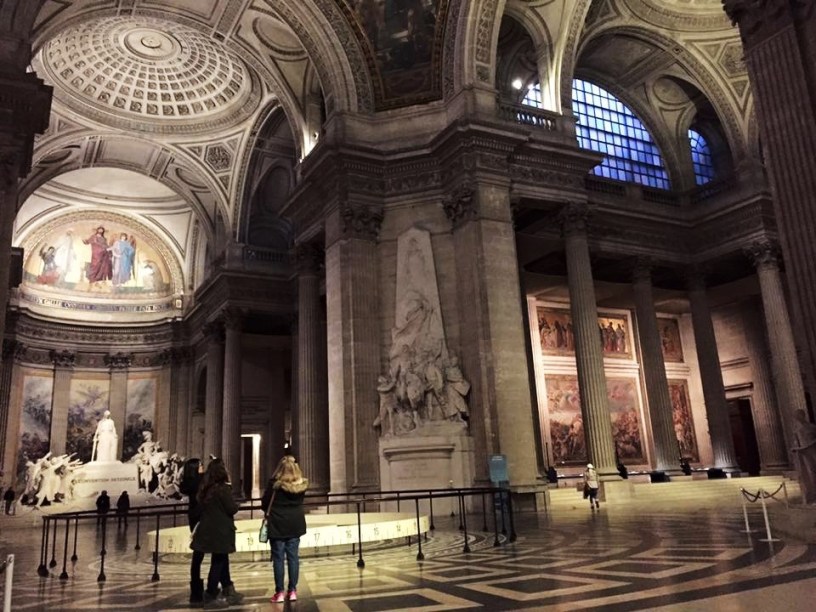
Each time I visit Paris, I am looking for the Paris that I fell in love with : the nineteenth century Paris of culture, literature, education, architecture, language, Impressionism, science, and Intellectuals.
Is it possible to still find these treasures from the nineteenth century? Yes, it is, however, one must first know what to look for and where.
Impressionist Art
In 1990, I became interested in French history and culture and began to study the art of Impressionist painting by visiting museums and reading art history books and Impressionist biographies.
The paintings of the Impressionists were my introduction to the city of Paris. Renoir, Monet, Manet, Pissarro, Cassatt, Seurat, and Caillebotte began to record the working class within the city of Paris mixing with the bourgeoisie, even imitating them in dress and activity.
The Impressionists had a great part to play in recording the changes of Paris during the reign of Napoleon III with his architect Baron Haussmann including vacations, picnics, promenades, boating trips and “spontaneous sociability”. In addition to Georges Haussmann, the main architects of this period were Charles Garnier (Opéra Garnier), Eugène Viollet-le-Duc (Notre-Dame), Gustave Eiffel (Eiffel Tower), Jacques-Ignace Hittorf (Gare du Nord), and Henri Labrouste (Sainte-Geneviève and National Libraries). The impressionists depicted in their works a Paris that was reinvented and transfigured into a modern city that was imitated by all the capitals of Europe. Manet, Renoir, Caillebotte, and Seurat painted many scenes of Paris representing the aesthetic changes of modernity, the mixing of social classes, the changing perception of nudity, and images of suburban leisure in the surroundings. I have since learned to paint and have used these works from the Impressionists as my guide [see posts starting with “Painting Impressionism: Cliffs at Etretat].
Locations to see nineteenth century Paris painted by the Impressionists
Here are some locations to see nineteenth century Paris today, which was recorded by the Impressionists:
- Place de l’Europe :
Caillebotte (1876) Sur Le Pont de l’Europe [Kimbell]
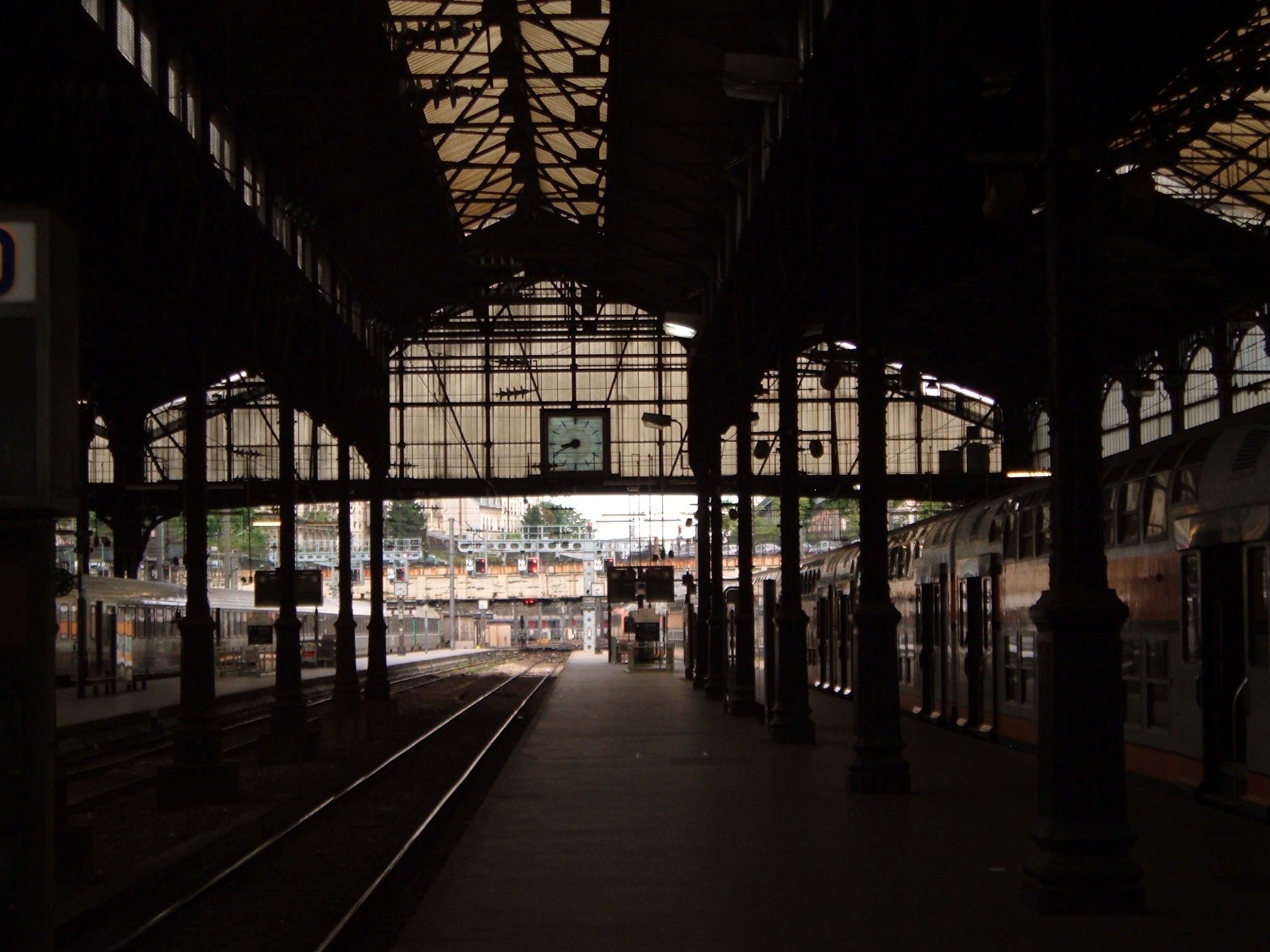
Caillebotte (1876) Le Pont de l’Europe (man strolling, self portrait, rue de Vienne ; rue Vienne/rRome
Monet (1877) Sous le Pont de l’Europe
Monet (1877)Le Gare Pont de l’Europe (rueLondres near pl l’Europe)
Jean Beraud ( 1876) Le Place et Pont l’Europe [priv]
Norbert Goeneutte Le Pont de l’Europe [priv] (62 rRome/r Copenhagen)
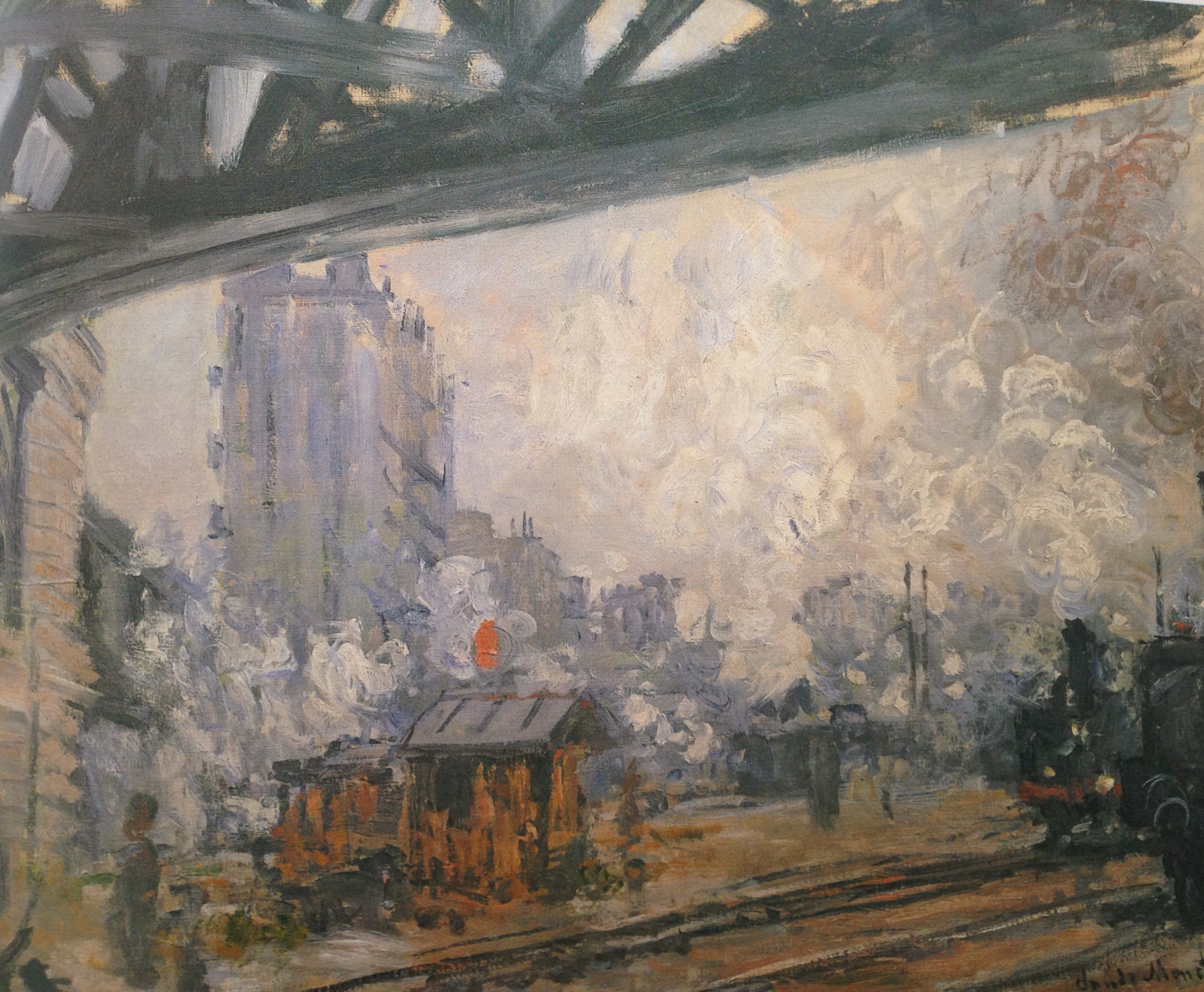
- Gare Saint-Lazare :
Monet (1877)`Gare Saint Lazare Auteil [d’Orsay]
Monet ( 1877) Les Docks Gare Saint Lazare [AIC]
Monet (1877) Arrive Train de Normandie [AIC] (near rAmsterdam)
Monet (1877) Les Voies Gare Saint Lazare [Japan]
Manet ( 1875) Le Chemin de Fer [NGDC] (2 sisters and puppy with station in background, Manet’s garden #58 rRome/Naples)
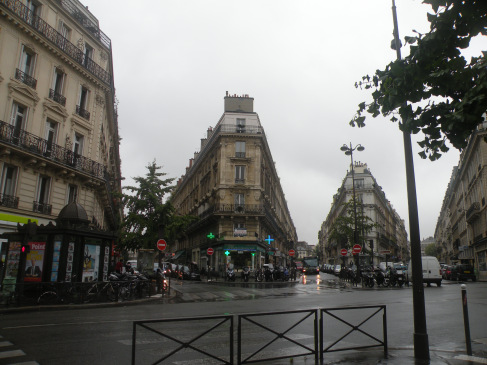
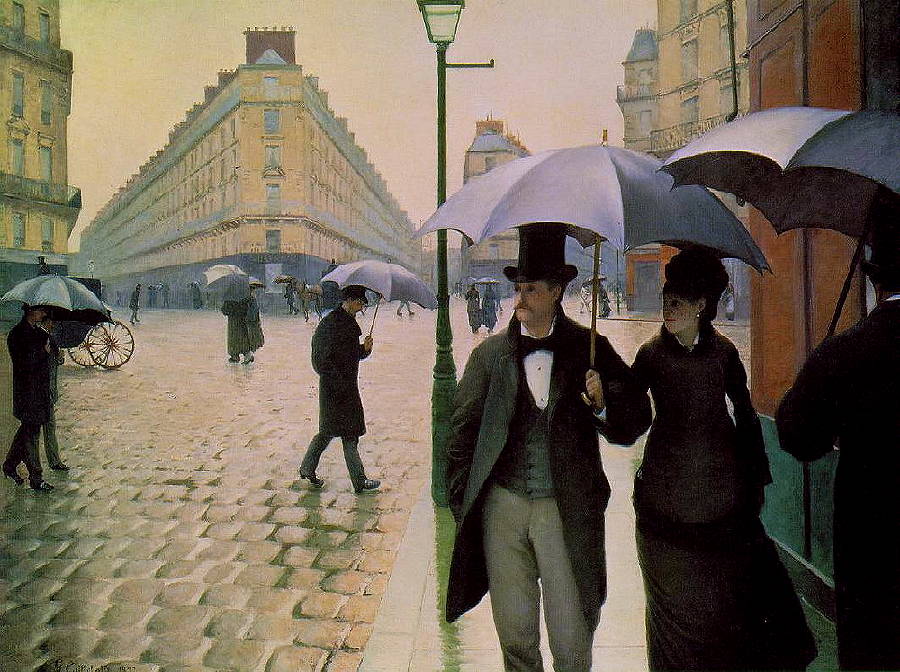
- Rue de Paris, rainy day
Caillebotte (1877) Rue de Paris, Rainy Day [AIC] (rDublin/r Moscou/r de Turin)
Homes and Studios of the Impressionists– Caillebotte’s home : G, 77 rMiromesnil/ r Lisbonne;
– Renoir’s home : D map 1, 23 rue d’Argenteuil ; -Renoir’s studio, Musée Marmottan (Metro : La Muette line 9, 2 rue Lois Boilly, T-Sun 10-5 :30) – Bal au Moulin de la Galette 79 rue Lepic in Montmartre -Bazille’s studio : L rue de la Condamine Studio rue de la Condamine (Zola on steps chatting with Renoir ; Monet smoking ; Manet examines painting on easel ; Bazille holds palette)-Cafe Guerbois : M 9 rue Batginelles : hangout for Manet, Monet, Renoir, Degas, Bazille, La Tour, Cezanne, Pissaro;- Musée Marmottan : (#2 rue Louis-Boilly ; M : La Muette T-Sun 10-530) Monet’s paintings, Impression Sunrise; –Musée d’Orsay : Impressionist paintings (M 12yellow Mairie d’Issy to Solferno);
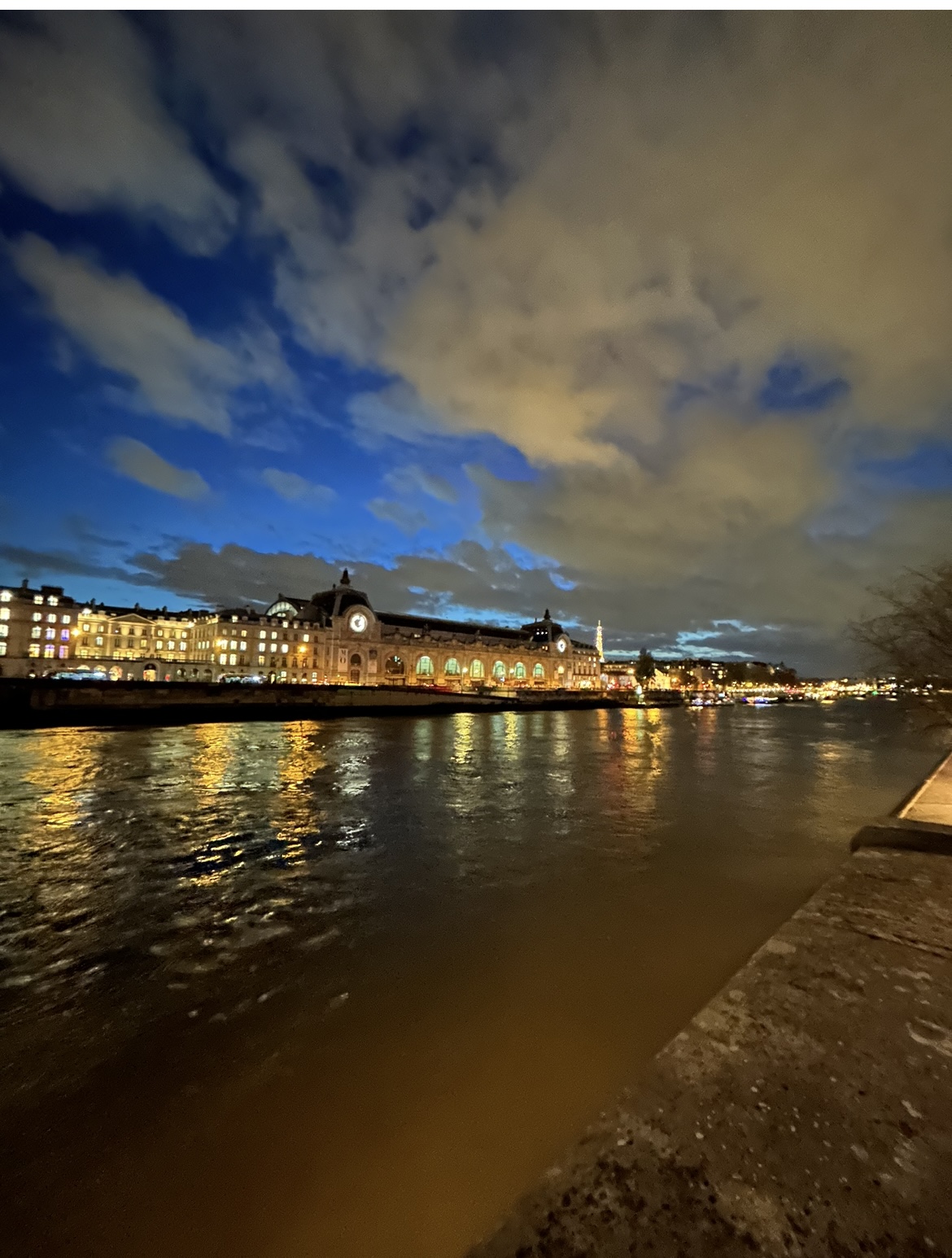
–Musée de l’Orangerie: Monet’s Water Lilies; – 8 Impressionist Exhibitions : 1874, 1881- #35 blvd des Capucines ; 1876, 1877- #11 rue le Peletier ; 1879- #28 ave de l’Opera ; 1880- 310 rue des Pyramides ; 1882- #251 rue Saint-Honoré ; 1886- #1 rue Lafitte
Language and Literature of the nineteenth century
In nineteenth century France, people spoke various languages according to their province. Each province had their own unique cuisine, language, flora and fauna, weather, and traditions. There were 1600 distinct types of French cheese alone! France would only become a linguistically unified country by the end of the nineteenth century. Almost all French were required to read and understand a national language, even though many still spoke their regional language at home.
When I began my quest of learning French (at the age of 43!), there were no courses offered at the university where I was teaching and “Online” did not exist at that time, so I turned to these resources to help me in my journey:
- The Revised French Grammar (1901; revised 1942) edition by Fraser, Squair and Parker, which was in the collection of French books. This student textbook (sans answers) contained the traditionally prescribed French of The Académie française;
- La Sainte Bible Version Semeur, in which I began to translate the book of Marc from French to English,
- Tutoring from one of my students, Ouapo, a French native from the Ivory Coast, who helped me with conversation. [My husband and I visited Ouapo’s family during our trip to Paris and brought back many treasures for him.]
As a linguist, I wanted to learn the prescribed, traditional French language first instead of the colloquially, informal French language spoken today. The writers of the nineteenth century became my textbooks. I translated, sometimes word by word, Victor Hugo’s Hunchback of Notre Dame, Balzac’s Pere Goriot, and Monet’s letters written to Clemenceau concerning his commissioned works of the Water Lilies (I purchased a French catalog at the Musée de l’Orangerie the weekend that it reopened in May, 2006). In my pursuit of a second language, it was helpful to study works that I was interested in!
After ten years of independent learning the French language, I pursued a Master’s degree in Applied French Literature and Linguistics and spent a semester through a graduate internship studying French Language, History and Art at the Cours de la Civilisation Française de la Sorbonne. in an immersion program through a graduate Internship at the Sorbonne in Paris.

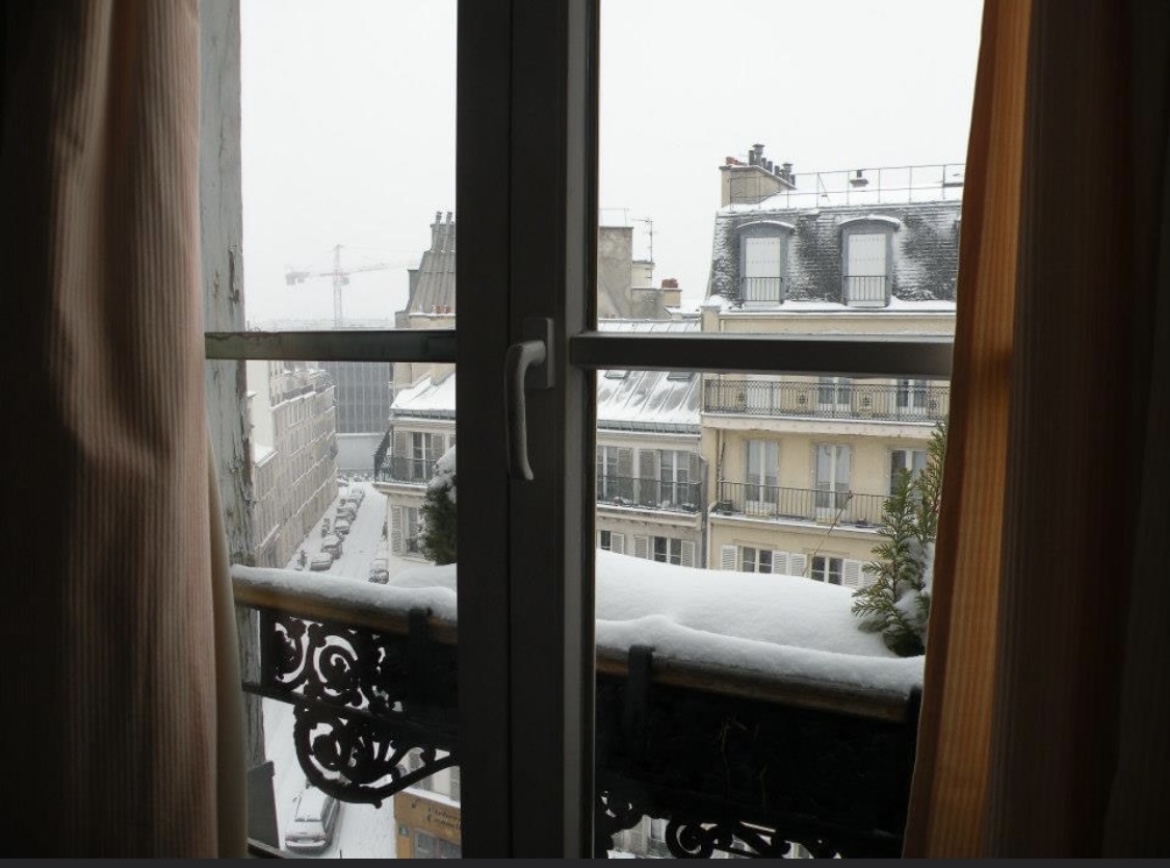
I rented an apartment in the Latin Quarter so I could walk the same streets as Jean Valjean and Père Goriot! I began blogging on myfrenchquest as part of this internship–[see posts of my study abroad].
Where to find nineteenth century French language today?
While it is possible that some still speak traditional French, realistically, I cannot recall anyone speaking nineteenth century English in the U. S.-ever!
Therefore, I recommend visiting the many libraries around Paris and purchasing nineteenth century literature and essays! Some great libraries to visit: Shakespeare and Company (most of their works are in English, but they do have a French section); Gibert Joseph- five glorious etages of French books of all genres; and Book shops around the Sorbonne university in the Latin Quarter.
What is so unique about nineteenth century French Literature?
My favorite part of Paris in the nineteenth century (and a little into the twentieth) is the literature. I have spent many hours reading the works of Balzac, Hugo, Jules Verne, Verlaine, Valery, Sartre, Maupassant, and Voltaire. I have a bookshelf, built by my son-in-law, containing nearly 400 French novels and language books (I frequent many university library book sales!).
France thought so highly of their authors that they gave them a great prominence in their society by referring to them as Intellectuals. French Publishers marketed their works to schools which chose their literature to educate students.
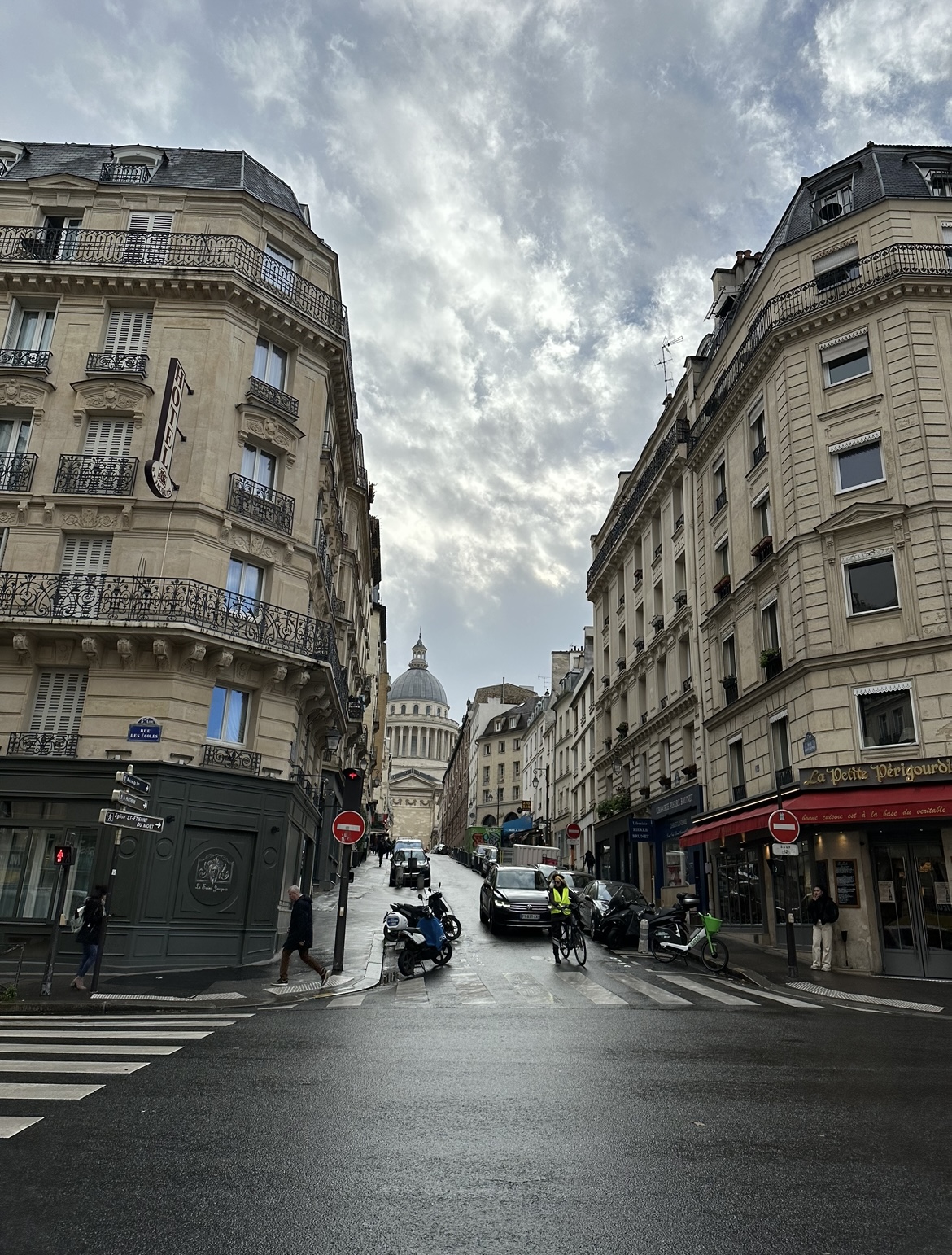
In her book Literary France, Pricilla Clark claims that, “Only France has a literary culture that elects the writer as a spokesman and invests literature with such powers (Literary, 9).” So much so that a Crypt as added to the Pantheon to include France’s literary giants such as Victor Hugo, Voltaire, Emile Zola, and Rousseau who “fused the public world of country with the private word of belief “(15).
These writers helped shape the norms, values, and behavior of society.
The Intellectuals were not only writers but also poets, philosophers, theologians, and scientists as well including Descartes and Pascal. The generation of the 1890 literary avant-garde elevated themselves to the rank of “supermen” (Michael Burns, France and the Dreyfus Affair: A Documentary History 110). Like the German intellectuals, Goethe, Wagner, Nietzsche, and Kant, who were superior in philosophy and the sciences, the French intellectuals were also superior in the arts and culture.
My two favorite Intellectuals: Honoré de Balzac and Victor Hugo
Balzac
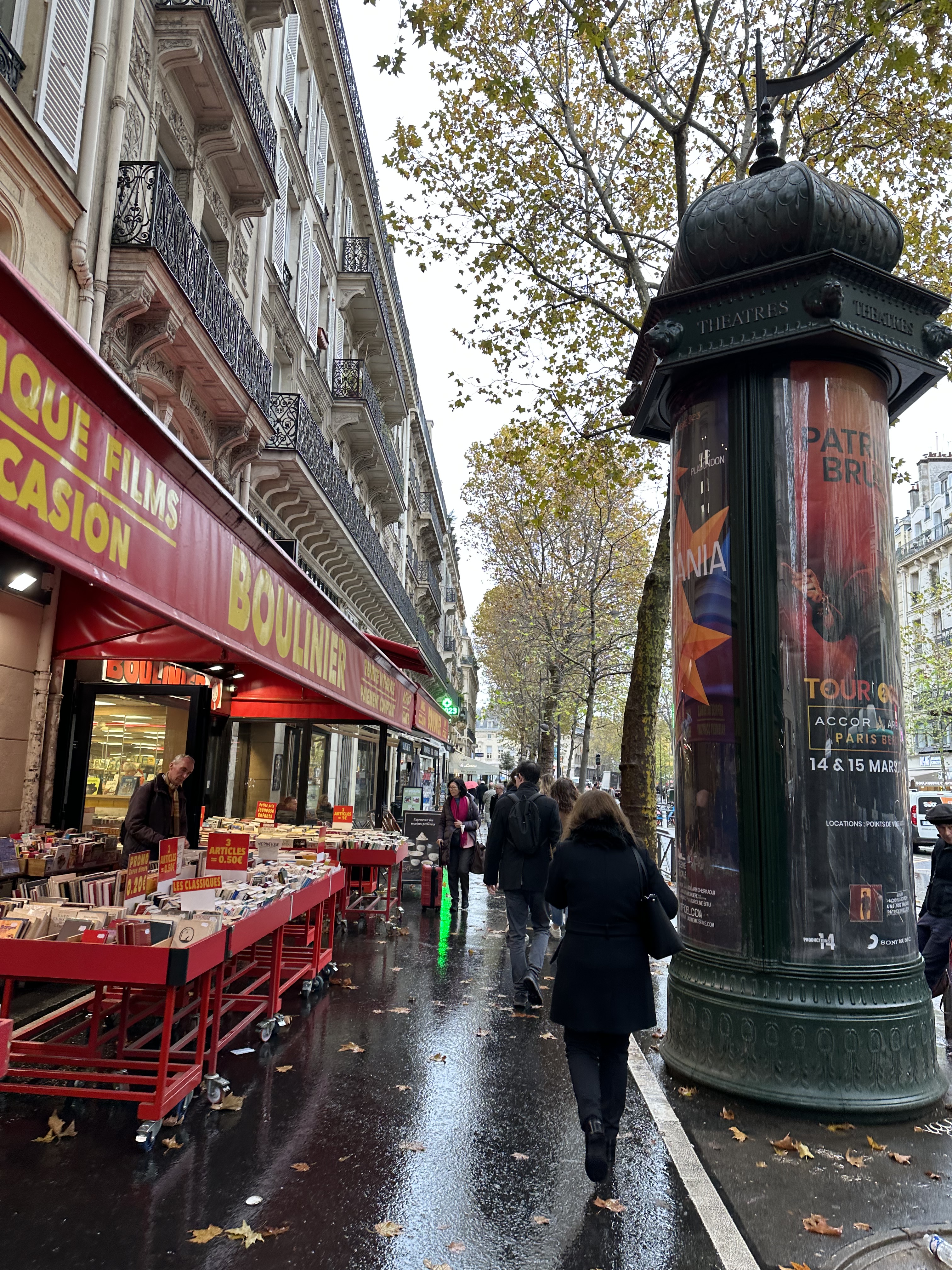
My favorite feature of Balzac’s stories is the introduction of the flâneur to the French landscape. This is a person who has a simple, confident, relish of pleasure (Prendergast 4). You will see flâneurs in many Impressionist paintings such as “Rainy Day” by Caillebotte. Baudelaire also identifies the flaneur in his essay “The Painter of Modern Life”(1863) as “a man of leisure, the idler, the urban explorer, the connoisseur of the street”. This is my favorite activity when I visit Paris, especially walking through the “Haussmann” Paris, the Grands boulevards of Saint Michel and Champs Elysees for example.
My first two visits in Paris, I tried to hit every tourist attraction and “walking tour” found in travel books. This was a great way to check off my list of “Things to Do in Paris” and not feel that I was missing out; however, I wanted to connect more with what Paris represented, its identity; this is what Christopher Prendergast refers to “the tautology and stereotype”—the Avant-propos in his book Writing the City: Paris and the Nineteenth Century (2). In Comédie humaine, Balzac calls this the sens cache of the modern world. The tautology of Balzac’s Paris in the nineteenth century is “a visual field, peculiarly open to the mobile gaze and the unforeseen encounter” (3). Paris seems to be unaffected by time—the monuments, train stations, boulevards, parks, the Seine, museums that were spared during the world wars are still present and accessible. I love this! Now, as a flâneur in Paris, I anticipate these mobile gazes and unforeseen encounters which make this city so magical.
Balzac was one of the first French writers to show the great principles of order, politics, and morality in writing about post-revolutionary French Society in his collection of short novels La Comedie Humaine (115). In this series, I was introduced to Père Goriot who is buried in Pere Lachaise cemetery after a long life of living selflessly to provide for his entitled daughters and Geoffroy Saint-Hilaire, one of Napoleon’s Savants during his expedition to Egypt [see post on the contributions made by Hilaire to the Jardin des Plantes ]. Balzac connected writing of the social sciences to literary culture in France.

Victor Hugo
After reading nineteenth century French literature for over 20 years, I have a new appreciation for the Intellectual, Victor Hugo, the symbol of France, whose ambition was “revolutionizing literature by revolutionizing language”(114). Hugo loved his Paris. He was a member of the National Assembly and raised money to preserve the Arènes de Lutèce, a Roman arena built in 1100, and to repair the Notre Dame Cathedral and keep it from being razed.
The more I read about Victor Hugo, the more I find in common with him: our family heritage both originate from Alsace, France; we both have worshipped in the Notre Dame Cathedral; we both have grandsons named George, and we both spent many hours reflecting in the Jardin des Plantes, located in the Latin Quarter of Paris.
Hugo wrote about his experiences in the Jardin des Plantes in L’Art d’Etre Grand-Père, as he took frequent strolls with his grandchildren Georges and Jeanne. In As Hugo described, “I go to this garden because it is pleasing/To Jeanne, and that I am helpless against her/ I go there to study two chasms: God and childhood.” In 2018, I translated this book of poems from French to English which you will find on my blog. It was a great joy to see Hugo’s impressions of a Jardin that I love come alive!
My first Hugo novel was Les Miserables, which chronicles the history of Post-Revolution Paris and France from 1815 through 1832. This 1500+ page tome examines the harsh consequences of breaking the law tempered with divine grace of redemption. Weaved into this story of romantic and familial love is Hugo’s view of politics, philosophy, religion, war and justice. “Hugo refers to contemporary Paris in Les Miserables as:
‘not only the centre of civilization but the motor force of the world-historical future: Paris est sur toute la terre le lieu ou l’on entend le mieux frissonner l’immense voilure du progrès’” (Hugo, Paris pp. 586-587).
In Les Misérables, Hugo also includes a descriptive detail of Paris during this time period including the architecture, parks, boulevards, and monuments. Consequently, the first thing I did when I moved to Paris in 2012 was to start reading Les Misérables, noting the boulevards, houses, monuments that Hugo details in the story and walking through them recreating this incredible homage to Paris. To my surprise and fortune, I walked down these same streets every day to class at the Sorbonne, through the jardins , boulevards and houses of Les Misérables. In fact, it is hard to think of Paris without Hugo. My husband read the English version and I read the French version while I was living abroad for 6 months. When he came to visit, we would search out the landmarks from the story and discuss the political (David’s favorite parts) and historical (mine) nuances of this brilliant story (and, of course, the sweet love story!). So fun!
If you have made it to the end of this very long post, thank you- I saved the best for last! As a flaneur in Paris, these are the places I visit to find my nineteenth century world:
- The Latin Quarter: specifically, the 5th, 6th, and 7th arrondissments around the Sorbonne
- Jardins: Jardin des Plantes: I have devoted many blogs to this wonderful park of history, science, and nature; Jardin du Luxembourg
- Museums: Musée d’Orsay, Musée de l’Orangerie, Musée Marmottan, Maison Victor Hugo, Maison Honoré de Balzac, Musée du Cluny,
- Churches: Notre Dame Cathedral, L’eglise Saint Germain-des-Pres, Saint Medard, Saint Etienne du Mort,
- Pere Lachaise Cemetery: The graves of many writers—Moliere, Balzac and Proust; Artists- Caillebotte, Modigliani, Ingres, Seurat, Pissarro, David, Corot, and scientists—Raspail, Hilaire, Cuvier,

 My French Quest
And Hugo is also so much more than his already great novels: amazing plays and poems
Yes, I have read many of his poems as well and love them equally! Thank you for your interest.
Interesting and very informative! Thank you Robyn
Thank you for stopping by Sheree!
Always a pleasure Robyn
Compliments Robyn. Indeed the XIXth century was one of the richest in French history. (Despite 2 or 3 major military disasters…)
A very complete post. I can relate to the places you mention. Spent my first two years of college Rue Valette, near the panthéon.
I like your comparison of famous paintings with actual site. I hadn’t “picked” la place de l’Europe in the painting. Thanks for making me notice. (Very old friends of mine live Rue de Rome, I should know…)
Bonne fin de semaine
Thank you equinoxio21 for your kind words. I really tried to dig deep and understand my passion for this era over the past few decades! It was a rewarding blog for me! Robyn
Pleasure Robyn. Happy week-end.