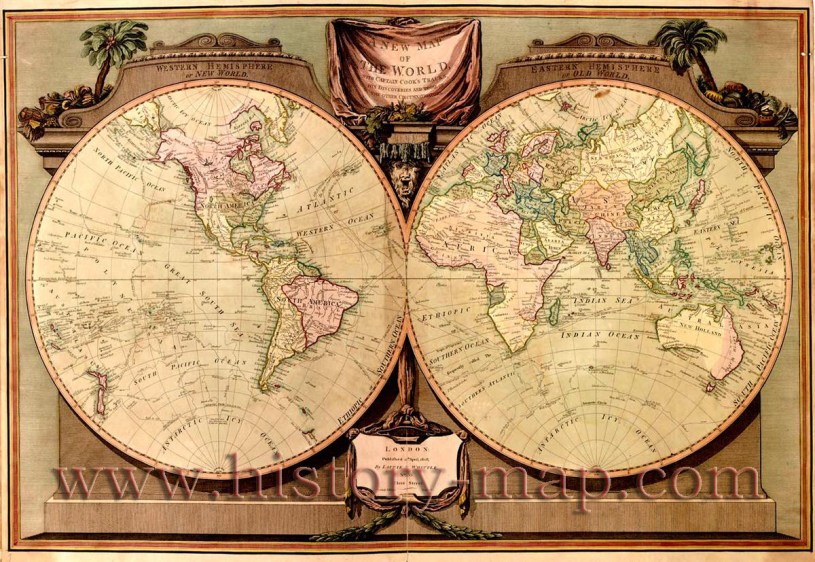
In my last blog, Jules Verne et le paradoxe du circumnavigateur, I explored the subject of the paradox of circumnavigation in Verne’s “Around the World in Eighty Days” [see post]. This paradox happens when a day is gained or lost, depending on the direction chosen, and consequently the changes in dates, which can take place at any point on the earth’s surface.
My reference for that blog was an article from the Anthology Jules Verne: Science, crises et utopies , in which the author, Ronaldo Regério de Freitas Mourão, which explains this phenomenon Verne supposed in his article Les méridiens et le calendrier, published in the Bulletin de la Société de Géographie (1873). This was published two years before the Prime Meridian had even been established. Mourão states that the Meridian was established in Greenwich partly due to the influence of Jules Verne’s thesis.
In his article, Maurão cites Edgar Allan Poe’s (1809-1849) short story on the similar theme, the paradoxes of circumnavigation, in “Three Sundays in a Week” (1841). This will be my focus for this blog. I am referencing Arthur B. Evans’ article, “Literary Intertexts in Jules Verne’s ‘Voyages Extraordinaires.’” From Science Fiction Studies, 1996. [read Poe’s story here]
Edgar Allan Poe’s “Three Sundays in a Week” –a paradox of circumnavigation
In “Three Sundays in a Week”, Poe sets the scene where a young couple needs the blessing of Uncle Rumgudgeon—”a hard–headed, dunder–headed, obstinate, rusty, crusty, musty, fusty, old savage”, for their marriage. The Uncle’s response: “Well, then, you shall be married precisely—precisely, now mind!—when three Sundays come together in a week”, believing , bien sûr, that this would be an impossibility!
Not long after this proposition, Uncle Rumgudgeon is visited by his friends Naval Captains Pratt and Smitherton who have just traveled the globe for the past year, in opposite directions. Yes, you guessed it, Pratt navigated around Cape Horn (tomorrow IS Sunday) and Smitherton west around Cape Good Hope (yesterday WAS Sunday). For Uncle Rumgudgeon, the day IS Sunday. Three Sundays came together in a week! Whew.
As you may recall, in Jules Verne’s “Around the World in Eighty Days”, (1872)”, he poses a similar paradox through a race around the world.
[In this story, Phileas Fogg of London and Passepartout, his French valet, attempt to circumnavigate the world in 80 days with a wager of 20,000 pounds. Fogg and Passepartout depart from London by train at 8:45pm and must return by the same time on 21 December, 80 days later, to win the wager. Fogg travels east and returns a day earlier therefore, winning the wager.]
Poe’s Influence on Verne
Jules Verne was possibly influenced in writing his paradox of circumnavigation by Poe’s “Three Sundays in a Week”(1841). Poe’s story is very short, around 2,000 words. Verne, on the other hand, took this paradox into a novel form, as apropos to his style, with much adventure, science, intrigue, conflict, and imagination. [It should be obvious whose works I prefer!]
In a book review of Verne’s newly-published novel “Cinq Semaines en ballon”(Five Weeks in a Balloon”) which appeared in the Musée des Familles in 1863:
“M. Jules Verne is of the same school as the American novelist Edgard Poe. Like Poe, he knows how to link fiction to reality in proportions so exact that one does not know where one begins and the other leaves off “(179).
Verne wrote a review soon after on Poe’s work in his article “Edgar Poe, sa vie et ses oeuvres” (his life and his works). Verne begins his 1864 article praising Poe, explaining some aspects of Poe’s life, and analyzing lengthy excerpts from Poe’s works. Verne then goes on to say: “… they occupy an important place in the history of imaginative works because Poe created a distinct literary genre all his own. One might call him the leader of the School of the Strange.”
Verne refers directly to Poe’s “Three Sundays in a week”:
“… Then the third individual would accomplish the same voyage, under the same conditions, but in the opposite direction, going east, and after his circumnavigation of the world, and he would be behind by one day. What would happen if all three travellers met one Sunday at their starting point? For the first, it would be yesterday, for the second today, and for the third tomorrow. So you see, this is truly a cosmological joke told in very curious terms indeed…”( 175).
Evan argues, “Contrary to most scholarship on the subject, it would not be unreasonable to see in this passage the inspiration for Verne’s future Le Tour du monde en 80 jours (1873) [Around the World in Eighty Days]”(175).
As one critic was later to express the similarity between these two authors: “Poe’s use of scientific detail must have attracted Verne … But where Poe is the doomed poet of the Inward, Verne is the supreme celebrant of the Outward” (178).
Unfortunately, Poe died in 1849, several years before Jules Verne published his first “Five Weeks in a Balloon” (1863). I am grateful for the inspiration of Poe’s work in “Three Weeks” for another great adventure by Verne.
Work Cited
Evans, Arthur B. “Literary Intertexts in Jules Verne’s ‘Voyages Extraordinaires.’” Science Fiction Studies, vol. 23, no. 2, 1996, pp. 171–87. JSTOR, http://www.jstor.org/stable/4240502. Accessed 11 Oct. 2024.
 My French Quest
Poe and Verne wrestled with time as impacted by “modern” travel where one could travel so far from home by train, ship, and balloon. I’m always impressed by people who embrace tomorrow when so many live looking backwards. Thank you for sharing these stories with us. (After reading these stories watch out for jet lag) 😎