
In this blog, I will reference two works on the influence of Shakespeare’s life and works on Goethe . The first work is a biography of Goethe, Life of Goethe by James Sime, written in 1880. The second is Goethe’s Essays on Art and Literature (1771) translated by Ellen Von and Ernest H. Nardroff (1986). It was very interesting to me as I read Goethe’s biography by Sime that not much was mentioned about Shakespeare’s influence even though Goethe’s Essays on Art and Literature were cited in the Bibliography—in the original German language. Therefore, I included Goethe’s essays on Shakespeare in the second part of this blog.
Of course, how can one recount all of the life, works, and international influence of Johann Wolfgang Goethe in 166 pages? This is possibly the reason only two pages were dedicated to the influence of Shakespeare on the life and works of Goethe in Sime’s biography.
Life of Goethe by James Sime
On his twenty-second birthday (28 August,1771), Johann Wolfgang Goethe began to study the life and works of William Shakespeare. He finally found a poet who expressed the thoughts and feelings that kindled with him. Goethe subsequently organized a Shakespeare festival at his father’s house in Strasbourg in which “the history of the world sweeps on before our eyes on the invisible thread of time”(48, Life of Goethe).
The works of Shakespeare provided Goethe with a model that diverged sharply from the classical conventions which were dominating Europe at that time. Shakespeare had the capacity to depict the breadth of human experience in which Goethe famously proclaims that Shakespeare “lifts us above the earth and sets us on a broad, free stage” (49).
Shakespeare’s influence on Goethe is perhaps most evident his approach to character development. Goethe was inspired by Shakespeare’s ability to portray characters who are psychologically complex and morally ambiguous as is seen in Faust, Goethe’s magnum opus, Faust. For example, the introspective soliloquies of Faust echo the psychological depth found in Shakespeare’s Hamlet which explore inner conflict and self-reflection, themes that would become central to both the works of Shakespeare and Goethe.
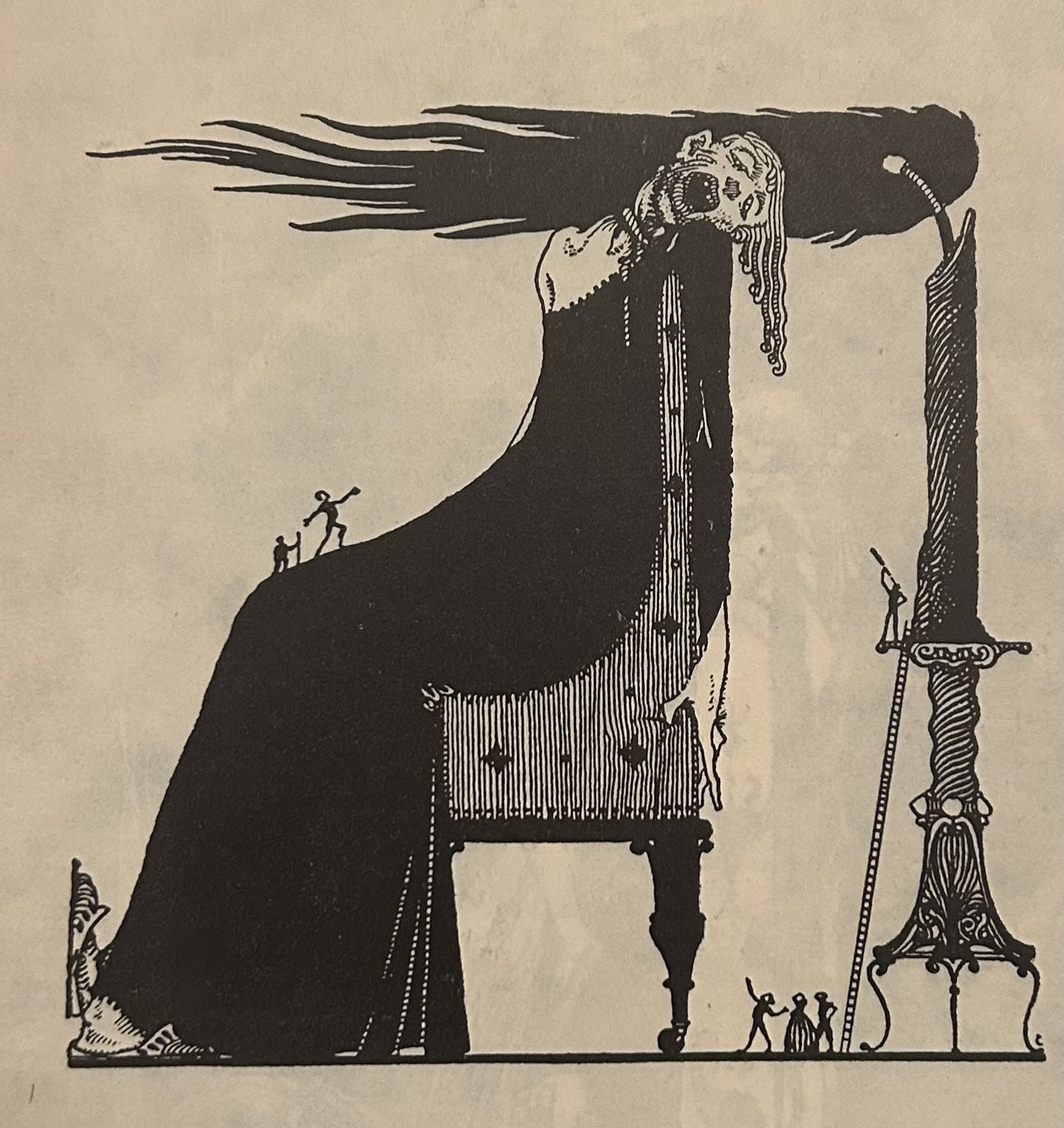
World Literature: Shakespeare and Goethe
My favorite part of Shakespeare’s influence on Goethe’s life is the role he played in shaping German literary nationalism. As a universal poet, Shakespeare’s works transcended national boundaries and, likewise, Goethe spent many years of his professional life establishing the introduction to Comparative World Literature [see post]. In this method, one compares translations with their originals, or contemporary translations in various languages of a single work, compares the interpretation and treatment of similar subjects and themes by the various literatures, or compares indigenous literary forms with borrowed ones.
Goethe’s Essays on Art and Literature
In his essay Literary Criticism (1771), Goethe gives tribute to William Shakespeare stating, “The first page I read made me a slave to Shakespeare for life. And when I finished reading the first drama, I stood there like a man blind from birth…I realized and felt intensely that my life was infinitely expanded” (Essays, 163). Goethe compares his life and importance as a writer to that of Shakespeare. “The noblest of our sentiments is the hope of continuing to exist even after destiny has apparently turned us to a state of non-existence”(163). Goethe wrote this at age twenty-two, 150 years after Shakespeare’s death. However, this is still true today, 400 years after Shakespeare’s death; he continues to exist. Why is this so?
In the spring semester, 2020, I taught a unit on Shakespeare’s Macbeth in a Survey of Western Literature class. In preparing for this course, I read Macbeth for the first time, hence, I turned to Goethe’s essay on literary analysis to give me more insight into the genius mind of Shakespeare.
In his second essay, Shakespeare Once Again (1815), Goethe begins by discussing Shakespeare as a poet. Shakespeare achieved the “highest goal”, according to Goethe, in his awareness to his own attitudes and ideas—knowledge of himself. A poet must have this knowledge in order to provide himself the “means to gain intimate knowledge into the minds of others”(166). By calling Shakespeare “one of the greatest poets”, Goethe implies that he is among only a few who can perceive the world, express their visions and allow the reader to share so fully in the awareness of the world. “Shakespeare makes the world completely transparent for us; he does not write for the eye”.
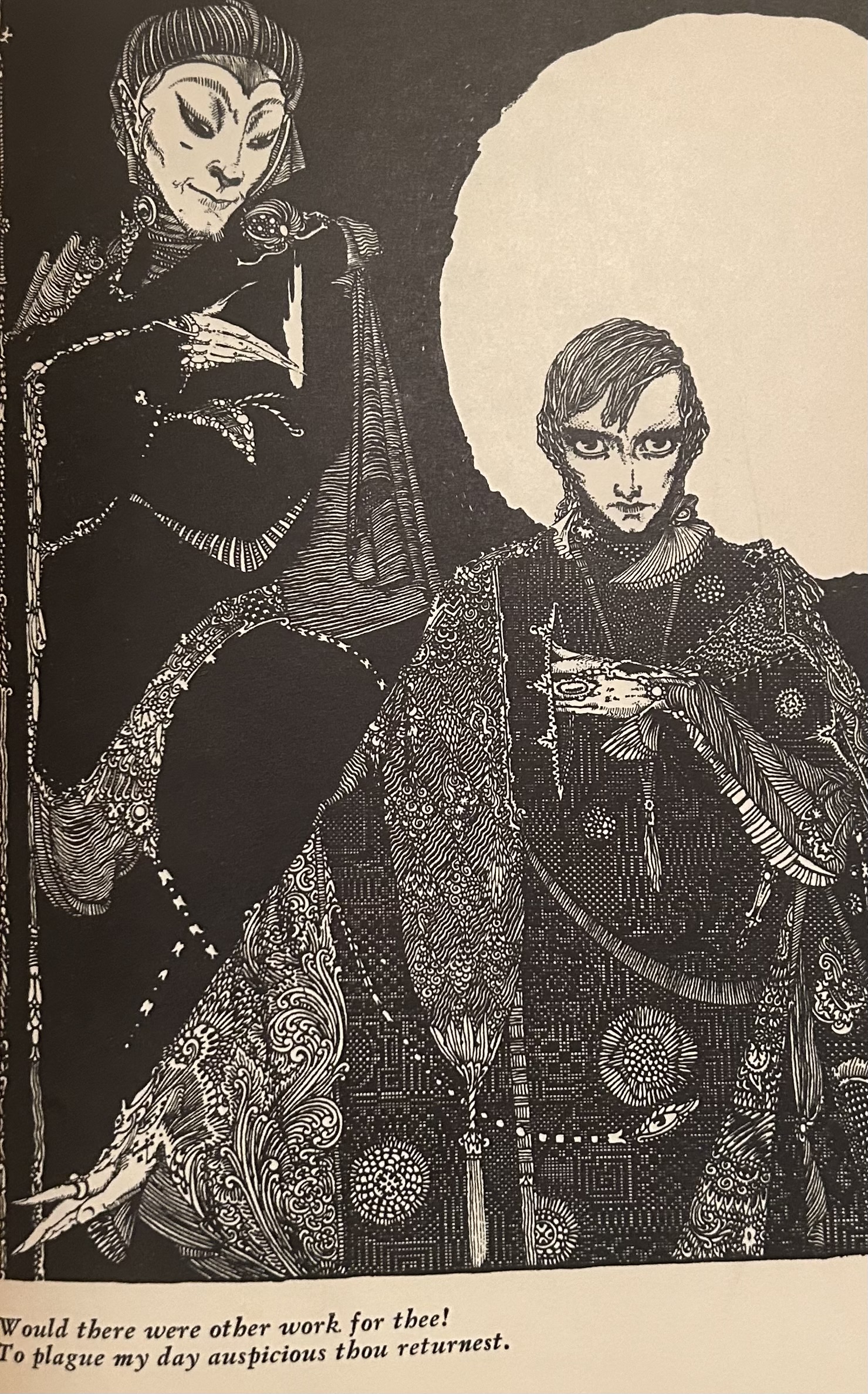
As we readily use our sense of sight to perceive the world, our inner sense can sometimes take a back seat. Shakespeare’s intent is to address our inner sense which immediately activates our creative imagination and help us determine the things that are otherwise inexplicable. He makes things happen which are easily imagined, for example, Macbeth’s witches. Many a gruesome scene in Macbeth becomes meaningful only through the power of imagination. As this play cannot always be performed for the reader, including myself, Shakespeare is able to conjure the description of certain characters plus the image of what is happening in the characters’ minds through a sequence of words and speeches. Quite a daunting task-unless you are Shakespeare. Through this skill, Goethe continues, minor characters can be more active than leading ones; everything fills the air, unspoken, during a historical event. “Everything that is lurking in the human heart in moments of great distress” become apparent. What the mind anxiously represses and conceals is revealed frankly and without inhibition. “We experience the truth of life, and we do not know how”(167).
How was Goethe, a German poet, exposed to England’s Bard? Goethe was a young law student in Leipzig and Strasbourg when he was first introduced to Shakespeare’s writings in Rede zum Shakespear’s Tag, 1771. German was one of the first languages in which Shakespeare’s plays were translated by the great Schlegel, Tiecks and Wolf Heinrich Graf von Baudissin. The German poet August Wilhelm Schlegel called Shakespeare ganz unser (entirely ours). The Sturm and Drang writers of Germany also championed Shakespeare whose plays helped liberate German theatre from the constraints of the neoclassical French dramas in which Goethe derives in his subsequent essays on Observations of Art and Literature (see Essays on Literature, Part 3). Shakespeare has even been honored in Weimar, home to Goethe, with a statue in his honor.
Just as Goethe honors his homeland of Germany in his poems and novels, England is ever present in Shakespeare’s works. Goethe states, “this land, surrounded by the sea, shrouded in mist and clouds, active in all corners of the earth” was portrayed by Shakespeare through its culture, strengths and weaknesses in a positive spirit (167).
Goethe continues with his tribute by comparing Shakespeare to Ancient and Contemporary Writers. “What inspires Shakespeare’s mind is the real world”(168). The reality of Shakespeare’s own world and its vitality form the broad basis of his writings. For example, even though Macbeth is set in 11th century Scotland, it bears little resemblance to that time. He had to rely on Raphael Hollinshed’s historical account and add his own impressions and conclusions. Scotland is the backdrop; Macbeth is the protagonist wherein he is the underlying connection between desire and moral obligation. Hamlet and his ghost. Hecate and his wife. Brutus and his friends. It is true for all of his protagonists. Thus, eternal conflicts for his characters can take place in “any world” based on reality or fiction.
In this analysis of Shakespeare, Goethe accomplishes a journey by “examining a single footprint which inspires and excites us more than gawking at a royal parade of thousands”(163). I can say the same of my journey over the past 10 years with Goethe!
Works Cited
John Gearey. (1986). Goethe Essays on Art and Literature. Translated by Ellen von and Ernest H. Nardroff. New York: Suhrkamp Publishers.
James Sime (1890). Life of Goethe. London: Walter Scott, LTD.
 My French Quest
“Shakespeare’s influence on Goethe”. Really cool! I can’t remember if this was presented to me in my teens when we studied Faust. But it all makes sense
Yes, I don’t typically think of Shakespeare’s plays when reading German literature, specifically Goethe- this was fascinating!