
My introduction to French Literature came through La Comédie Humaine by Honoré de Balzac (1799-1850). I was learning French, independently, at the time and attempted to translate Hugo’s Père Goriot from French to English word-for-word. This process was very laborious but worth the effort! I fell in love with Balzac’s story of Père Goriot and his unconditional love for his two daughters. This story was also a great introduction to the history and culture of nineteenth-century Paris in the Latin Quarter.
After I finished this novel, one year later, I lived in Paris for one semester for a Graduate Internship at the Sorbonne. Each morning, on my way to class, I retraced the steps of Balzac’s characters and setting in the Latin Quarter. It was magical!


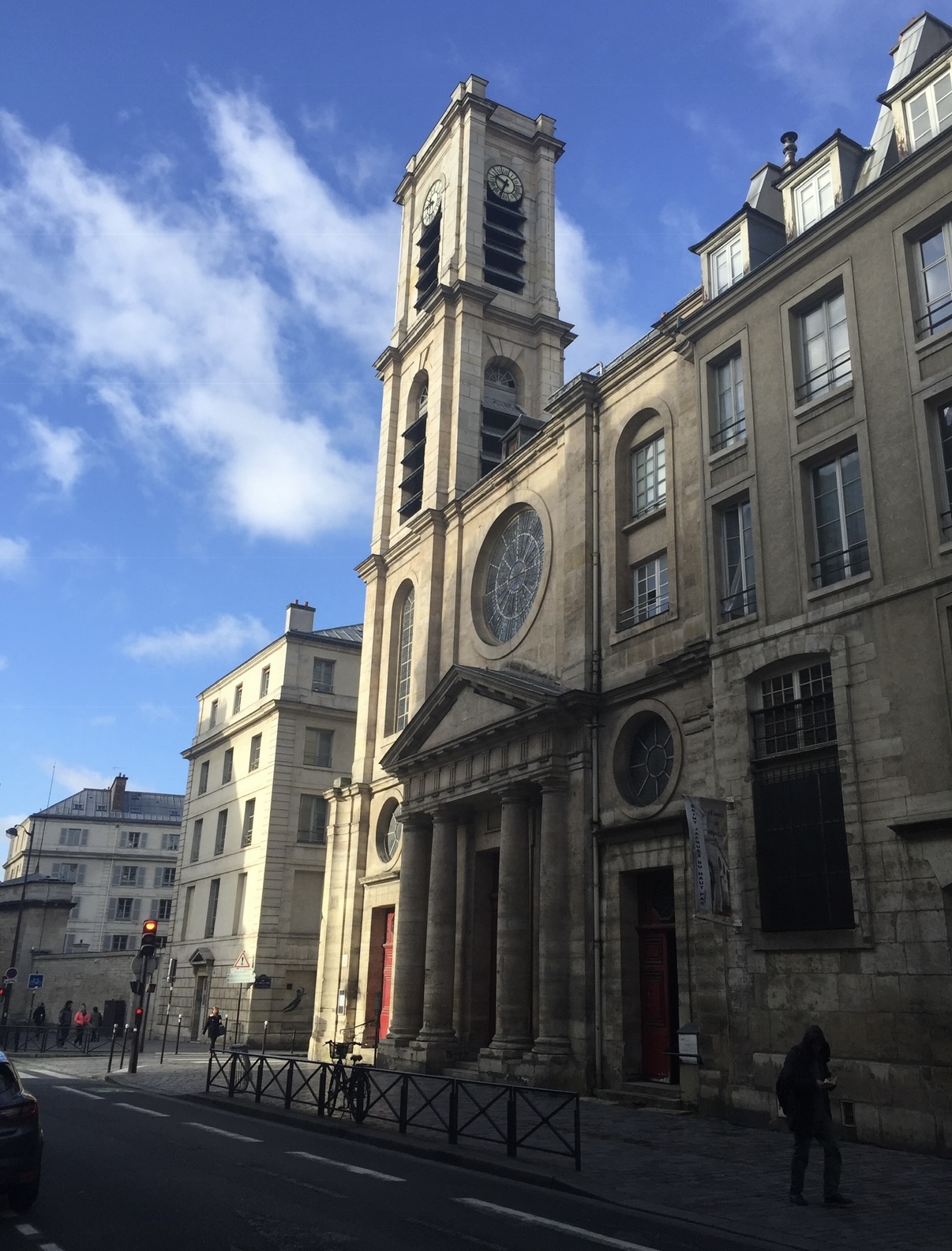

As a Romantique, Balzac was a powerful visionary who combined the gifts of observation of contemporary life in the first half of nineteenth-century France with the influence of the material and social environment on its citizens. He urged the writer of his day to consider himself a “teacher of men”. Victor Hugo was one of the first to see Balzac as a “revolutionary writer”, and Balzac saw himself as a public writer but never played the public role as Hugo did in the 19th century or Voltaire in the 18th (Pendergast, 60).
One reason I love the writings of Balzac is that he incorporates his studies of society not only as a writer, but also as a scientist and a historian. He was inspired by the work of Geoffroy Saint-Hilaire, a French naturalist, who traveled with Napoleon Bonaparte to Egypt on a military and scientific expedition from 1798 to 1801.
(Nina Burleigh gives much detail to this expedition in her excellent book Mirage. [see more about this in my post on Napoleon]
Balzac used Hilaire’s writings to show the parallel between zoological and social species to supply a basic structure and coherence as an ‘archaeologist’ and set a goal of popularizing the astonishing facts of modern science (Pendergast, 142). Balzac dedicated my favorite character, Père Goriot, to Saint-Hilaire as a tribute to his genius.
In addition, to gain a better understanding of life in Paris after the Revolution, Balzac shows the great principles of order, politics, and morality of this time in French society in La Comedie Humaine (Clark, 160). As Balzac describes, “La Comedie Humaine was a society with its geography, its genealogy and its families, its places and things, its persons and its facts; its coat of arms, its nobles and bourgeois, its artisans and peasants, politicians and dandies, its army, in a word, its world (Balzac, avant-propos, 1:19).
Balzac describes the first half of the nineteenth century world of Paris as a mobile landscape; la rapidité du tournoiement dominated by “a chance encounter, fast transaction, frenetic circulation of money, goods and bodies”(Balzac, Illusions perdues, vol. 4, p. 62). Balzac also refers to Paris as « the capital of the world…sans égal dans l’univers” (Balzac, Paris en 1831 Oeuvres diverses, vol.3, p.610). However, this Balzacien universe is more imagined than observed. Balzac reproduced in his work the sites, the objects, and the men which were fixed in his memory: the physical, the professional, the domestic, and the custom:
“L’homme…tend à representer ses moeurs, sa pensée et sa vie dans tout ce qu’il approprie à ses besoins” (Lagarde & Michard, 306)
One aspect of Balzac’s stories that I love is his ability to construct a visual canvas of nineteenth- century Paris for his characters in La Comédie Humaine to play out la vie quotidienne. He has a unique way of creating a physical image of each character. The flaneurs, who endlessly search for poetic delights, through long, intricate descriptions, often composed of a single sentence. In Le Pere Goriot, the main characters live in a vine-covered boarding house on rue Saint-Genevieve in the Latin Quarter near Val de Grace. His daughters live in the aristocratic area around the Boulevard Saint-Germain des Prés, the newly upscale quarter near the rue de la Chaussee-d’Antin. During my Graduate Internship in Paris, 2012, I walked by this apartment every day, and the surrounding neighborhood is just as Balzac describes:
“The house is of three storeys, with attic chambers. It is built of rough blocks of stone, plastered with the yellow wash that gives so contemptible a character to half the houses of Paris. The five windows of each storey of the facade have small panes and are provided with green blinds, none of which correspond in height, giving the outside of the house an aspect of uncomfortable irregularity. At the narrow or street end, the house has two windows on each storey; those on the ground-floor have no blinds and are protected by iron gratings.” (1835, Père Goriot, 2)
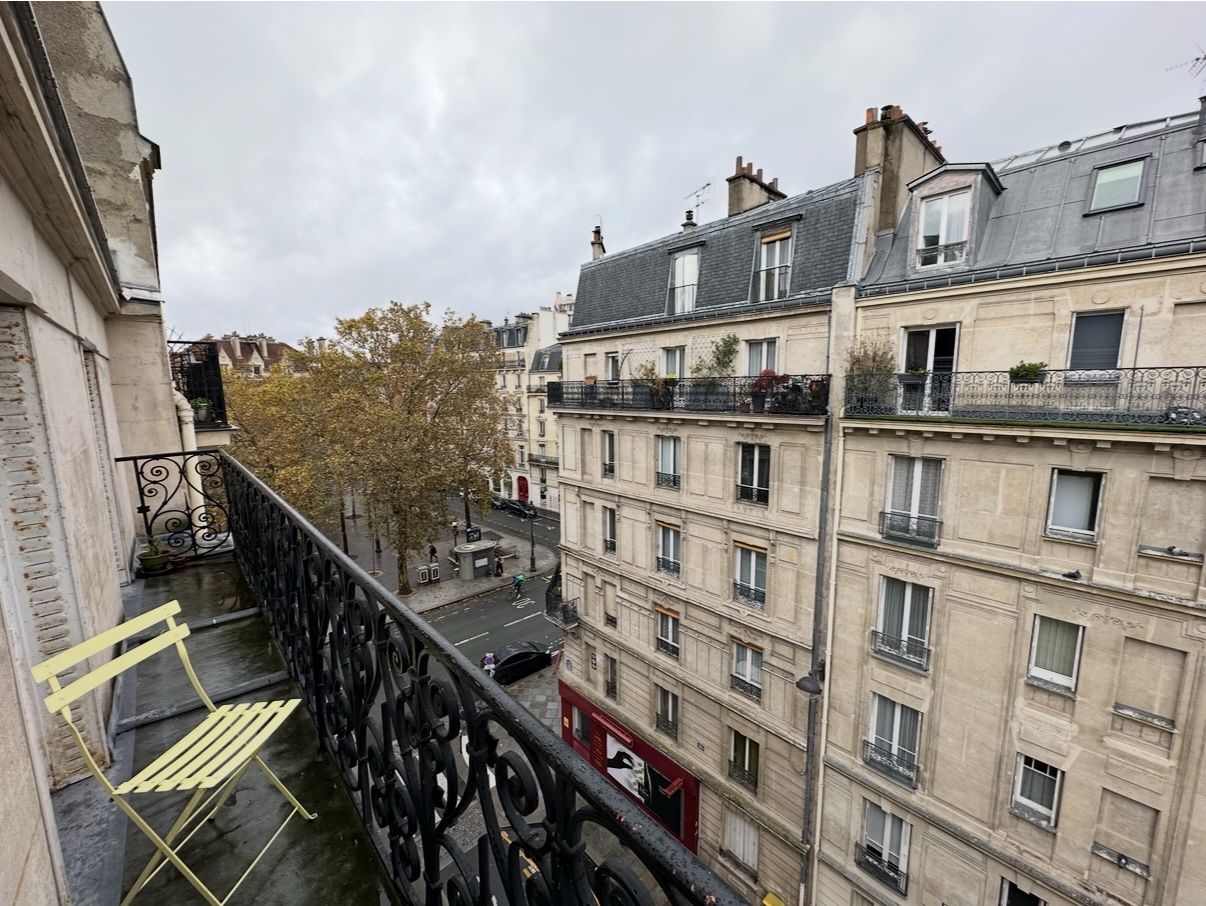
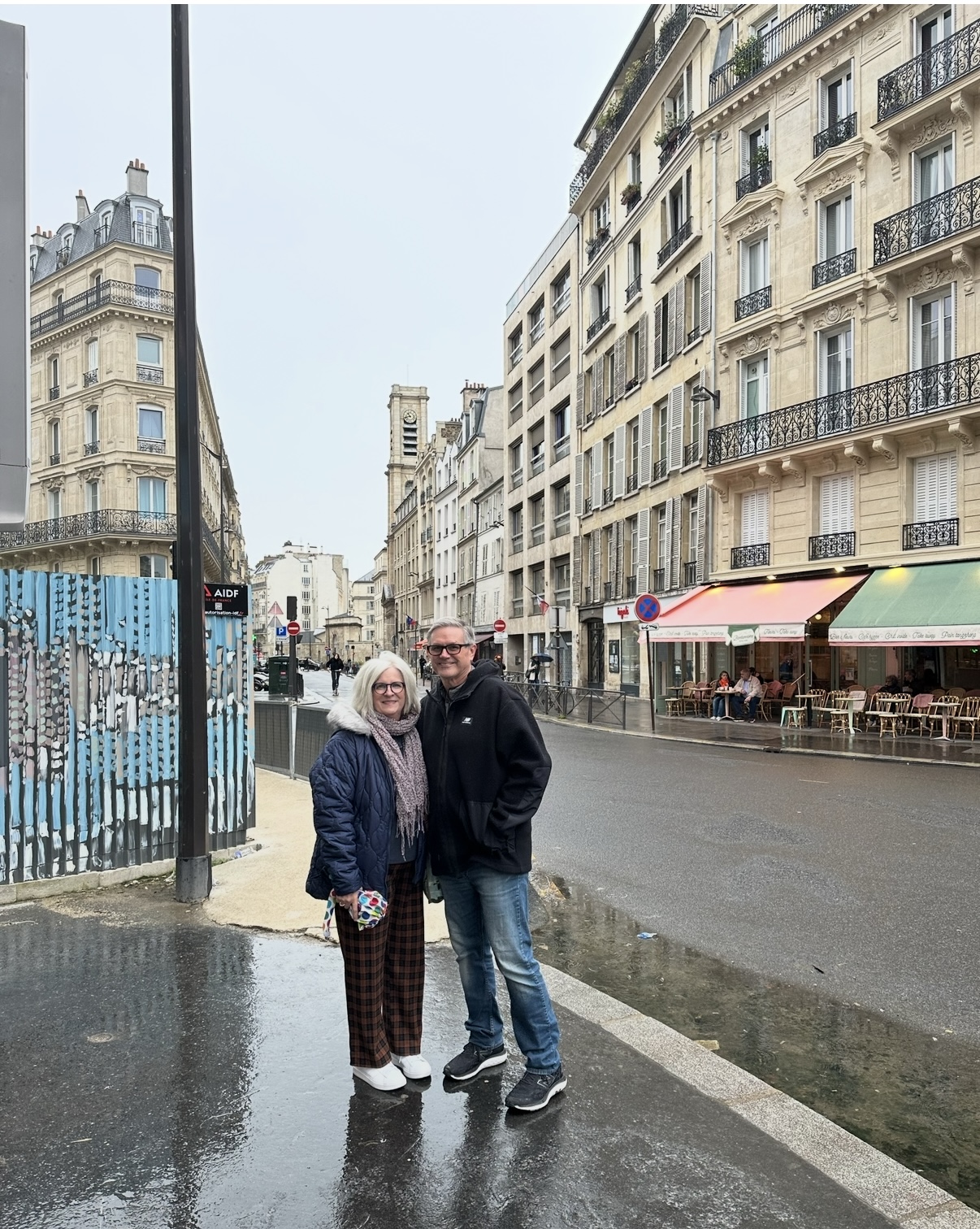
Keep in mind that Balzac’s Paris was experiencing economic and class struggles as a direct result of the Revolution as well as a new political and ideological order. More than one-third of the city’s inhabitants lived in an area not twice the size of Central Park (Pinkney, 46). This pre-Haussmannian Paris in Balzac’s novels can still be experienced today in the Latin Quarter from the Pantheon on rue Soufflot, down the rue Saint Jacque to Val de Grace.

Balzac died in 1850, two years after Napoleon III took office, and never saw the newly built Paris, where the mixing of classes was part of the new social context. Napoleon III and his architect, Baron Haussmann, rebuilt Paris over the next two decades with wide boulevards, mansards, iron-balustrades, and all the iconic images that come to mind when we think of Paris.

Honore de Balzac Pere La chaise Cimetiere Paris, Dec 2012
A second reason I am drawn to Balzac’s novels is the way he portrays his heroes, specifically the protagonists in Le Colonel Chabert and Le Père Goriot. In Le Père Goriot, Balzac describes the final days of a retired vermicelli maker, Jean-Hoachim Goriot, the title character, and his steadfast, unconditional love for self-absorbed daughters Delphine and Anastasie, who care more about his funding their lavish lifestyles than for their father’s ailing, meager existence. Despite of their selfish machinations, which lead to Père Goriot suffering a debilitating stroke, he spends each day wishing just to catch a glimpse of his daughters as they leave their apartments. His love remains unwavering, leading him to sell everything he owns, even the clothes off his back, to provide a lavish lifestyle for them. In the end, they are not even present at his funeral in Père La Chaise cemetery (where, ironically, Balzac is buried years later).
This post is not a literary criticism of Le Père Goriot with its main themes of Machiavellian marriages, the obligations of the older generation to the young, or social Darwinism; it is more about how this story of paternal love touched me as a daughter. Here are some of my favorite quotes from Balzac in Le Père Goriot (my translation from the French):
- “A father knows his children as God knows us: he can see into their hearts and know what’s really there…When I became a father, I understood God”.
- “Someday you will find out that there is far more happiness in another’s happiness than in your own.”
- “A letter is a soul, so faithful an echo of the speaking voice that to the sensitive it is among the richest treasures of love.”
- “If the human heart sometimes finds moments of pause as it ascends the slopes of affection, it rarely halts on the way down.”
- “You are my whole life. My father gave me a heart, but you made it beat”.
- “God must surely be on the side of a father who loves his children”.
Balzac’s home in Paris (Maison de Balzac, 47 Rue Raynouard, 75016 ) was converted to a museum and includes many original, edited manuscripts as well as his writing desk with a view of the Eiffel Tower.

Maison de Balzac, (view from back porch, 2014)
Finally, La Comédie Humaine contains 91 finished works (stories, novels, or analytical essays) and 46 unfinished works by Balzac. The following is a list of my favorites by volume:
- Scenes de la Vie Privée : La Bourse, Une double famille, Étude de femme, **Le Colonel Chabert
- Etudes de mœurs : Le Père Goriot, Le Lys dans la vallée, La Cousine Bette , Le Cousin Pons
- Scènes de la vie de campagne : Le Curé de Village ; Le Médecin de campagne
- Des Romans mystiques : Séraphîta
- Scènes de la vie militaire: Une Passion dans le désert
- Etudes philosophiques : Catherine de Médicis ; Jesus-Christ en Flandre (see my post : )
Further Reading:
https://frenchquest.com/2012/08/29/the-legend-of-jesus-christ-en-flandre-by-honore-de-balzac/ (in French)
Works Cited:
Lagarde & Michard. XIXe Siecle. Les Grands Auteurs Français du Programme. Bordas : France, 1969
Pendergast, Christopher. Paris and the Nineteenth Century. Blackwell Press: Oxford, 1995
Pinkney, David. Napoleon III and the Rebuilding of Paris. Princeton University Press. 1958
 My French Quest
La Comedie Humaine was my first venture into a sustained reading of French Lit, and I loved it. I read it piece by piece over two years with a Yahoo group (remember them?) and we even made our own collaborative website in homage to this great writer, see https://balzacbooks.wordpress.com/
For me, the most memorable story is An Episode under the Terror. There is a whole world of tragedy in that short story.
I look forward to a deep dive into this Balzac website, how fun. Thank you for sharing this with me Lisa. I will also read An Episode under the Terror. Robyn
Interesting and informative
Thank you Sheree!