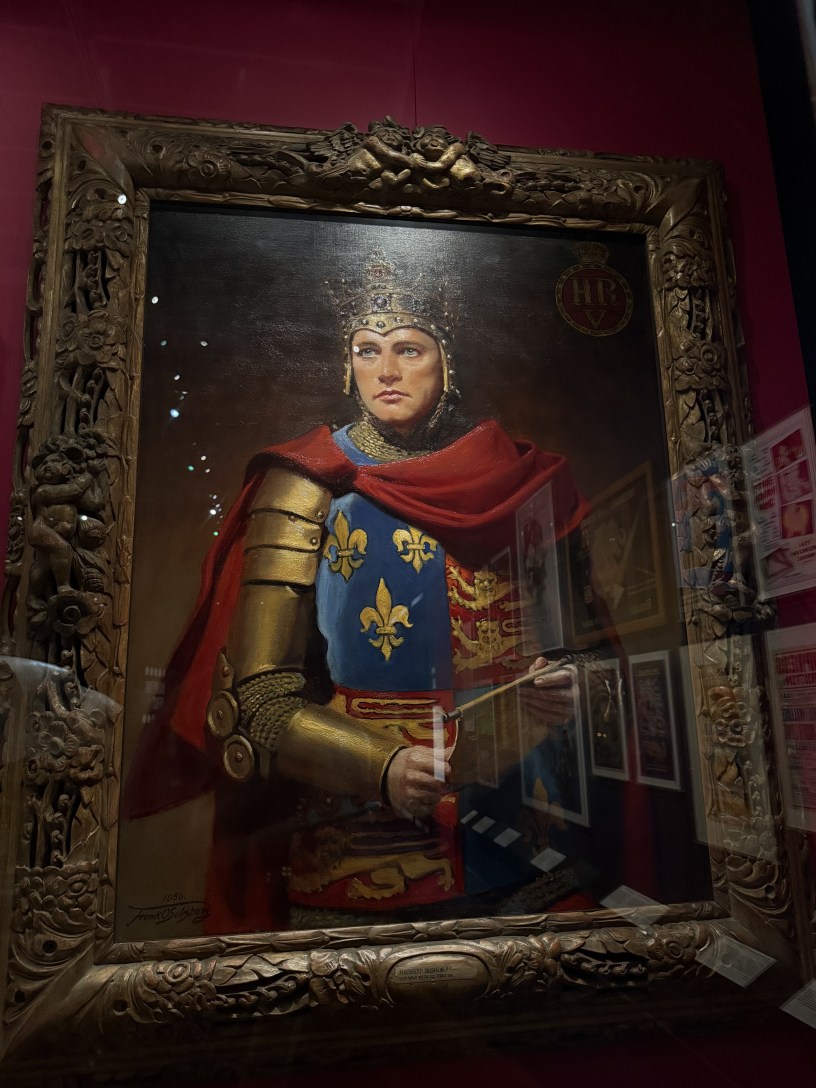
On a recent trip to London, I visited the National Portrait Gallery. My first stop was to see a portrait of King Henry V, as I have been reading Shakespeare’s play about his life. Unfortunately, it was not on display. The Portrait Gallery owns a portrait in profile of Henry V, painted posthumously decades after his death-, but it is not currently on display.
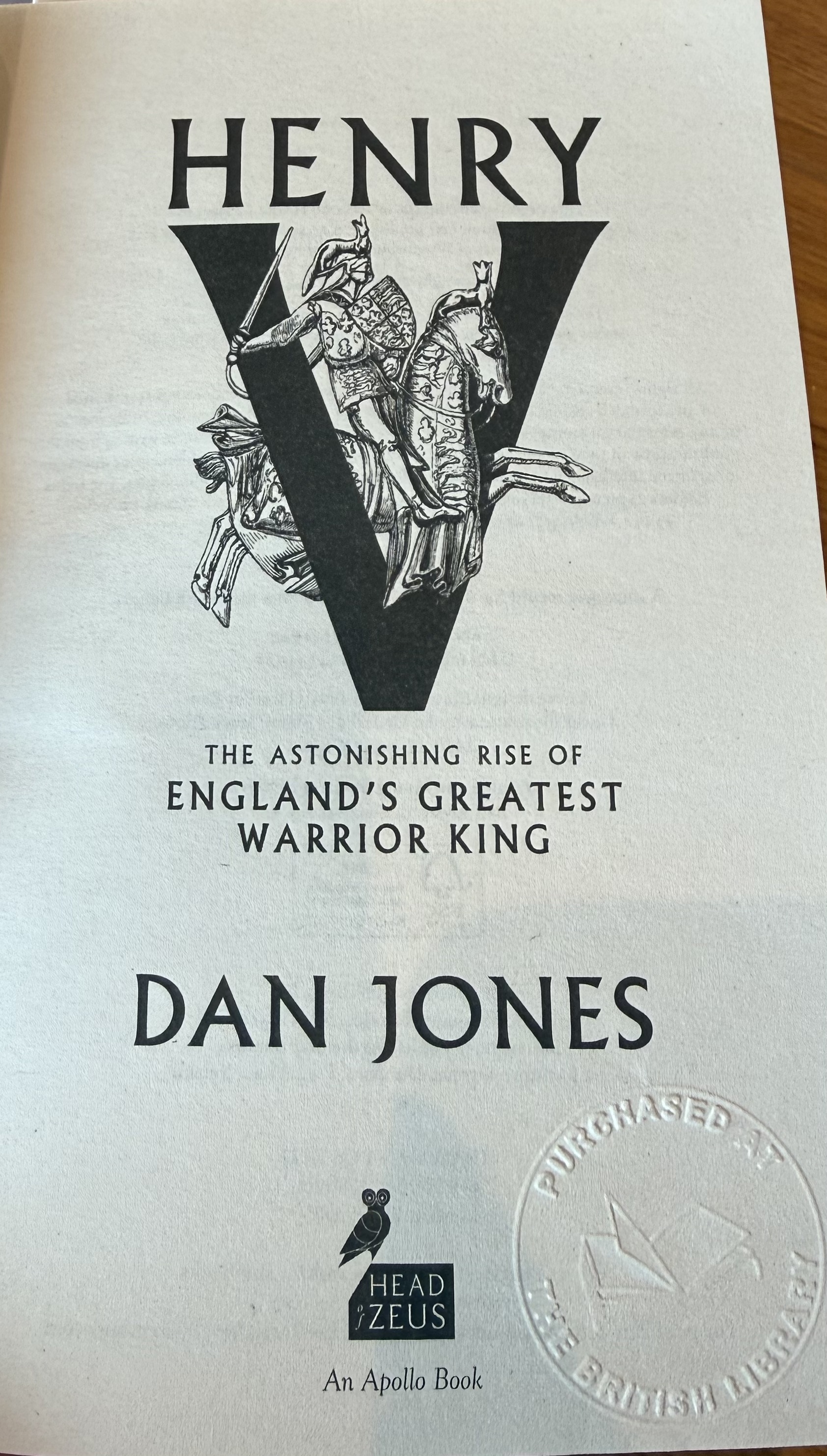
However, on my Henry V quest, I did find a nice biography of Henry V: The Astonishing Rise of England’s Greatest Warrior King by Dan Jones in the British Library Bookshop (with a nicely embossed seal!). Jones is a journalist for the New York Times and a Fellow of the Royal Historical Society. His research includes the Primary Sources of The Parliament Rolls of Medieval England, Rymer’s Foedera, Thomas Aquinas’ On the Governance of Rulers, Charles D’Orléans, and Geoffrey Chaucer’s The Riverside Chaucer.
Henry V (1386-1422) is regarded by many as the greatest medieval ruler of England, even though he reigned for only nine years. He dragged England out of the “doldrums” of the reign of his cousin Richard II and of his father, Henry IV. Henry V was the general who won the battle of Agincourt and seized the crown of France. He was a great statesman on the international stage while maintaining harmony in domestic politics. As a monarch, he did the most to promote English as the preferred language of poets and patriots. He was considered as “the acme of kingship: the man who did the job exactly as it was supposed to be done” (Henry V, 4). He died at the young age of just 35 in the Chateau du Bois-de-Vincennes in 1422. These attributes drew me to read Shakespeare’s tribute to Henry V and to pursue this deep dive into his life through Jones’ biography.
I like how Jones writes this biography of a medieval hero in a narrative style, in the present tense. In my Introduction of the recently published Song of Roland, I gave the same consideration in an untraditional approach to history. I feel that it helps us “know” these historical heroes of history better and understand the medieval world in real time.
Jones’s biography includes some incredible images of King Henry’s life and accomplishments from restricted collections at The Bodleian Libraries, Oxford; the British Library; and the BNF, Paris, France.
These images include: 1) The effigy in the Lancastrian mausoleum of his mother, Mary de Bohun; 2) the Knighting of Henry by Richard II in Ireland; 3)the portrait of Henry V from the Royal Collection, King Charles III; 4)notes from the royal surgeon who removed an arrowhead from deep within Henry’s skull when he was 16; 5) the Painted Chamber in the old Palace of Westminster (which has since been destroyed by fire; 6) Henry’s marriage to Catherine de Valois; and 7) Henry’s tomb effigy in Westminster Abbey which was carved from oak in the 1430’s—this is especially important as it is impossible to view in the Abbey as a visitor.
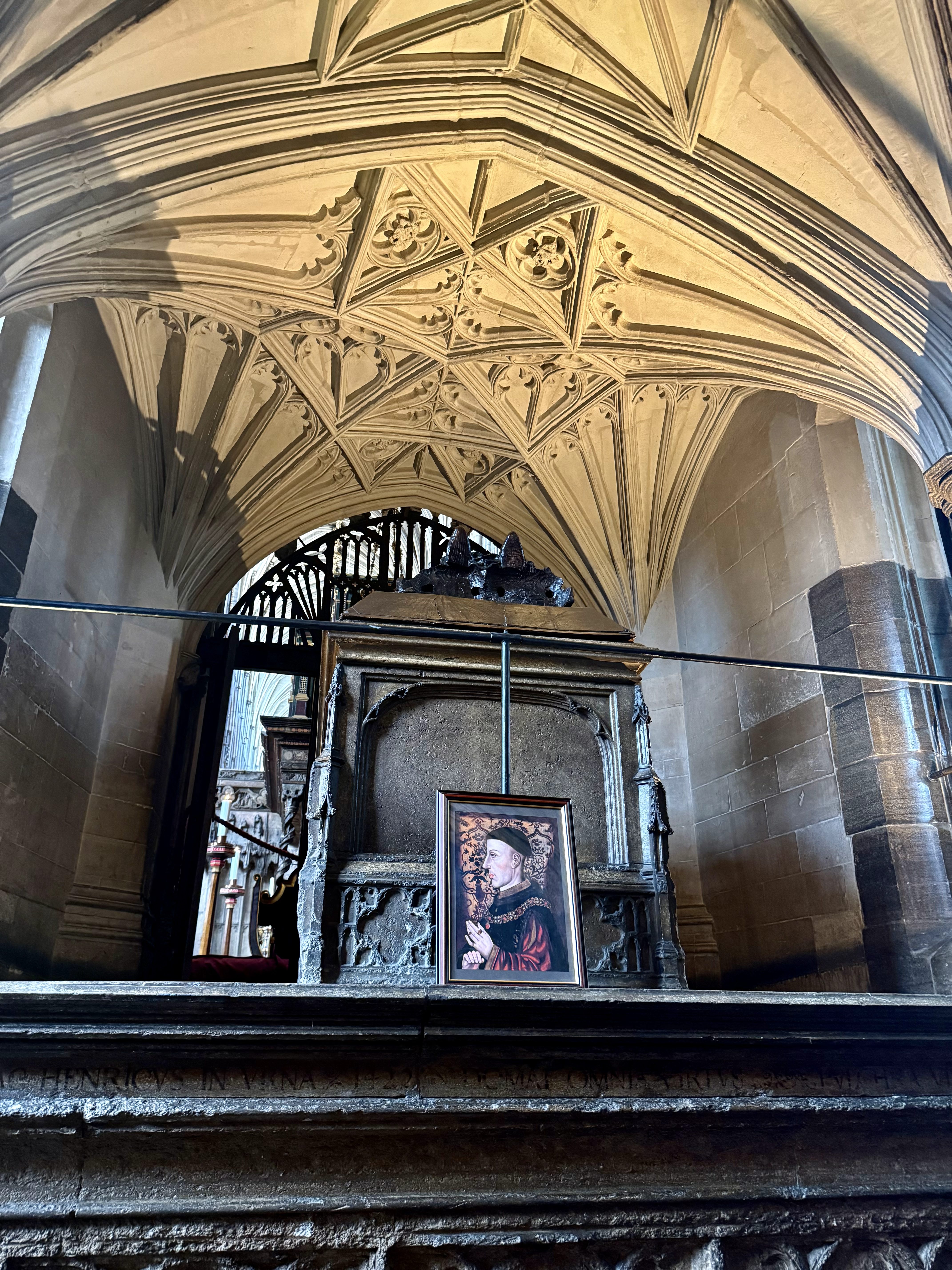
King Henry’s personal legacy has endured over the generations in part because of his youngest brother, Humphrey, who commissioned a Latin biography of Henry, known as the Vita Henrici Quinti, from the Italian humanist Tio Livio in 1430 (Jones, 398). Several other memorials to Henry exist in Agincourt and Rouen (Gesta Henrici Quinti).
In his biography, Jones gives account of both the short-lived victories and the massacres, coldhearted at times, which Henry V suffered in his short reign. I appreciate that he paints Henry as the compassionate son of a ruthless King, striving to right his father’s wrongs. The fact that he was well respected by his peers.
In the sixteenth century, Tudor historians recognized him as ‘the noblest king that ever reigned over the realm of England’(399). One of the strongest recognitions of King Henry is attributed to William Shakespeare in his ‘history plays’ in the fifteenth century—on my TBR for the Summer26!
Work Cited
Jones, Dan. Henry V: The Astonishing Rise of England’s Greatest Warrior King. Bloomsbury Publishing, London, 2024.

