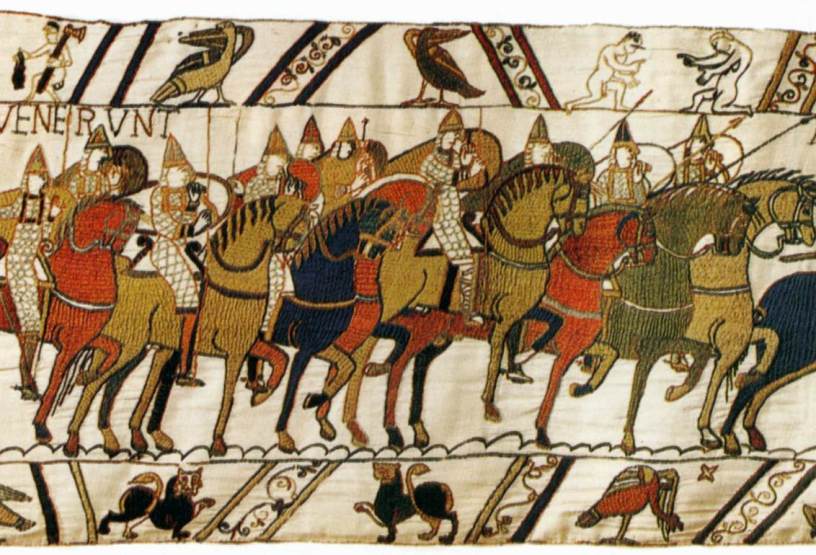
In my previous blog on The Song of Roland, I discussed the influence that this epic poem had in inspiring many Medieval knights in French battles. One of the most famous is the Battle of Hastings, fought in 1066 between the Norman-French army and the Anglo-Saxon forces of King Harold. This battle is depicted the Bayeux Tapestry, which is currently on loan to the British Museum [Sept 10, 2026, through July 11, 2027). This is the first time in nearly 1,000 years that it is back in England, where it was originally crafted!
In the Tapestry, a minstrel named Turold rides in the front of the army to inspire courage and unite the army before battle, and to preserve the stories and pass them on after the battles. His name is stitched in the tapestry. The minstrel in The Song of Roland is Taillefer, who sang of Charlemagne, Roland, and the heroes of the Battle at Roncevaux.
For this blog, I am reposting from 2014 about the history of French art and highlighting The Bayeux Tapestry, which I had the privilege to see in the town of Bayeux, France, in 2007! I am referencing my lecture notes from Dr. Philippe Pantet’s art history course, Cours de la Civilisation Française, at the Sorbonne in Paris (Hiver 2012). In his lecture “L’ Histoire de l’Art Français”, he included the artists, dates, locations and works of French art from the Moyen-âge to Surréalisme (1918-1969).
L’Histoire de l’Art Franćais: Moyen-âge Xe-XIIIe siècle (Middle Ages, 10-13 centuries
The history of French art can be traced back to the Moyen-Âge, Xe-XIIIe siècle, and can still be viewed today in the Musée du Louvre, L’Eglise Saint-Germain-des –Prés (la nef romane), Bayeux, France (The Bayeux Tapestry), and the Musée de Cluny, Paris.
Art Roman
The Art Roman developed in a society that was very rural and religious under the Carolingiens rule of Charlemagne up to the Capétiens rule of such well known French Kings as Hugues Capet, Philippe II Auguste, and Saint Louis (Louis IX).
The seven liberal arts of this era were divided into two groups: Le Trivium : grammaire (Priscien), rhétorique (Cicéron), and dialectique (Aristote) and Le Quadrivium : arithmétique (Pythagore), astronomie (Pythagore), géométrie (Euclide), and musique.
The architecture was influenced by the churches of northern Italy, northern Spain, and the south of France, which used massive, latin crosses of three nefs and one abside in their design. The edifices had voutes en berceau using solid contreforts and robust pillars.
The paintings of this time were frescoes with many colors and religious themes. Some of the churches you can visit today to see the Art Roman are :
Paris :
L’Église Saint-Germain-des-Prés
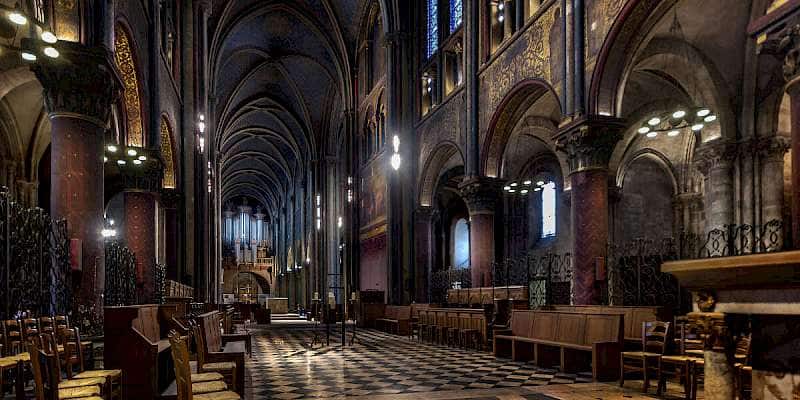
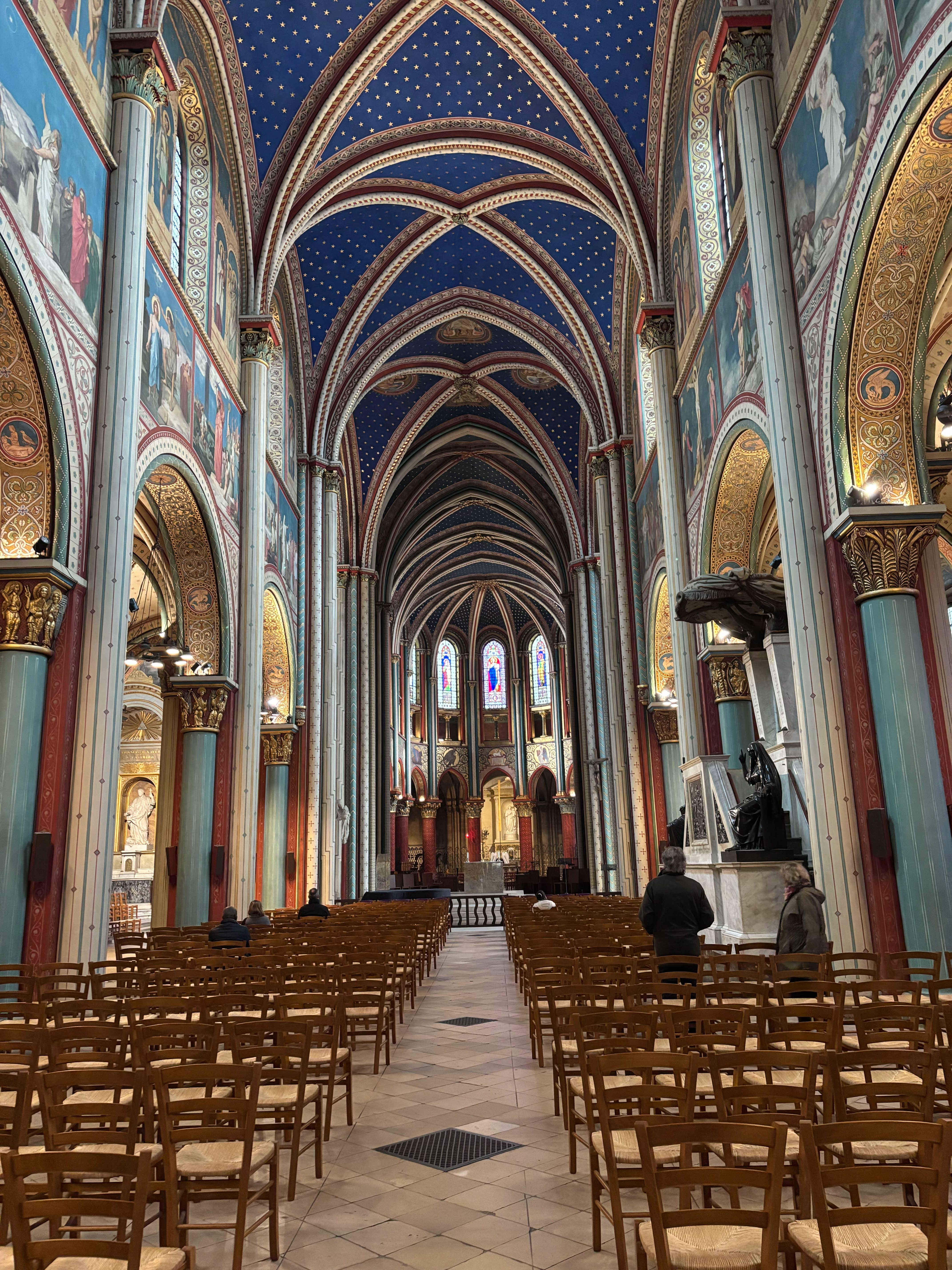
Musée de Cluny ; La Sainte-Chapelle (gothique rayonnant) ;

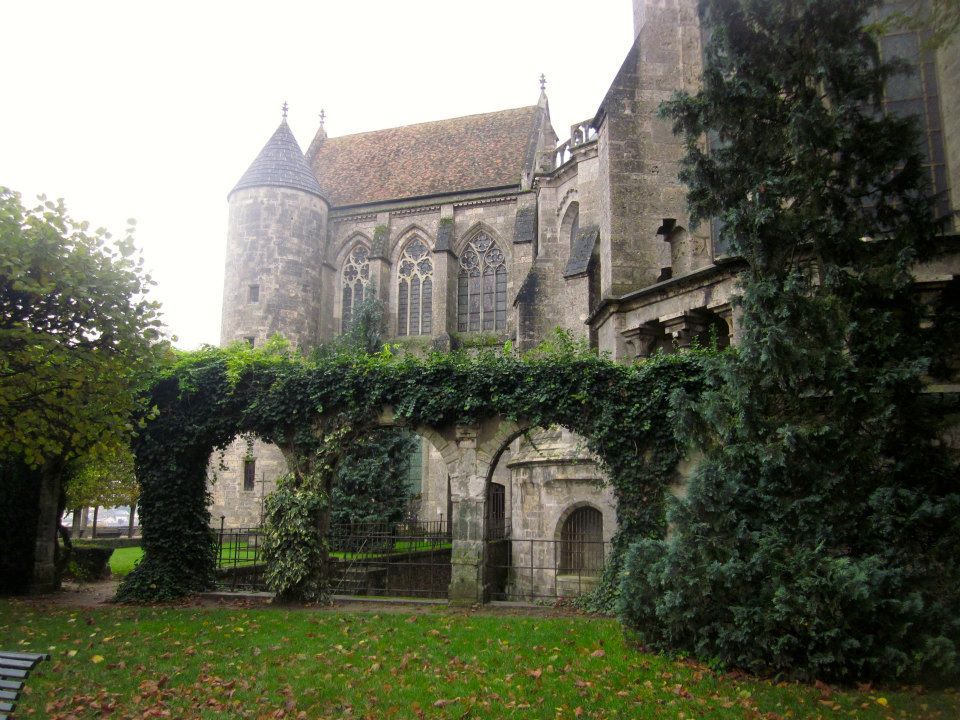
and L’Eglise Saint-Germain l’Auxerois (gothique flamboyant).
Outside of Paris: L’ Église Notre-Dame-la-Grande, Poitiers ; Cathédrale d’Angoulême, Vézelay, la basilique ; Cathédrale d’Amiens ; Cathédrale de Reims and Cathédrale de Chartres ;

The Bayeux Tapestry
The Bayeux Tapestry was created during the reign of Mathilde around 1064 to chronicle the Battle of Hastings. It is 69m long and 50 cm wide and includes 58 scenes of the famous battle. Some of the more well-known panels show Halley’s Comet as it preceded the invasion of England, Guillaume riding on his horse into battle and the death of King Harold.
Architectural style
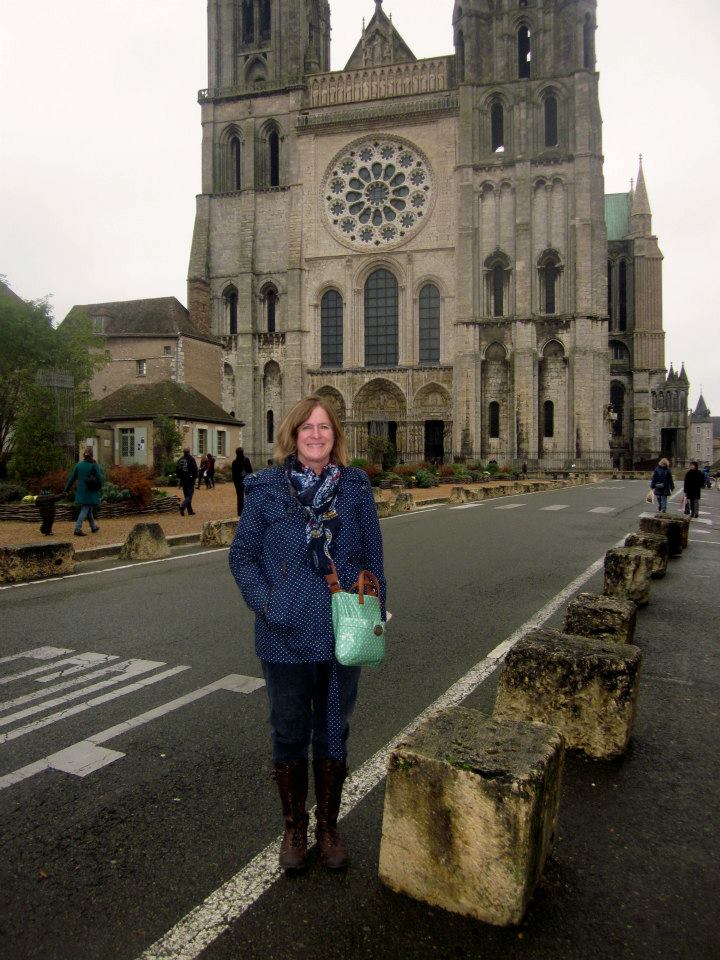
There are several different Gothic styles that can be found today from the Moyen-Age. We are fortunate to be able to still see examples of this style in many Cathedrals today. I have included some photos of the Gothic churches that I have visited below:
• L’art Gothique (1140-1190) : Arc boutants, Harmonious façades, and double déambulatoires which can be seen in L’Eglise Saint-Denis and Saint-Étienne de Sens, Paris
• Gothique Classique (1190-1240) : During this period, churches began adding labyrinths, which can be seen in the Cathedrals of Chartres and Reims
• Gothique Rayonnant (1230-1350) : Occidental facade with two stages, An Abbatiale choir, large stained glass windows which emitted rays of light « rayonnant » such as : Notre Dame de Paris, La Sainte-Chapelle, Palais de la Cité of Paris and L’abbatiale Saint-Ouen of Rouen
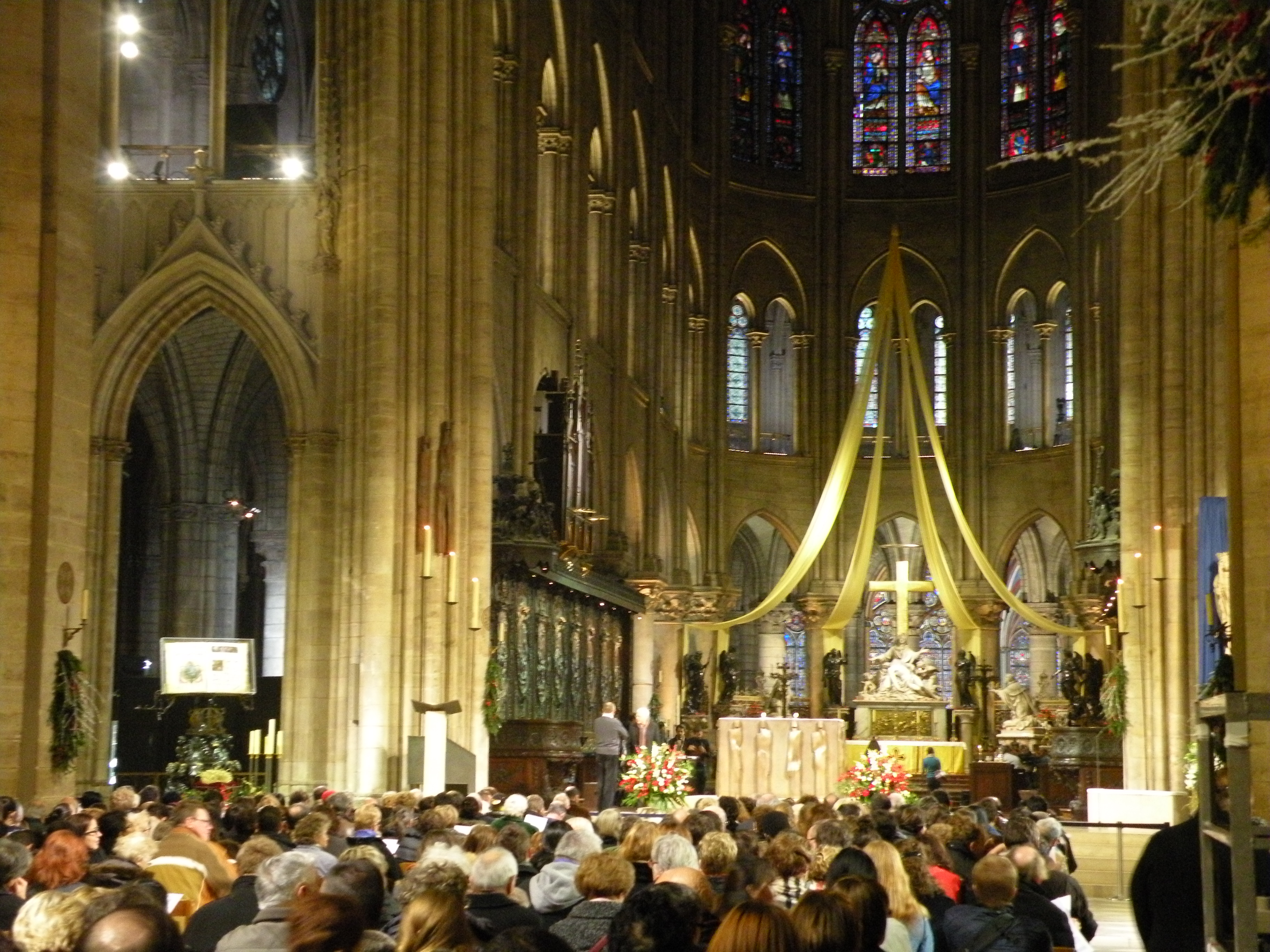
Notre Dame Cathedral, 2012 (before the fire)
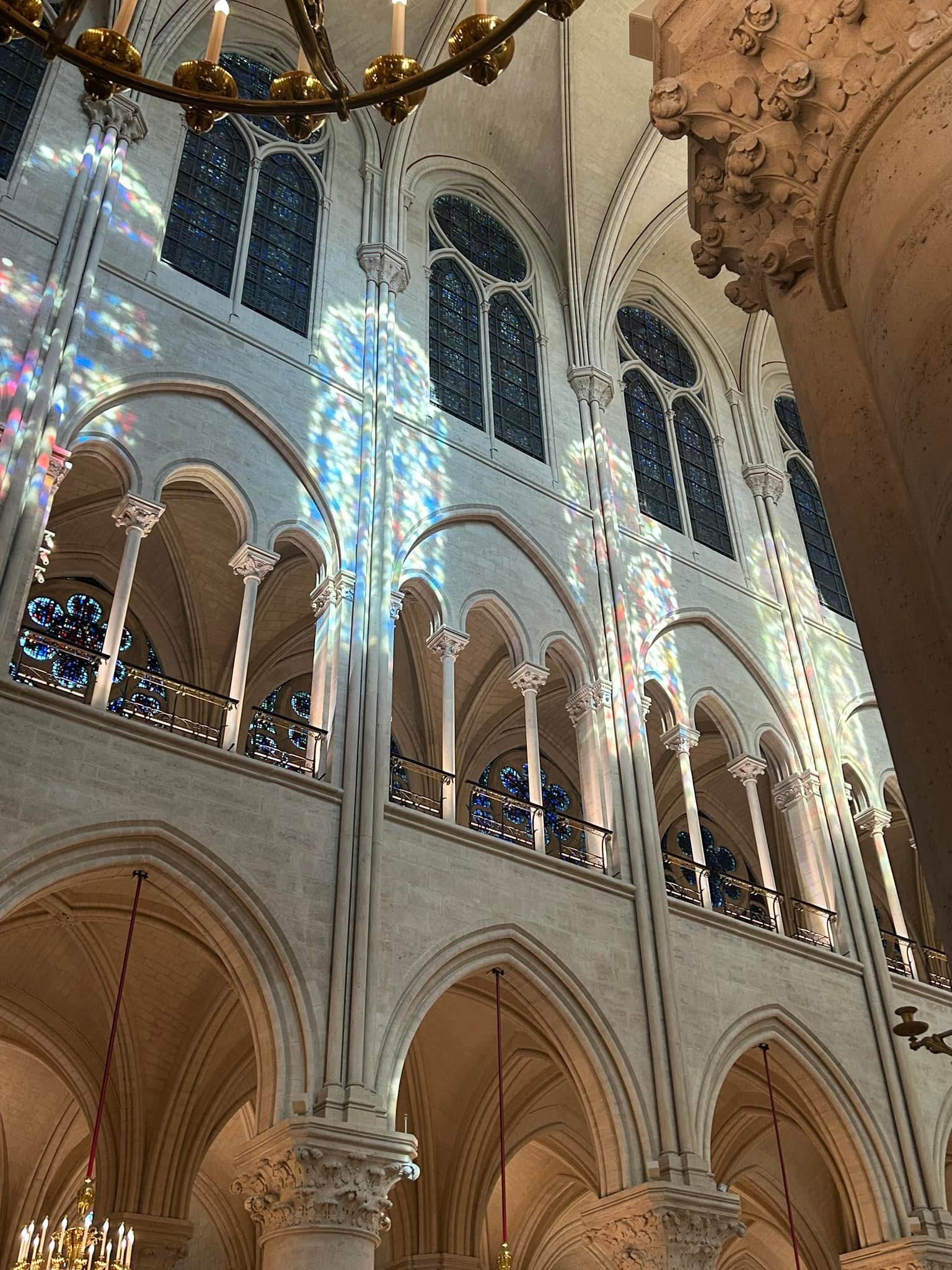

• Gothique Flamboyant (1350-1520) : The basic structures are the same as the other Gothique styles but the décor evolves into a « flamboyant » ornamental style as in Saint-Germain l’Auxerrois
• Gothique International (1400s) : In paintings and sculpture, the characters are delicate and traditionally without emotion and are represented in vivid colors and can be seen in central and occidental Europe.


Fascinating
Thank you!