How old is French civilization? Anthropologists have found cave paintings from le paléolithique era (35,000 to 5000BCE) in Dordogne, France which depict the Cro-Magnon man who lived in extreme environments.
In this post, I have listed the artists, dates, locations, and works of French art from the Prehistoric to the Moyen-Âge, using my lecture notes from Dr. Philippe Pantet’s Art history course, Cours de la Civilişation Française, at the Sorbonne University in Paris ( 2012-2013). These notes have been very useful to me through the years as I have visited museums, churches and historical monuments around France, and I hope they will be helpful to you as well!

Ancient France
Le paléolithique: « Paléolithique » relates to the time from 35,000 BCE to 5000 BCE. Anthropologists found in Dordogne, France, a “Cro-Magnon” man, cave paintings, and decorative figurines. Cro-Magnons lived in environments that constantly changed due to the rhythm of glaciations and climate warming. They chased now-extinct animals such as mammoths, cave lions, aurochs, and woolly rhinoceroses. They built their habitat, invented a powerful tool, buried their dead, and created the splendors of the Chauvet or Cosquer caves, thus laying the foundations of our humanity.
The most famous representations of art are found in the paintings from the Grottes de Lascaux, depicting horses and cows alongside human figures, discovered after WWII. Lascaux was open to the public until 1963, but the carbon dioxide from humans’ breath began to damage the paintings. Therefore, today we have to rely on pictures and video to see these ancient paintings. There is also an excellent video presentation (in French) by Patrick Lostcathare on YouTube.
– See more at: http://www.lascaux-dordogne.com/en/lascaux-cave#sthash.eG4X0vZG.dpuf
Le néolithique (between 5000 BC to 1500 BC) “Néolithique” refers to the period characterized by farming, the domestication of animals, the development of crafts such as pottery and weaving, and the making of polished stone tools (Ravise, 34). Throughout France, one can find remnants in the Bretagne and Auvergne regions such as les menhirs, stone circles and chamber tombs, and les dolmens (similar to Stonehenge in England). The most famous of these are the Carnac stones (3300 BCE) and the stones at Saint-Sulpice-de-Faleyrens.
L’âge des métaux (1000 BCE to 700 BCE) The « Bronze Age ». Tools and houses are made in rectangular form.


La civilization celtique: In 700 BC, the Celts, the Belges and the Iberes began to settle in Gaul (now France) around Paris, which they called « Parisii ». Julius Caesar reported that people known to the Romans as “Gauls: called themselves Celts. In 58 BCE, the Helvetii planned to migrate westward, but Caesar forced them back. In 52 BCE, Vercingetorix, a Galois commander, led a revolt against the Roman occupation but was defeated at the Siege of Alesia and surrendered (Ravise, 56).
La Gaule Romaine: (120 BCE to second half of 5th Century CE):
- The Romans built temples, theaters, arenas, aqueducts and des arcs de triomphes in Gaul to resemble their homeland. At this time, Paris was called « Lutèce ». There are still many remnants of the Gallo-Romaine period in France.
- South of France: Le Pont du Gard, La Maison Carrée de Nîmes, L’Arc de Triomphe,’L’Aix Les Bains, Le Théâtre Romaine de Lyon, and Le Théâtre Romaine d’Orange.
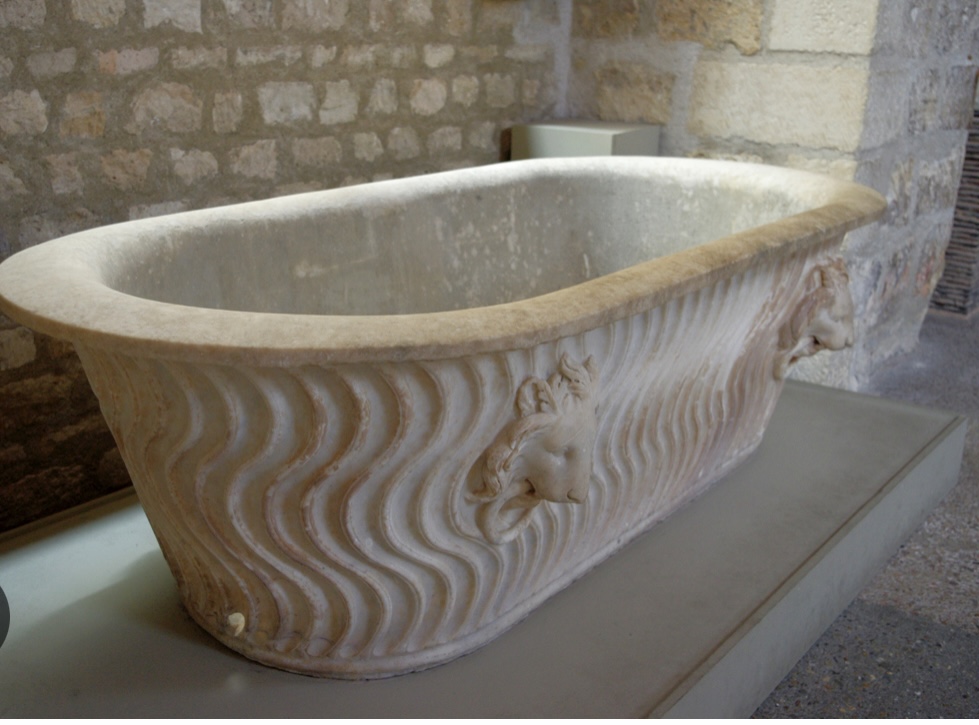
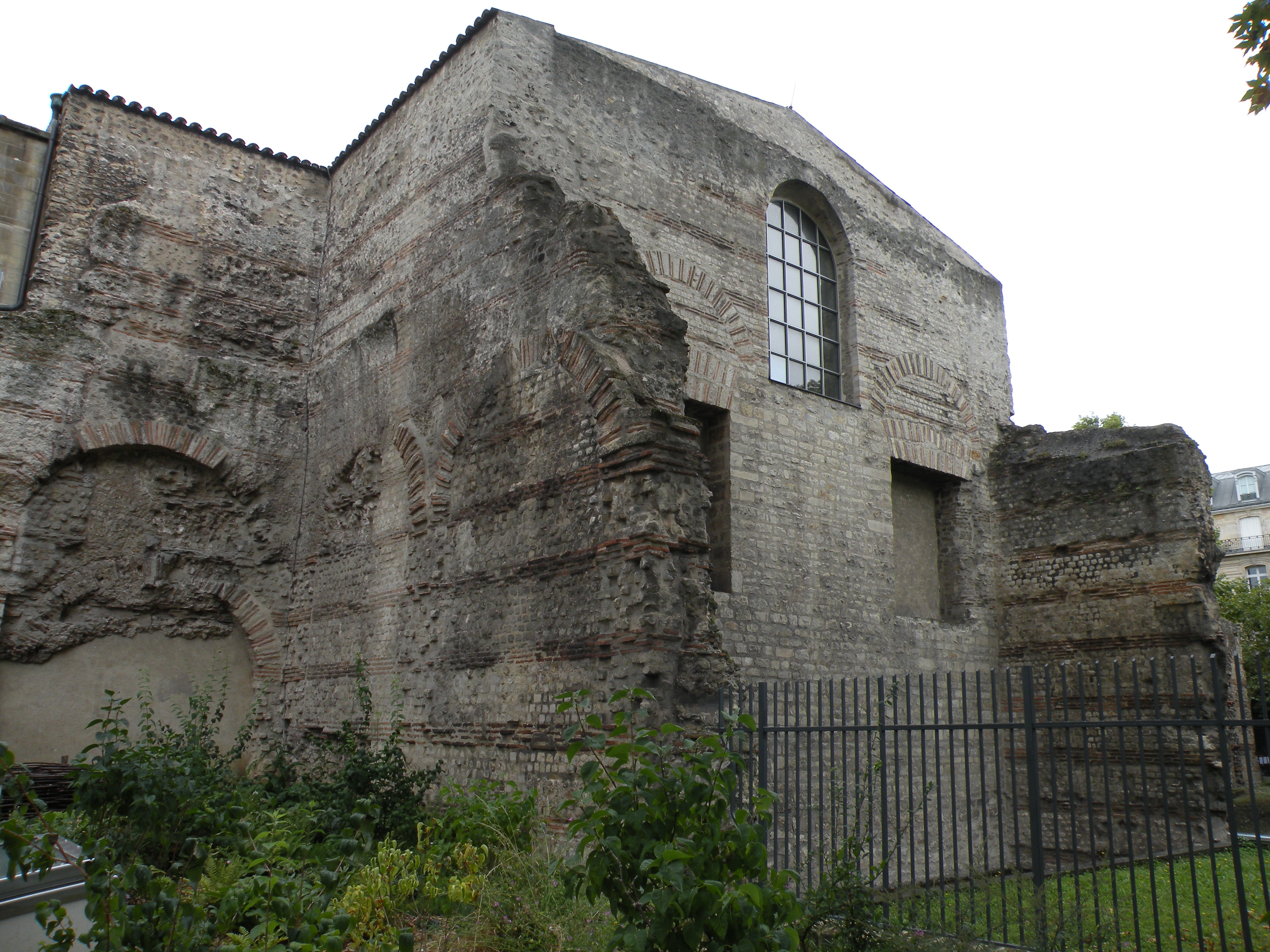
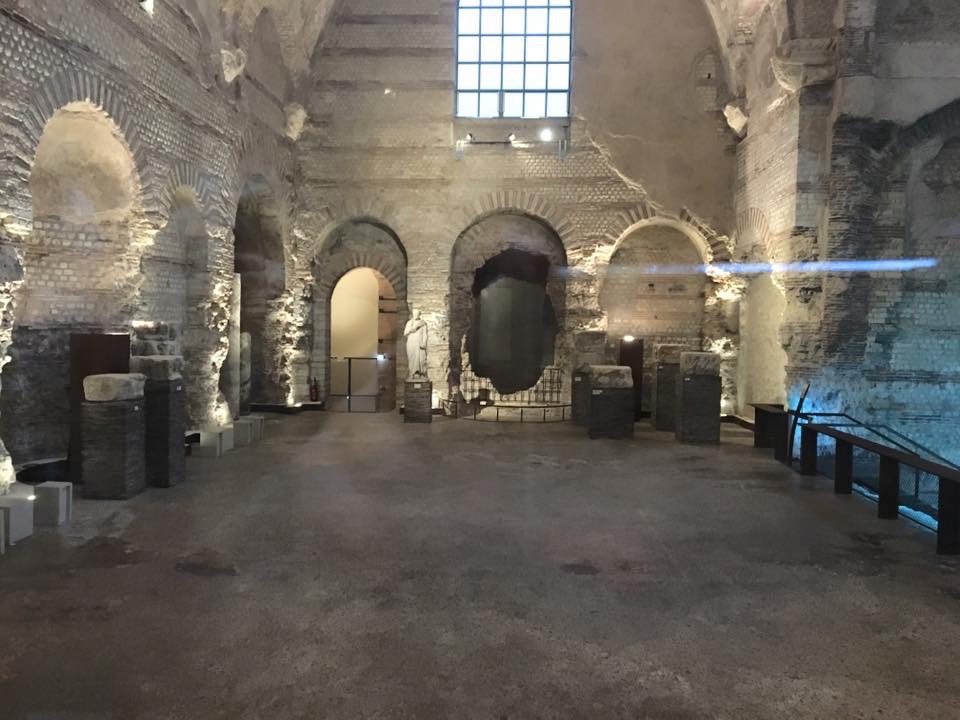
- In Paris : Les Thermes de Cluny, Les Arènes de Lutèce, Le Crypte d’ Archéologique, le Parvis Notre Dame, la Forum Lutetia (present day Pantheon on rue Soufflot and rue Saint-Jacques)
As the Romans began to settle in Gaul, Pliny the Younger wrote: “I did not think they (Gaul) had booksellers in Lugdunum (modern day Lyon, the first capital of France)!” This joke is a measure of Romanization. It was not enough for the Romans to reconstruct their public life or to identify the remains of Roman architecture; they had to make their new home what we would call today “Roman way of life (Ravise, 69).”
[photo: Thermal Baths, Musee du Cluny]
La Christianisation (end of 1st century) : After the death of Jesus Christ, around 33 CE, Christianity began to spread across Europe. In Gaul, Saint Denis introduced Christianity to the Catholic church around the 3rd century. Legend says that he was beheaded on le mont des Martyres (present day Montmartre) and carried his own head down to Lutèce. The church of Saint Denis (north of Paris) was built upon this site (Depaepe).
In 312, Emperor Constantine converted to Catholicism and, in 313, together with the Emperor Licinius, made the Edict of Milan which enforced freedom of religion.
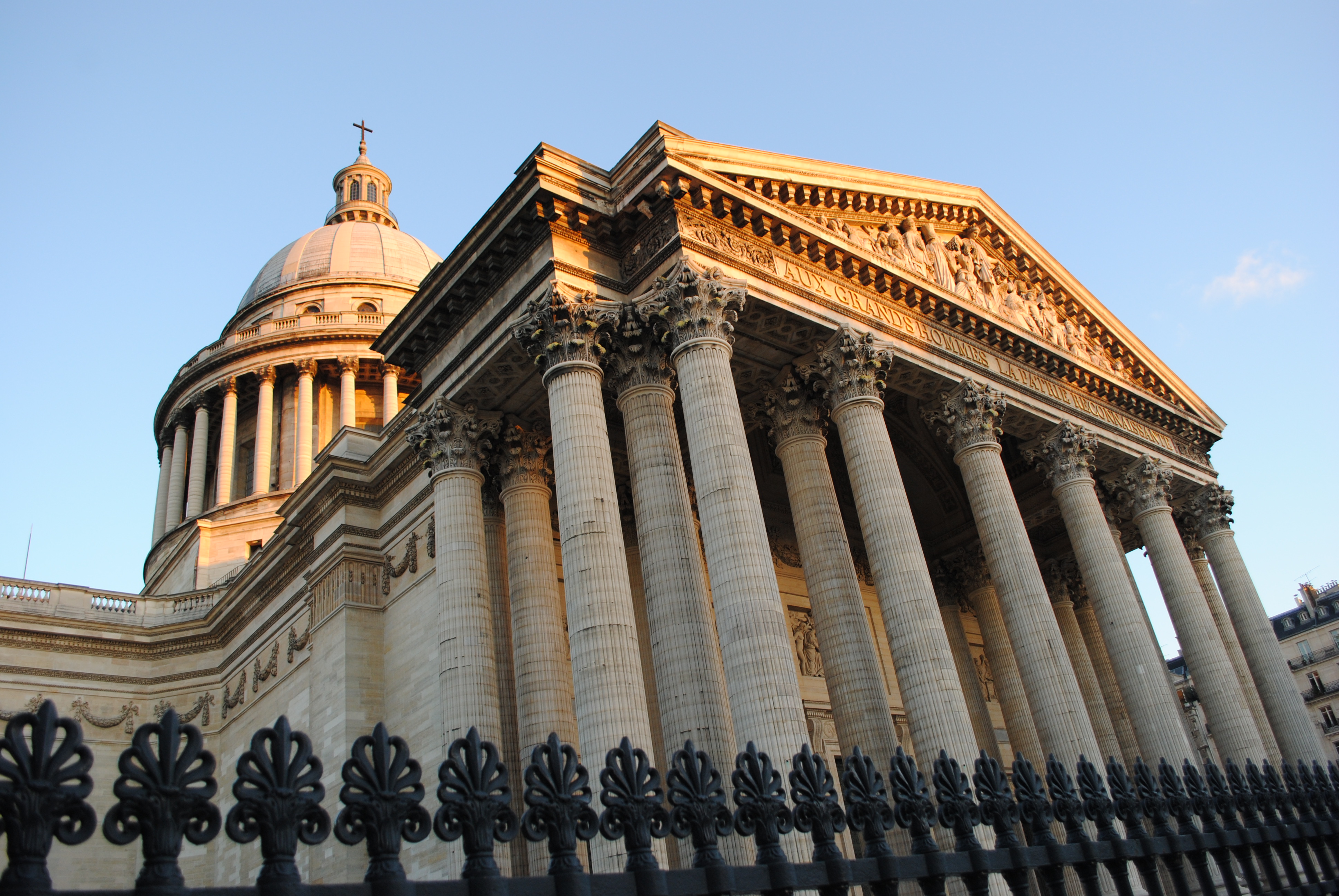
In 451, Saint-Genevieve organized troops to fight against Attila the Hun. He attacked Orleans instead. Louis XV had a church built in Saint-Genevieve’s honor; after the Revolution, it became known as the Le Panthéon.
Les Invasions barbares: (5th century):
Gaul was invaded in the 5th century by Barbarians: the Wisigoths and the Alains from Aquitaine, The Francs from the north (Belgium), The Burgondes from the Saone and Rhone valleys, and the Alamans from Alsace. However, these were not hostile people, as the name barbaric suggests in English. The Romans and Greeks before them were grouped under this term as “those who did not speak their language and did not share their model of civilization based on the city and writing” (Depaepe). The same was true of the Barbarians arriving in Gaul with non or weakly Christianized populations. Hence the pejorative sense of uncivilized that was associated with that term and consequently the prejudices of “cruel,” “fierce”, and “inhuman” (Depaepe). Les Gaulois eventually became Francs during this time and adopted the Latin language. This also marked the period known as Le Moyen Age.
Works Cited
Depaepe, Pascal. La France du Paléolithique. Inrap: Paris 2009
Kessler, M. Cours de Civilisation de la Francaise, Sorbonne Université. 2012
Ravise, J. Suzanne. Tableaux culturels de la France. NTC Publishing, 1995

