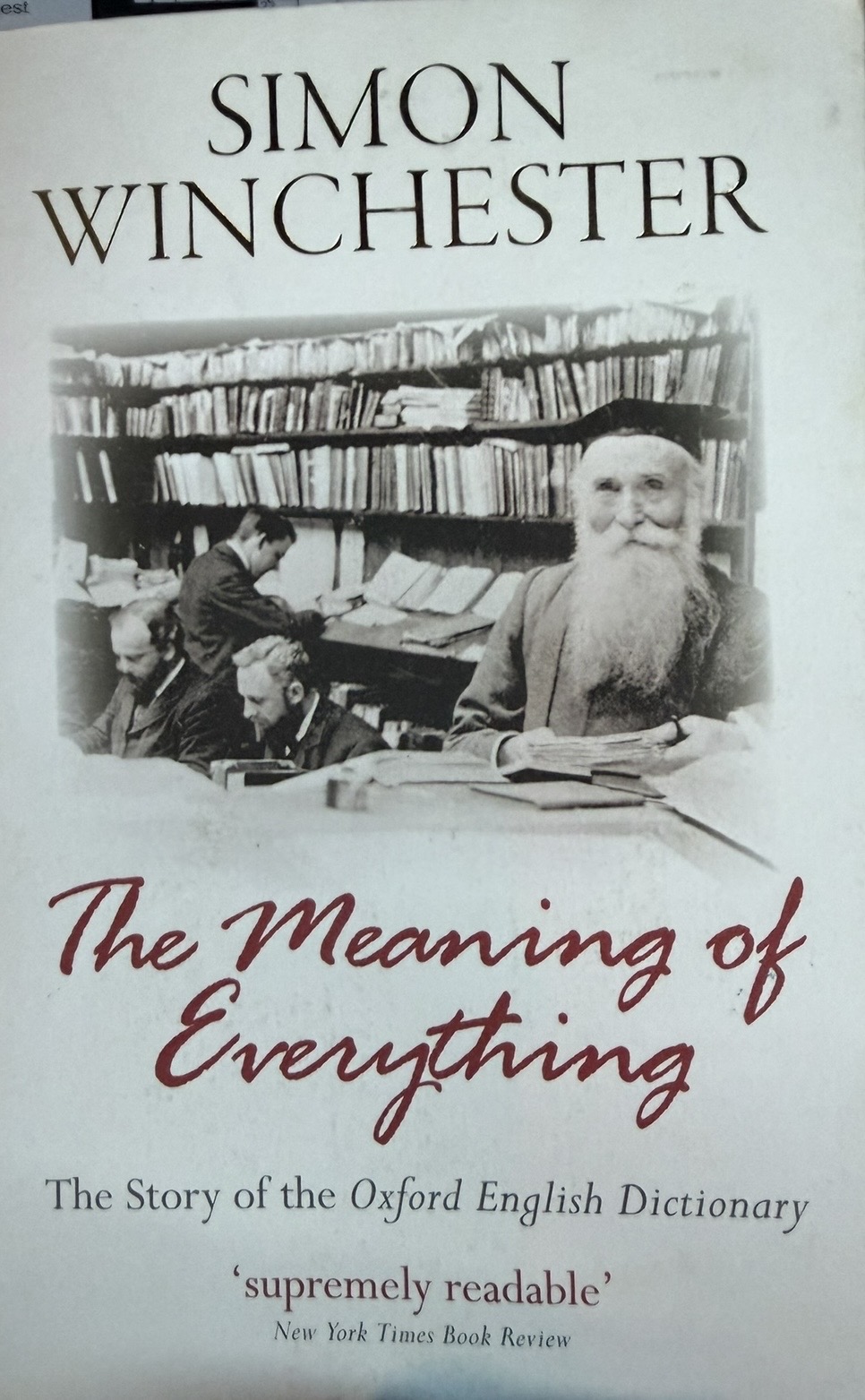
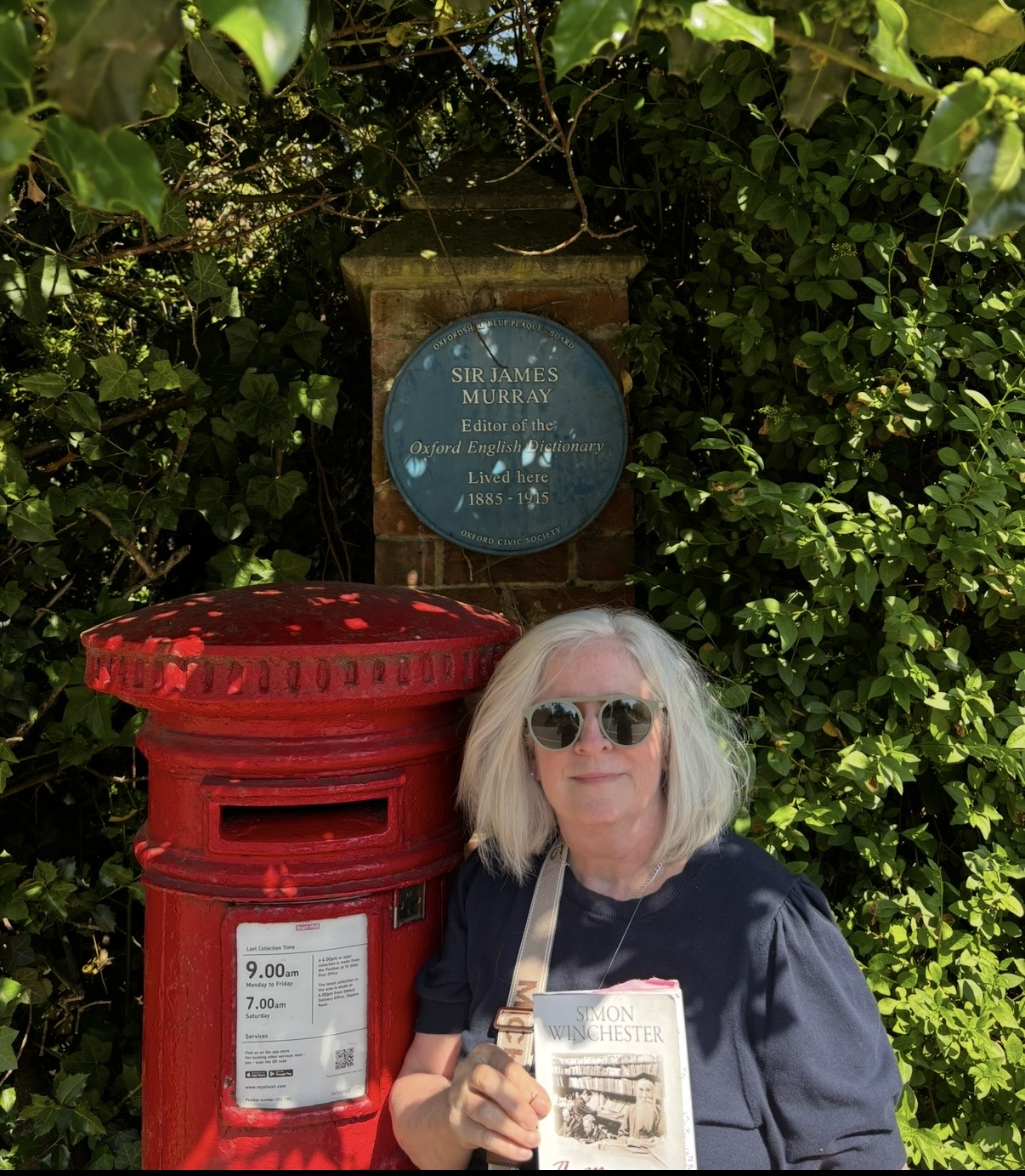
In The Meaning of Everything: The Story of the Oxford English Dictionary, author Simon Winchester tells the exciting story behind the creation of the “World’s Greatest Dictionary”. One of the best parts of this book, pour moi, is the etymological journey he leads us on. The New York Times heralded Winchester’s prose as “teeming with knowledge and alive with insights…supremely readable, admirable in its lucid handling of lexicographical mire” (jacket). I could not have said it better!
Winchester’s lexicon Bibliography includes the scholarship of: Herbert Coleridge’s, A Dictionary of the First, or Oldest Words in the English Language, (London, 1863); Richard Chenevix Trench’s A Select Glossary of Words Used Formerly in Senses Different from their Present (London, 1887); and R. Bridges’ The Collected Papers of Henry Bradley (Oxford, 1928).
The Origins of the English Language
The Celts (800BCE-43 CE)
Winchester begins the English Language journey with the Celts, who came from the valleys of the upper Danube and are generally counted as the first settlers whose language we know something about. (Meaning, 2) They spread across Europe during the Bronze Age (500 BC) and called themselves “Britons”. This language became the basis for Welsh, Cornish, Scots Gaelic, and Irish, which are still spoken today, as well as place names like London, Dover, Kent, and the Thames. These “Britons”, which included the Romans, remained in Britain for the next 400 years and then left to attend to their crumbling Western Empire in Europe (Rome would soon be sacked by the Goths and the Empire would die 70 years later).
The Roman-Britons (55 BCE-410 CE)
The Latin-based hybrid tongue of Roman-Britons dominated Europe. In the mid 5th-6th centuries, invaders from Denmark landed on the beaches of southern and eastern England in Yorkshire, Norfolk, Essex, Kent, and Hampshire and quickly conquered the Celts. These were linguistically Germanic stock-the Teutons, which included the Frisians, Jutes, and Saxons, also called “Angles”. This became the Anglo-Saxon language (more commonly known as Old English).
Anglo-Saxon/Old English (449-1100)
As the Britons entered Wales and Cornwall, “Old English” became the next linguistic form. Augustine’s missionary influence in Kent brought many Christian words into the language, such as hymn, priest, altar, disciple, and monk.
Beowulf was written during these post-Roman times (700-1000) and added grammar that is more standard in modern English. It is interesting, therefore, that we have been using many of these same pronouns and prepositions found in Beowulf (us, for, to him, in he) and verbs (sing, stood, answered) for over 1,000 years.
Runic
The surviving texts of the Anglo-Saxon language, Old English, employ a runic alphabet called futhorc, an acronym for the first 6 letters of a 31-letter symbol system. Old English vocabulary in its total lexicon amounts to 50,000 words: some from Latin, Celts, and Germanic origins.
The oldest English texts are written in runes, a writing system of intersecting straight lines imported by the invaders. The only runic letters that are still similar to modern English are B, H, and R. The others are decipherable but not written like ours today.
The Germanic-Teutonic English (before 450 CE)
The Teutonic core of English is everyday vocabulary, grammar, and sentence structure, inspired by Old English as the purest form ever written and spoken. Teutonic English is native to the Germanic core and includes the Angles, Saxons, Jutes, Frisians, and the influence of the Netherlands.
Norman French (1066-1350)
In 1066, the Norman Conquest greatly changed the English language; the defeat of King Harold resulted in the dynasty of French kings on the throne in London for the next 300 years. Norman French (Latin-based) became the language of England’s administration; Old English became “despised and regarded haughtily as the language of the peasant and the pleb” (11).
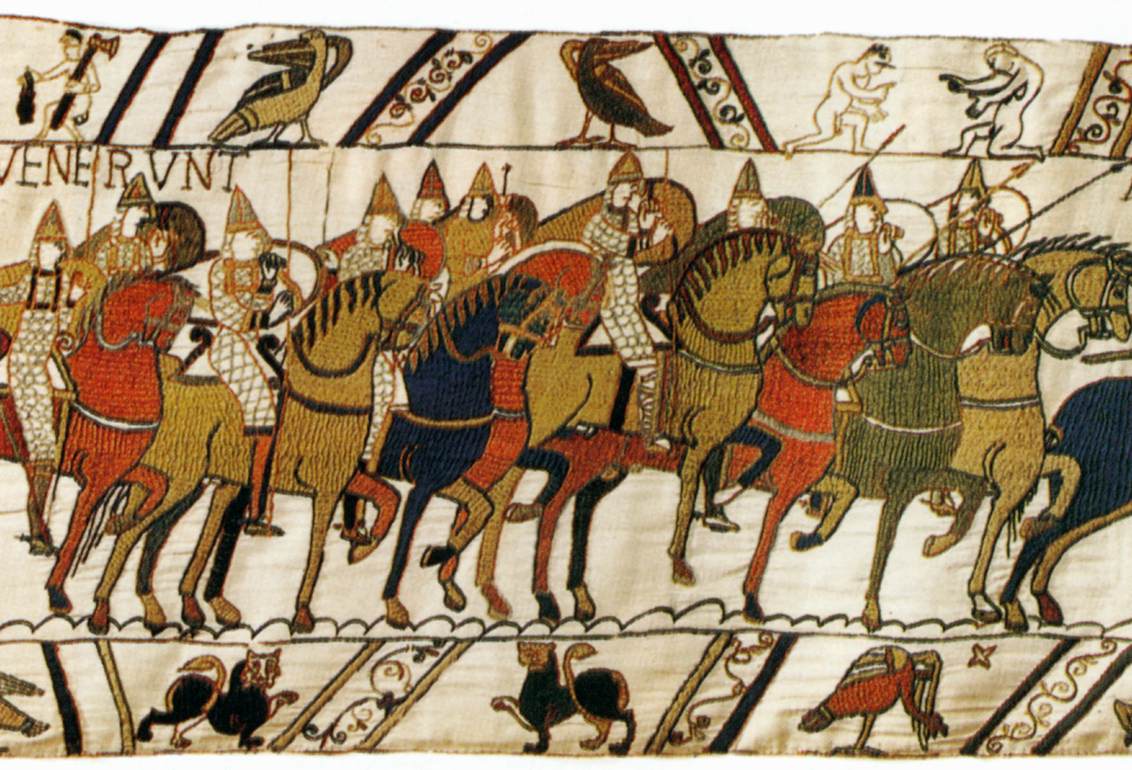
During this period, around 10,000 French words entered the English vocabulary, especially in government , religion, and law: judge, court, prayer. Parliament, sermon, and jury.
Middle English (1100-1500)
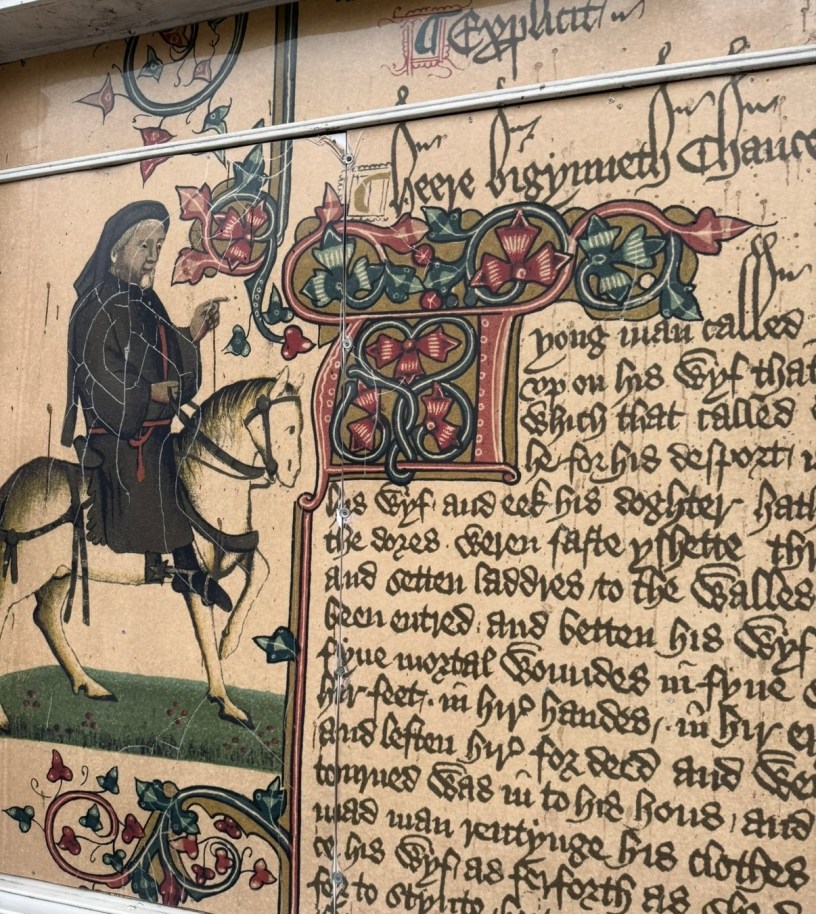
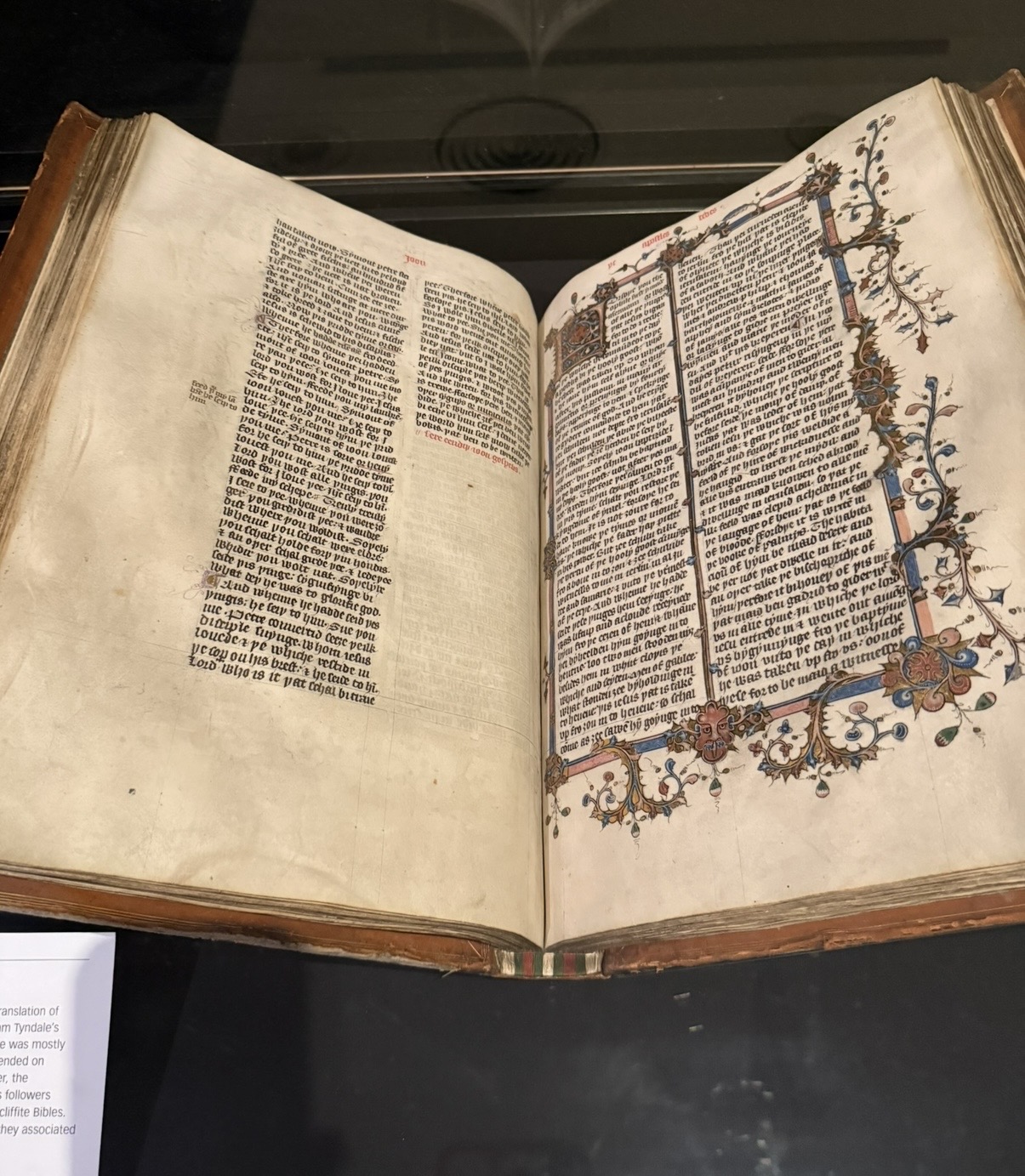
As Old English developed into Middle English through French, it absorbed words from Latin and Norse, and in the ninth and tenth centuries, as the “proselytizing work of Christian missionaries” flooded the British Isles (8). These Latin-derived words entered Middle English through French—abbot, angel, cloister, idol, martyr, pope, priest, psalm, and relic—to name a few. Fortunately, Old English did survive with thanks to Geoffrey Chaucer’s vocabulary in The Canterbury Tales. Old English inflections largely collapse and word order becomes the main carrier of grammar (9).
Winchester states, however, that this infusion of Teutonic stock, Angles, Latin, French, and Norse loanwords only amounts to no more than three percent of English; Germanic words account for almost all of the rest (10).
A very important change occurs after Henry IV becomes the first king since the Norman Conquest to speak his native tongue of English . This leads to “The Great Vowel Shift,” which changed long vowels (Winchester points out that this vowel shift is why English spelling and sounds often don’t match!)
Modern English (1500-present)
In 1474, William Caxton printed the first book in English on a wooden press: The Recuyell of the Historyes of Troye. After this book’s success, Caxton brought his hand-made wooden press to London and set up a print shop and publishing house next to Westminster Abbey. He printed 103 works including, Chaucer’s Canterbury Tales and Boethius.
Standardized English usage
Many linguists began publishing English Dictionaries at this point, including James Murray’s Oxford English Dictionary, which is the main purpose of Winchester’s book. As English continued to change, linguists wanted to establish a standard written form of the language.
What was the catalyst to create a standard of English in dictionary form?“With the advent of printing, there became a greater awareness of the multifarious dialects in which English was then both spoken and written, and the beginnings of a feeling that there should be a standard written form of the language” (14).
For example, Winchester explains one issue that puzzled lexicographers, linguists, and typographers at the time. They queried: The word ‘eggs’ in the northern form was ‘egges’ and the southern form, ‘eyren’. Which form should be used in the standard dictionary? One question that continues to puzzle lexicographers, even today, is the use of apostrophes ‘’ ‘’ Why is this issue controversial? There are two opposed schools of thought to the issue of etymology: Prescriptivism (holding fast to strict, historical rules) and
Descriptivism (mapping how people actually communicate).
[As a prescriptivist, I believe this is important. However, I can see the descriptivist’s (yes, I used an apostrophe here!!) point of view…In spoken language, you cannot hear an apostrophe, so when an apostrophe is completely omitted or misplaced, the reader’s comprehension is almost never compromised].
Apparently, this debate will soon be resolved, according to MIT Technology Review, as Government bodies have phased out and banned official street signs and maps to prevent data tracking errors. In addition, the social politics of the apostrophe has become a major point of controversy. Many hard-and-fast rules of grammar-purists have become a “tool for intellectual snobbery” (BBC “Have we murdered the apostrophe”). Last year, the Apostrophe Protection Society disbanded, supposedly having failed its mission (no apostrophe there).
How fun, I would learn more about these etymological issues in Dictionary publishing!
Work Cited
Winchester, Simon. The Meaning of Everything: The Story of the Oxford English Dictionary. Oxford University Press, 2003.

