
I have recently been learning about the novelist William Makepeace Thackeray through his essays in “The Works”, Volume VIII, published in 1891. Thackeray worked as a novelist, journalist, and essayist, commenting on British society and countries abroad.
On my first reading of his “Journeys from Cornhill to Cairo”, I saw similarities between Candide’s Voltaire and Mark Twain’s Innocents Abroad. All three writers use wit, irony, and observation of human behavior to color their narratives and, at times, embellish! I see similar writing styles in all three travel journals where they use the literary method of challenging their readers to reexamine what we think we know about other cultures and people groups.
[see my posts on Twain’s The Innocents Abroad :
and Voltaire’s Letters to Alsace: Constantinople:]

Johann Wolfgang von Goethe
As an avid Goethean, I was excited to read Thackeray’s essay “Goethe in His Old Age,” written to G. H. Lewes in London on April 28, 1855, about his personal recollections of time spent with Goethe. Lewes published “Life of Goethe” in 1855 (my next TBR!) . Thackeray met Goethe and Madame de Goethe in the summer of 1831at a “starring engagement” , or tea in the open air, as Thackeray describes, in the Gartenhaus Park which belonged to the Goethe family.
“Goethe had retired from the world, but still kindly received strangers ”, states Thackeray. I love this observation! Goethe is presented as a living person, not as an untouchable literary idol. The two novelists read over endless novels and poems in French, English, and German. Goethe’s house was covered with pictures, drawings, casts, statues, and medals, and his ante-chamber with antique casts, and bas-reliefs (372).
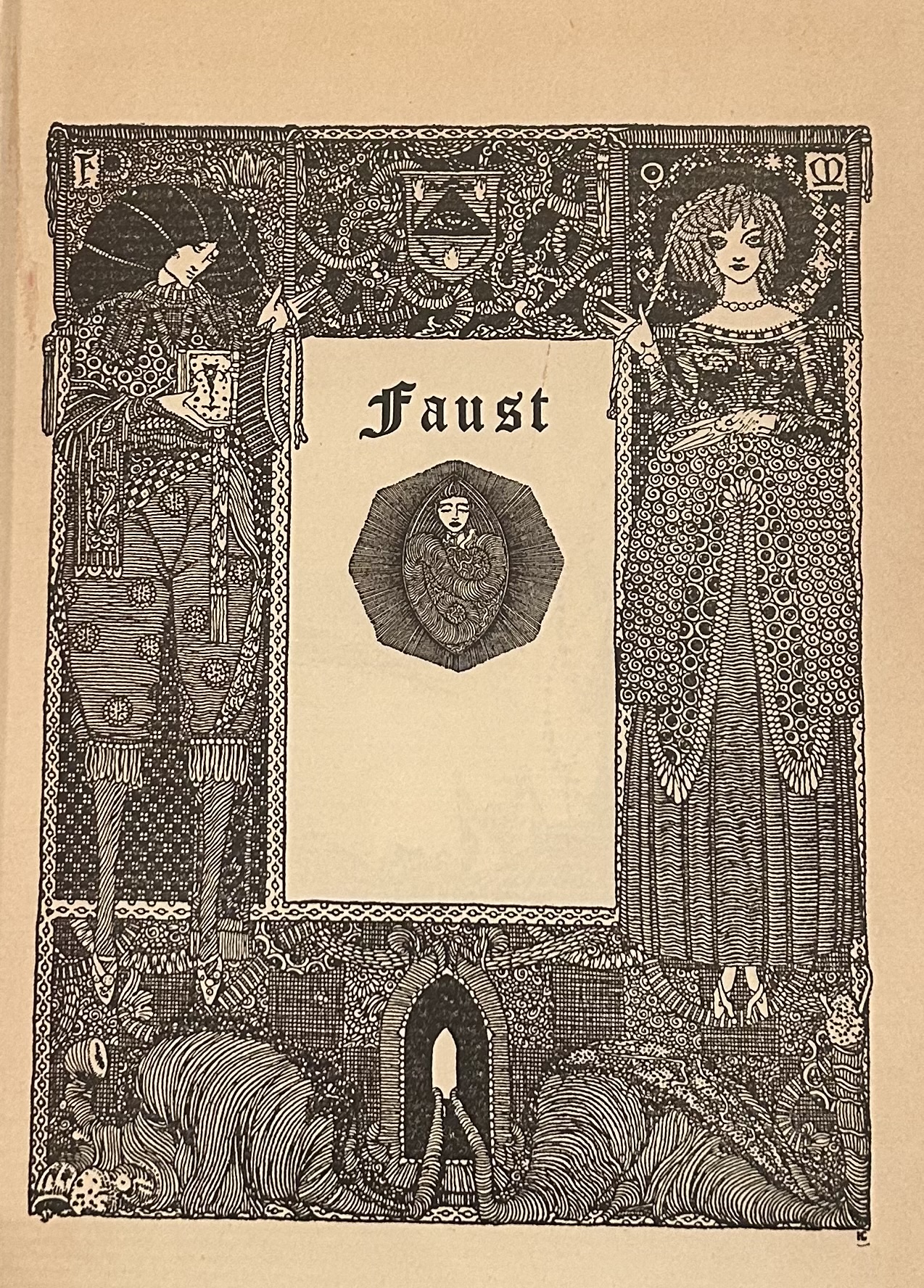
Of Goethe’s personal effects, Thackeray describes Goethe as having dark, piercing, and brilliant eyes, which Thackeray compared to the hero in “Melmoth the Wanderer,” which haunted him in his youth.
In his dress, Goethe was described as “habited in a long gray or drab redingote, with a white neckcloth and a red ribbon in his button-hole. He kept his hands behind him like a Rauch’s statuette”(372). Thackeray fancied that Goethe must have been still more handsome as an old man than even in his days of youth. “His voice was very rich and sweet”. Goethe asked him questions about his life and work, which he answered the best that he could. In these days before photography, Thackeray painted a beautiful, verbal photograph of a man that he greatly admired. I love how his personal memories show the sense of wonder in Goethe’s literary greatness-the ultimate compliment for a renowned writer!

Thackeray closes his essay on Goethe with these thoughts: “With a five-and-twenty years’ experience since those happy days of which I write, and an acquaintance with an immense variety of humankind, I think I have never seen a more simple, courteous, gentlemanlike than that of the good Schiller and the great Goethe”(373)!
Work Cited
The Works of William Makepeace Thackeray. Vol VIII. NY: P.F. Collier, 1891

