Maupassant by Himself by Albert-Marie Schmidt
I found a little treasure by Albert-Marie Schmidt on the life and works of Guy de Maupassant in my library last week and discovered new insights into his time in Étretat, France.
Maupassant grew up in Étretat, knew its fishermen and peasants, its countryside, its dialects, its weather, and its social customs. The landscape became part of the psychological and literary world he created.
Maupassant par lui-meme
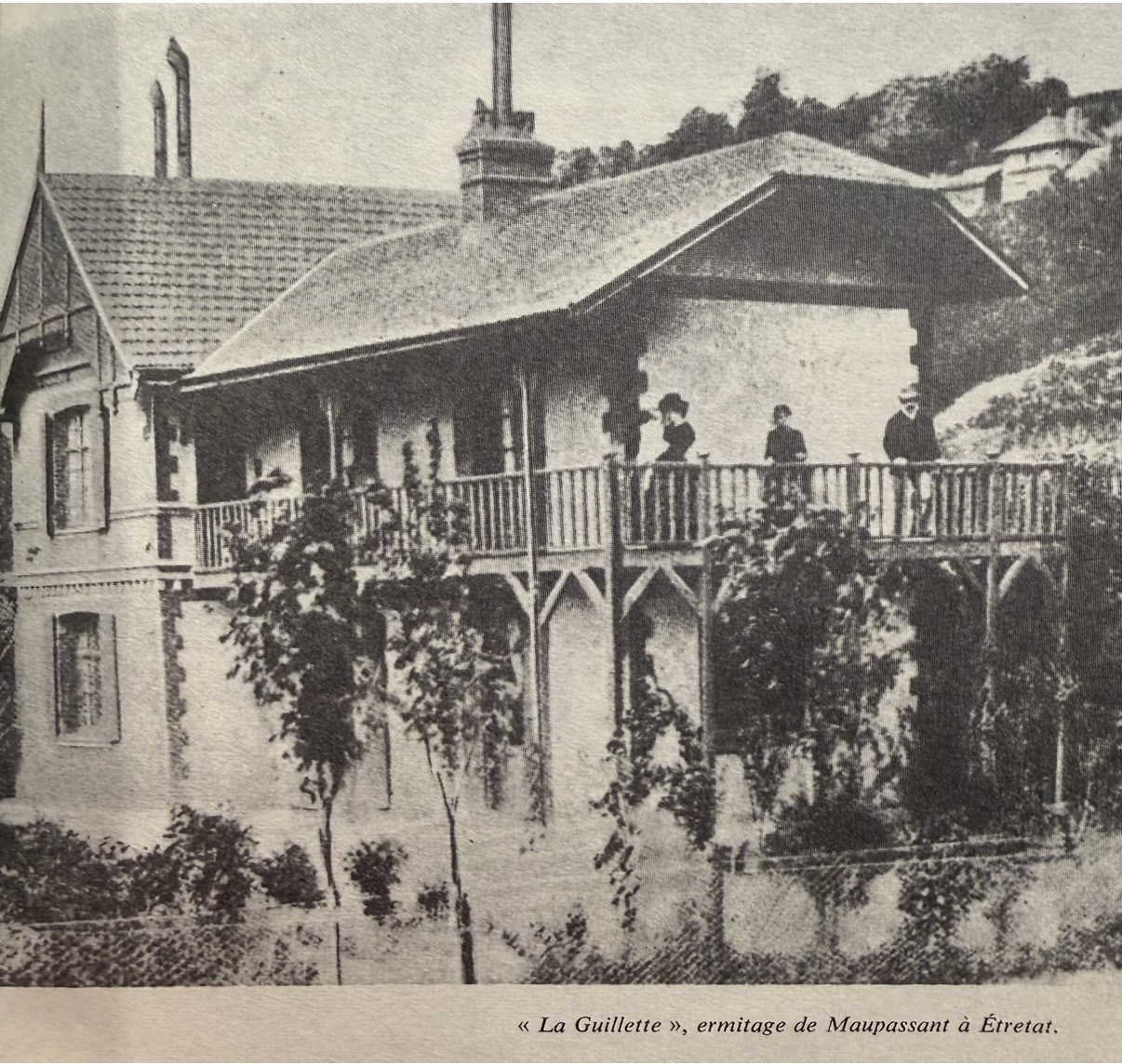
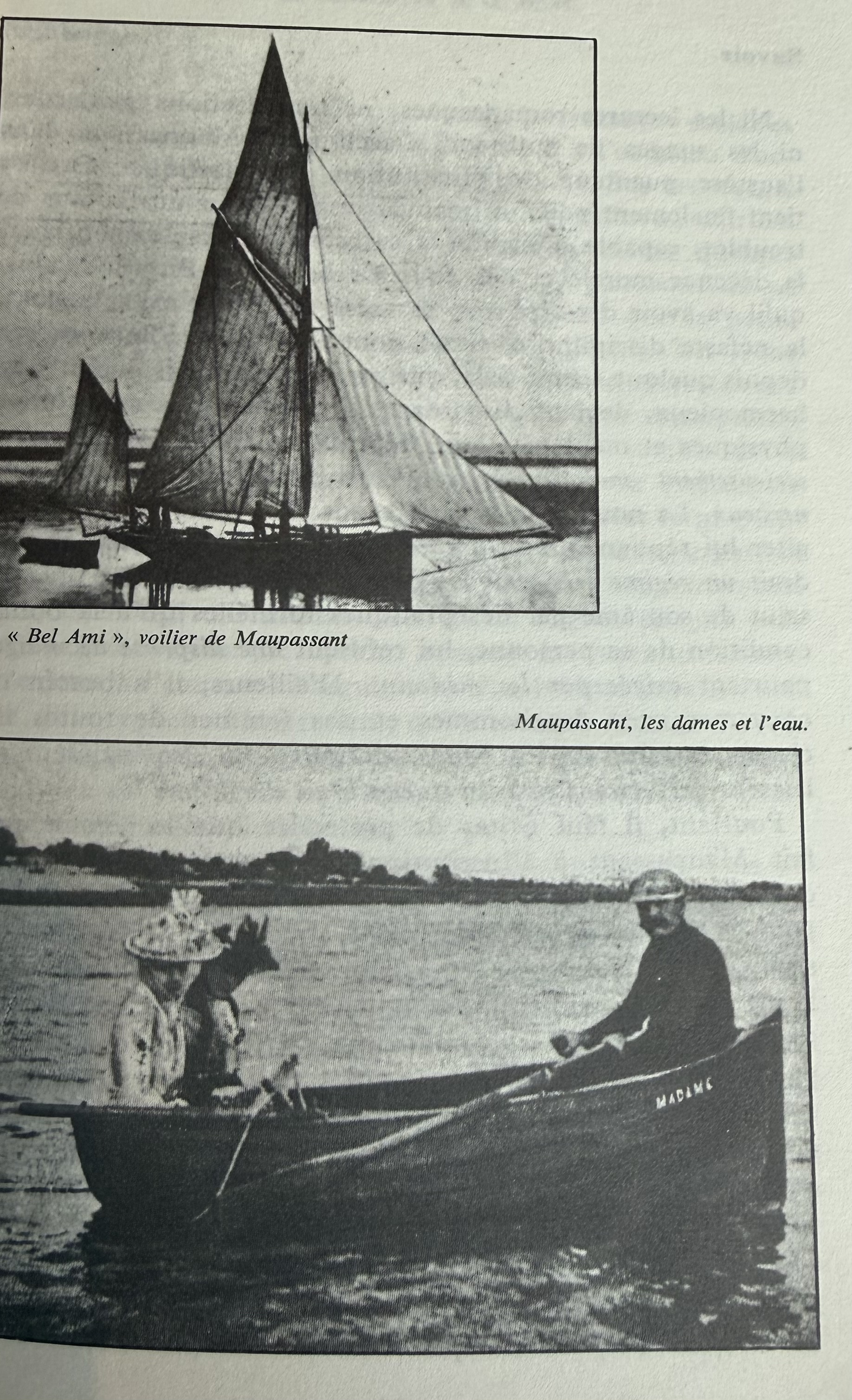
In the first chapter of Maupassant par lui-meme, Schmidt highlights Maupassant’s time on the Normandie coast with photos of him and friends on the beach, boating, and in his home high on a cliff overlooking La Manche. One of the most celebrated French writers of the nineteenth century, Maupassant found his most powerful inspiration in Étretat, in his daily excursions on the beach. “The teeming sea, sometimes gray, sometimes blue, sometimes purple, takes on the aspect of divinity in my eyes”, exclaimed Maupassant… I have found equal inspiration seated on the pebbles of Étretat beach (my translation, 18). We can see Maupassant’s yacht, “Bel Ami” and his schiff, “Madame”, accompanied by mademoiselles. That’s fun!
From 1885 onward, Maupassant indulged daily in relaxing water activities including solitary sailing, swimming in his pool, hot steams, and long, lukewarm, daily baths to interrupt the challenges of his melancholy.
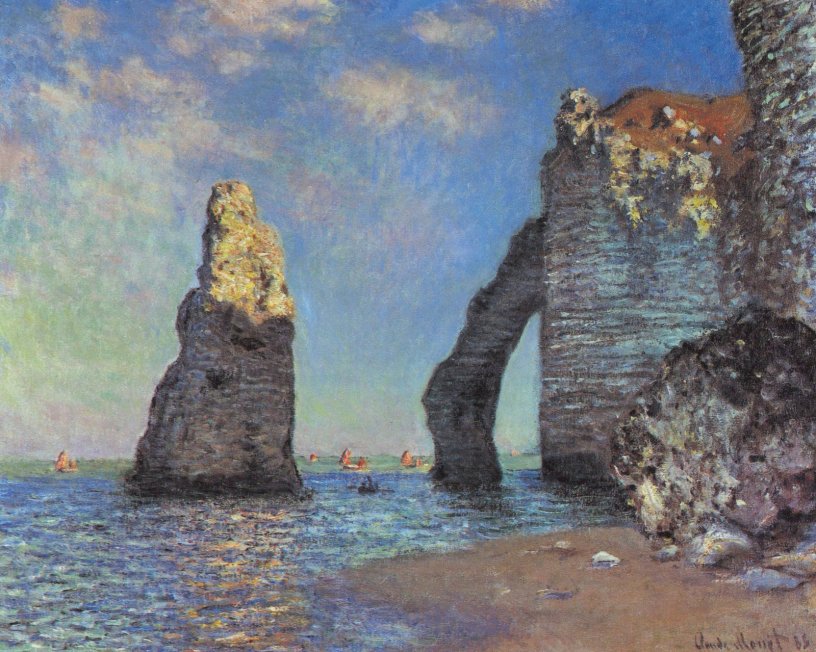
The Cliffs at Étretat
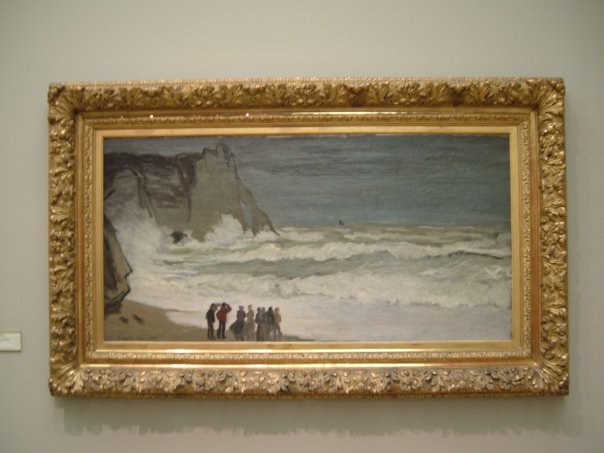
The first time I saw the Cliffs at Étretat was in the Musée d’Orsay in 2005. My soul was immediately drawn to this idyllic shore, and I longed to be there and hear the ocean beating against the rocks. I began to look at other paintings and “impressions” of this Normandy village in northern France and found several representations by Monet and Courbet, who were also drawn to these massive cliffs and their enormous apertures. Monet depicted the Cliffs of Étretat in over 50 paintings, several of which can be viewed in the United States at the Metropolitan Museum in New York, and The Clark Institute in Massachusetts, in Raleigh NC.
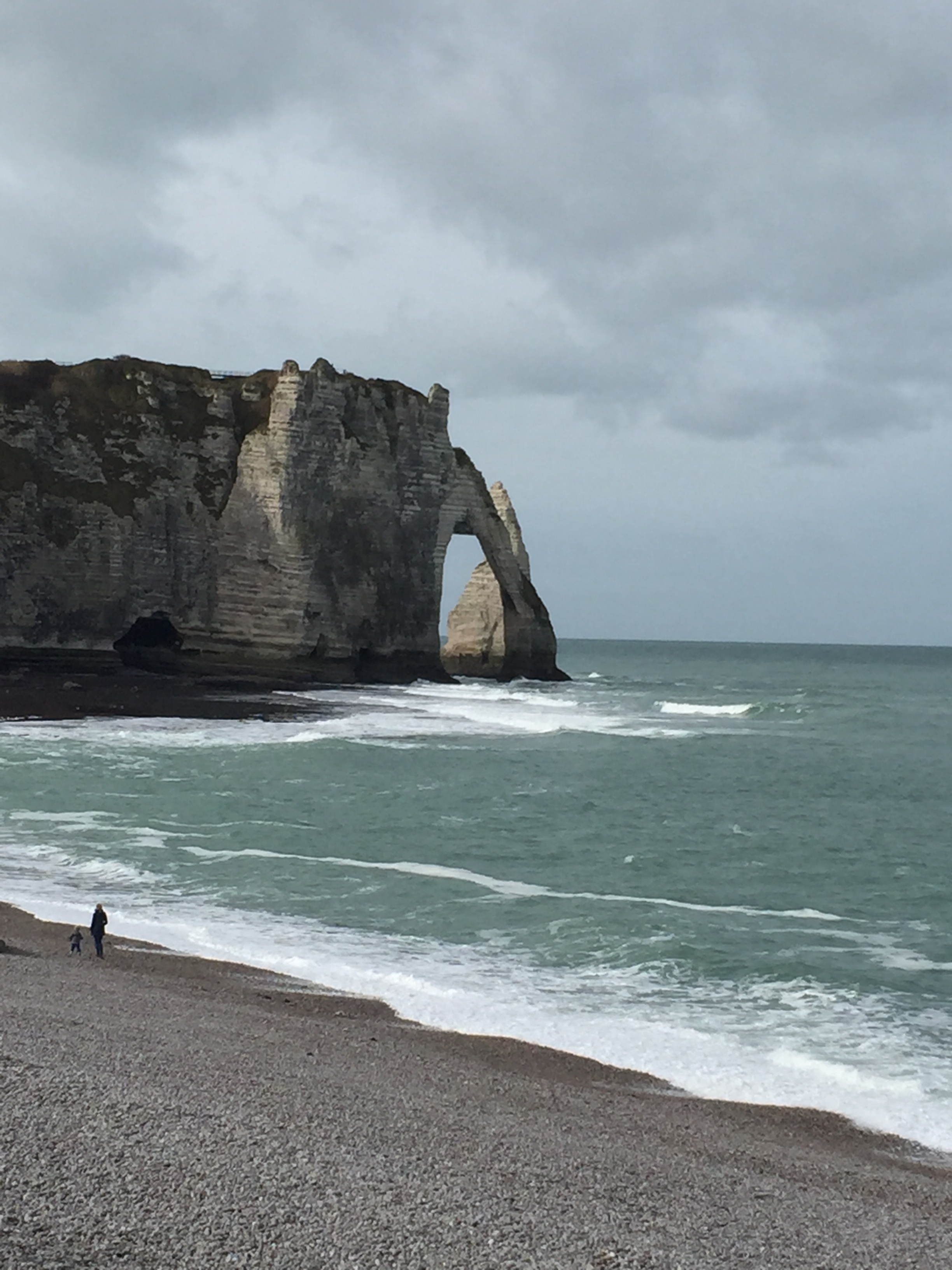
In 2017, my husband took me to Étretat for our 35th wedding anniversary. It was everything I dreamed it would be, and more. Upon my return, I knew this had to be my first painting to capture this experience on canvas.

According to Charles Chetham, Harvard University’s Fogg Art Museum, describes the cliffs at Étretat: “In each of these, the sensation of movement prevails, whether in subtle, inconstant shimmer of sunlight on becalmed waters, or in the dramatic turbulence of frenzied seas, wind-shredded clouds, or tangled grass surmounting craggy prominences”.
Life in Étretat
There is a great connection to Normandy and Étretat evident in Maupassant’s works. In Une Vie (1883), we see central themes of the Norman countryside through the landscape, social customs, and rural life. The social life in Normandy becomes another character in Une Vie . Secondly, the Normandy setting in Le Horla (1887) highlights the atmosphere of solitude and the peace that it can bring.
My favorite connection between Maupassant and Étretat appears in “La Vie d’un paysagiste” (The Life of a Landscapist, 1886), in which he writes about Claude Monet’s dedication to observing and capturing nature. In Monet’s representation of Étretat through many sketches and paintings, we see the fleeting conditions of light, atmosphere, the roaring sea, and tempestuous weather in this Norman town.
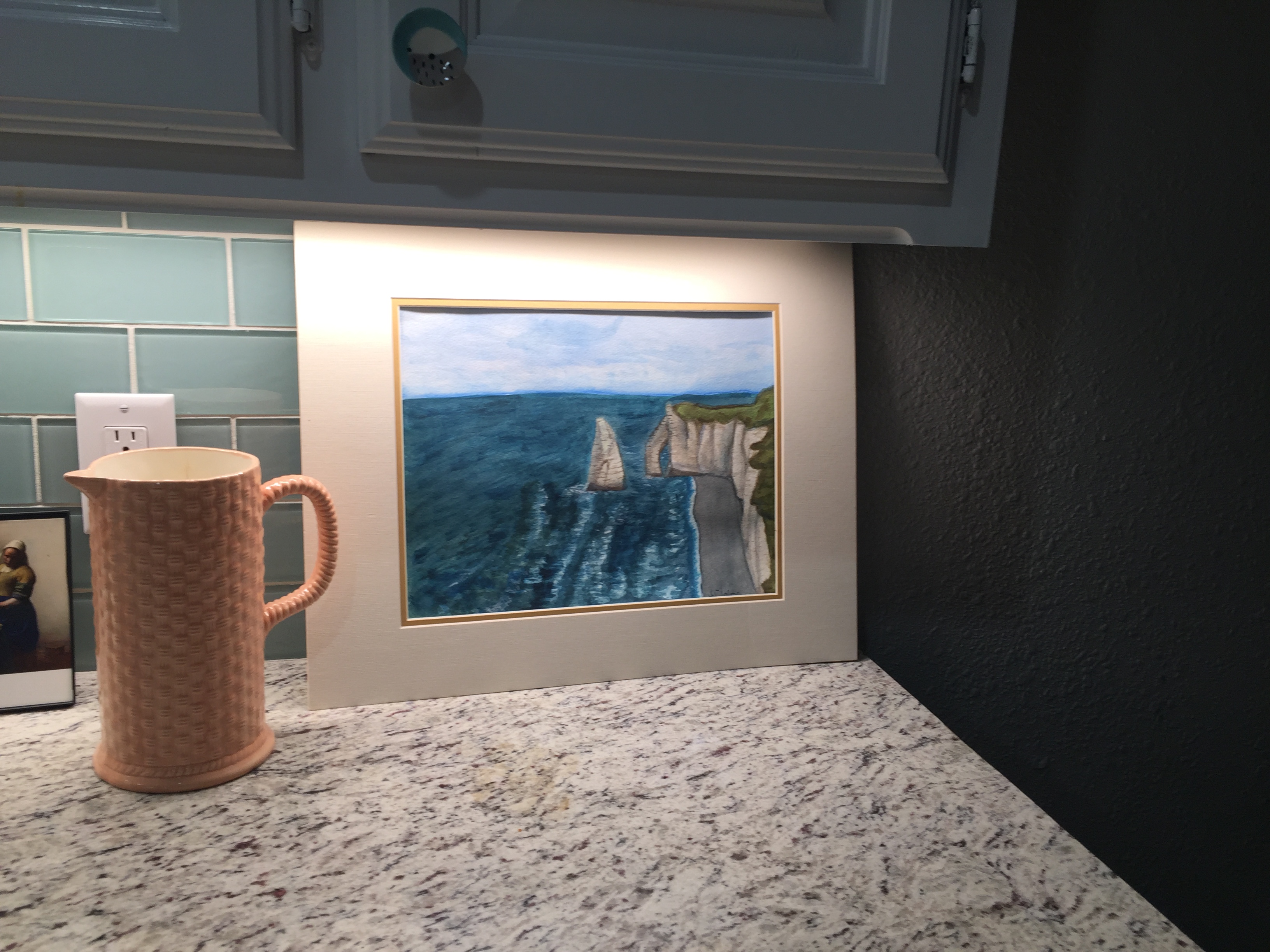
I used Monet’s impressions of Étretat as inspiration when expressing my own impressions of these magnificent cliffs.
Thank you, Maupassant, for giving your readers the history and inspiration of your Normandy home.
Work Cited
Albert-Marie Schmidt. Maupassant par lui-même. Paris: Ecrivains de Toujours, 1962.

